June 2025 Living Environment Regents — Answer Key & Worked Solutions
Every question from the June 2025 Living Environment Regents exam, with the correct answer and a full step-by-step solution. Check your work, learn the method, then convert your raw score.
These are real questions from the June 2025 Living Environment New York State Regents examination, published by NYSED. Worked solutions are written by RegentsLab.
Which of these components are found in all living organisms?
- (A) estrogen and testosterone
- (B) insulin and water
- (C) chlorophyll and hemoglobin
- (D) cytoplasm and ATP ✓
Worked solution
All cells, in every organism, contain cytoplasm and use ATP for energy; the other pairs are restricted to particular organisms or cell types.
Two types of molecules directly involved in cellular communication are
- (A) hormones and nerve cell chemicals ✓
- (B) fats and carbohydrates
- (C) ATP and carbon dioxide
- (D) glucose and oxygen
Worked solution
Hormones and neurotransmitters are signaling molecules cells use to communicate and coordinate body functions, unlike purely metabolic molecules.
When mountain lions consume large prey, they often leave large pieces of their prey behind. The carcass that is left becomes a food source for other organisms. A scientist reported a count of 24,000 beetles in an area where mountain lions had left partially eaten carcasses. Wolves, bears, and other animals also take advantage of the remains of the prey. The role of the mountain lion in this ecosystem is an example of the concept that
- (A) ecosystems require a large number of predators to increase the number of prey
- (B) populations are linked with many others in a stable ecosystem ✓
- (C) large animals waste food, resulting in harm to other organisms in the ecosystem
- (D) predators should consume small prey to protect the diversity of the ecosystem
Worked solution
The mountain lion's leftover carcasses support beetles, wolves, bears, and other scavengers, showing that populations across a community are interconnected and dependent on one another.
Mutations are an important part of evolution. One reason for this is that mutations
- (A) that occur in body cells are passed to offspring
- (B) are random events that always increase the ability of members to reproduce
- (C) occur only in sexually reproducing organisms
- (D) may result in gene variations that provide a survival advantage ✓
Worked solution
Mutations create new genetic variations within a population, some of which may improve an organism's ability to survive and reproduce, driving evolution through natural selection.
Ladybugs that eat plant pests are currently raised and sold commercially to gardeners. It was assumed that all of the imported ladybugs would remain within the garden area and consume only the harmful insect pests. It is now known that the ladybugs can travel widely, with one study showing that within a few days, 99% had left the area where they were originally released. One environmental concern regarding the use of ladybugs to control insect pests could be that
- (A) ladybugs are an endangered species and must be collected in the wild
- (B) ladybugs are a safer alternative than the use of chemical pesticides
- (C) the migration of introduced ladybugs may affect food webs in other areas ✓
- (D) the action of ladybugs may reduce insect pest populations
Worked solution
Since released ladybugs quickly disperse beyond the target garden, they can become invasive predators or competitors elsewhere, altering food webs in areas where they were not intended to be introduced.
The best-adapted individuals in a population are most likely to be successful in passing on their traits to the next generation because
- (A) they were able to survive the conditions of their environment when others could not ✓
- (B) their offspring will be better able to cope with any environmental changes that may occur
- (C) their genes are the strongest, which will help them attract suitable mates
- (D) they are less attractive and are less likely to find suitable mates
Worked solution
Natural selection favors individuals whose traits allow them to survive long enough to reproduce; survival is the mechanism, not attractiveness of genes.
Some structures found in living organisms are shown below: a protein molecule, a DNA molecule, and a cell. Which statement best describes the relationship among the three structures?
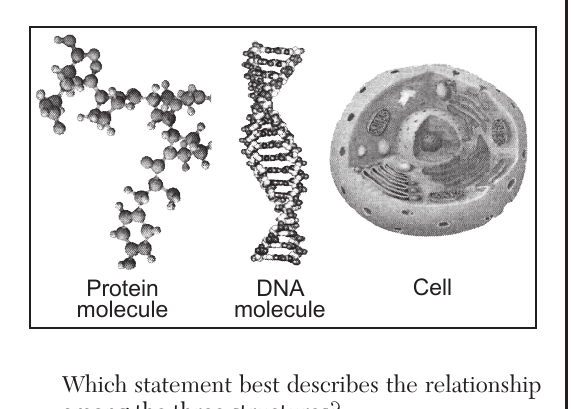
- (A) DNA is produced by large protein molecules that diffuse into the cell.
- (B) Protein is composed of DNA that is produced in the cell.
- (C) DNA controls the production of protein in the cell. ✓
- (D) A cell is composed entirely of DNA and protein.
Worked solution
DNA contains the genetic code that directs protein synthesis, which occurs within cells; this describes the actual functional relationship among the three structures.
Scientists found that over a period of 300 years, a pond slowly transformed into a meadow and then a forest. During that time, communities of organisms were replaced by different communities. The best explanation for why new communities were able to replace the older communities is that
- (A) the species in the old communities died of disease
- (B) the environment gradually changed, making the area less favorable for the old communities ✓
- (C) there was a lack of predators for the new communities of organisms
- (D) the original species suddenly became extinct
Worked solution
This describes ecological succession, where gradual environmental changes make conditions unsuitable for earlier communities and favorable for new ones.
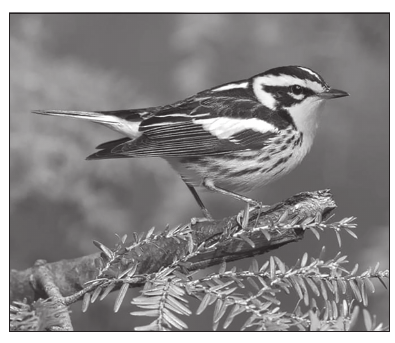
Many species of warblers, including the Blackburnian warbler shown below, migrate from Central and South America to New York State, where they breed each summer. Warblers primarily prey on insects and nest in hemlock trees. An invasive insect, the wooly adelgid, is killing hemlock trees across the entire state. If this continues, fewer warblers will be able to find suitable nesting sites. One consequence of this may be that
- (A) there will be more food for birds that prey on warblers and other small birds
- (B) fewer acorns will grow on the oak trees that also grow in the forest
- (C) insect pest populations will increase because fewer warblers are present ✓
- (D) more warbler eggs will be hatched in Central and South America to increase the population
Worked solution
Since warblers are insect predators, a decline in warbler nesting due to hemlock loss reduces predation pressure on insects, allowing insect populations, including pests, to rise.
Seagrass populations decrease significantly in size when sea turtles overgraze the area in which the grasses grow. When predators such as sharks have a constant presence in the same area, the turtles leave and the seagrass population increases. This is an example of how organisms
- (A) influence other species in a community ✓
- (B) balance their basic nutritional needs
- (C) maintain their own internal stability
- (D) depend on physical conditions for survival
Worked solution
The presence of sharks influences turtle behavior, which in turn influences seagrass abundance, illustrating how organisms in a community affect one another through trophic interactions.
Strawberry plants grow runners off of the main parent plant, as shown in the photo below. New strawberry plants that are genetically identical to the parent plant develop along the runners. This phenomenon can be best explained by the fact that these strawberry plants are produced by
- (A) asexual reproduction, and the new plants develop by mitosis and differentiation ✓
- (B) sexual reproduction, and the new plants develop by meiosis and fertilization
- (C) asexual reproduction, and the new plants develop by meiosis and fertilization
- (D) sexual reproduction, and the new plants develop by mitosis and differentiation
Worked solution
Runners produce genetically identical clones through asexual reproduction, with new plant structures forming via mitotic division and subsequent differentiation.
During a class field trip, a student measured and recorded some abiotic factors present in a pond. Which data did the student most likely include in their record of abiotic factors?
- (A) the number of possible food chains and food webs
- (B) the diversity of decomposers and their total mass
- (C) the temperature and pH of the water ✓
- (D) the size and number of fish species
Worked solution
Abiotic factors are nonliving components of an environment; temperature and pH are physical/chemical measurements, unlike the other choices which describe living organisms.
Mammals, including humans, dolphins, and cows, produce milk for their young. Surprisingly, researchers have discovered that certain spiders also produce a milk-like fluid for their young. The spider leaves droplets of her "milk" around the nest for the babies after they hatch from their eggs. After one week, the babies will feed on the "milk" directly from her body for at least 20 days. Which statement best describes this recent discovery?
- (A) It proves that all female animals produce the same hormones to make milk.
- (B) The discovery will allow for the re-classification of spiders as mammals.
- (C) It is an example of parental care for the survival of their offspring. ✓
- (D) The discovery confirms that spiders provide mammal milk to their offspring.
Worked solution
The spider's milk-like secretion nourishes and protects her young after hatching, which is a form of parental care that increases offspring survival.
As part of the "Charge NY" energy plan, New York drivers are being encouraged to purchase electrically powered cars. Many believe that this will help the environment by
- (A) reducing the number of cars on the road, since drivers will only be able to go short distances before having to recharge the battery
- (B) reducing local air pollution by lowering levels of carbon dioxide and other pollutants ✓
- (C) decreasing the number of car sales, since electric cars are more expensive than gasoline-powered cars
- (D) decreasing the consumption of fossil fuels, since only renewable energy sources can be used to generate electricity
Worked solution
Electric vehicles produce no tailpipe emissions, so widespread adoption reduces local air pollution, including carbon dioxide and other pollutant output compared to gasoline vehicles.
The New Mexico whiptail is a female-only species of lizard that exhibits an unusual form of asexual reproduction. Researchers discovered that these lizards produce eggs that have a full set of chromosomes and have the genetic diversity of sexually reproducing lizards. Which statement best describes the offspring of these lizards?
- (A) The offspring are a result of uniting a male and female gamete.
- (B) The offspring develop from eggs with twice the genetic information of the female lizard.
- (C) The offspring have cells that contain DNA found only in the female lizard. ✓
- (D) The offspring are genetically identical to each other and the female lizard.
Worked solution
Since the species reproduces asexually with no male involved, all genetic material in the offspring originates solely from the female parent.
In humans, the placenta is important to the developing embryo. Which essential life functions are carried out by the placenta?
- (A) nutrition, excretion, and reproduction
- (B) respiration, nutrition, and excretion ✓
- (C) movement, reproduction, and nutrition
- (D) coordination, immunity, and movement
Worked solution
The placenta transfers nutrients and oxygen from mother to embryo (nutrition, respiration) and removes wastes (excretion), performing these essential life functions on the embryo's behalf.
Injecting individuals with a vaccine composed of killed bacteria protects them from a disease because the proteins from the killed bacteria
- (A) serve as food for invading pathogens, which prevents them from feeding on human proteins
- (B) bind with cell nuclei, preventing live pathogenic bacteria from binding with the nuclei later
- (C) cause a mild case of the disease, preventing the immune system from responding to future infections
- (D) stimulate the production of antibodies that can be produced in response to an infection ✓
Worked solution
Vaccines introduce antigens from killed pathogens that trigger the immune system to produce antibodies and memory cells, enabling a faster response upon future exposure to the live pathogen.
Which statement about amino acids and simple sugars is correct?
- (A) Amino acids are used to build inorganic molecules, and simple sugars are used to build organic molecules.
- (B) Starches are digested into amino acids, and proteins are digested into simple sugars.
- (C) Amino acids and simple sugars are used as building blocks in the synthesis of organic compounds. ✓
- (D) Amino acids can enter cells, and simple sugars cannot enter cells.
Worked solution
Amino acids are monomers of proteins and simple sugars are monomers of carbohydrates; both serve as building blocks that cells assemble into larger organic molecules.
Protein chains may break. This can cause a problem for living cells because
- (A) if the proteins break, the cell will contain more proteins than it needs
- (B) if the chains break, the amino acids will poison the cell, destroying organelles
- (C) the broken proteins will not interact with other molecules correctly ✓
- (D) the broken chains will attack the ribosomes of the cell and shut them down
Worked solution
A protein's specific three-dimensional shape determines its function; if the chain breaks, its shape and ability to properly bind or interact with other molecules is lost.
Enzymes are essential to maintaining homeostasis and helping to regulate human metabolism. They are also examples of molecules that are
- (A) composed of complex carbohydrates
- (B) not specific to any life function
- (C) synthesized by the cell membrane
- (D) influenced by pH ✓
Worked solution
Enzymes are proteins whose shape, and therefore activity, is sensitive to environmental conditions such as pH, which can denature them or alter their efficiency.
The process by which DNA molecules separate and add new molecular bases to form another DNA molecule is called
- (A) protein synthesis
- (B) cell membrane synthesis
- (C) replication ✓
- (D) mitosis
Worked solution
DNA replication is the process where the double helix unwinds and separates, and each strand serves as a template for adding complementary bases to form a new, identical DNA molecule.
Which row in the chart below correctly describes activities that occur in each of the two organelles shown?

- (A) Row (1): chloroplast uses glucose as it functions; mitochondrion makes glucose as it functions
- (B) Row (2): chloroplast makes glucose as it functions; mitochondrion uses glucose as it functions ✓
- (C) Row (3): chloroplast uses oxygen as it functions; mitochondrion makes oxygen as it functions
- (D) Row (4): chloroplast uses oxygen as an energy source; mitochondrion uses carbon dioxide as an energy source
Worked solution
Chloroplasts carry out photosynthesis, producing glucose, while mitochondria carry out cellular respiration, consuming glucose to release energy; row 2 correctly pairs these functions.
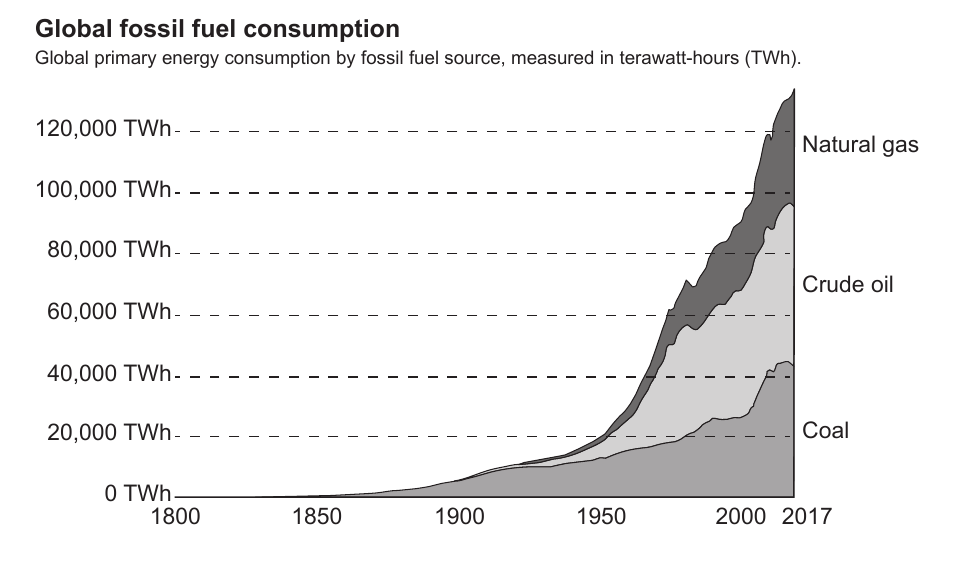
The amount of fossil fuels consumed from 1800 until 2017 is shown in the graph below. Global fossil fuel consumption: Global primary energy consumption by fossil fuel source, measured in terawatt-hours (TWh). The graph shows a stacked area chart with three fuel sources (Coal, Crude oil, Natural gas) from 1800 to 2017, with total consumption rising slowly until about 1950 and then increasing sharply, reaching over 120,000 TWh by 2017. The increased demand for and use of fossil fuels is a direct result of an
- (A) increased focus on renewable energy sources
- (B) increased concern for environmental stability
- (C) increase in atmospheric changes
- (D) increase in industrialization ✓
Worked solution
The sharp rise in fossil fuel consumption tracks the pace of industrial development, not environmental concern or renewable energy adoption.
Some prescription drugs come with a warning that these drugs should be avoided during the early stages of pregnancy. The reason that pregnant women should avoid certain medications early in their pregnancy is because the drug may
- (A) affect the development of organs in the fetus ✓
- (B) interfere with meiosis
- (C) allow differentiation to occur
- (D) interfere with fertilization
Worked solution
Since fertilization has already occurred by the time pregnancy is diagnosed, the concern is disruption of organ development, not meiosis or fertilization.
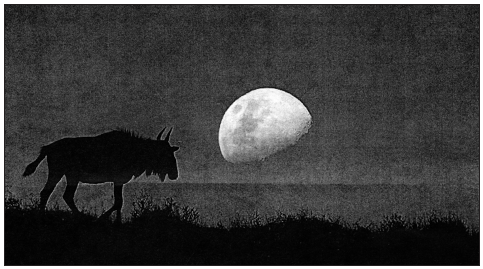
Lions in East Africa are night hunters. They are most successful during the darker phases of the moon, when they are less visible. Prey animals, such as the wildebeest shown below, are also influenced by the moon cycles and amount of darkness. During the dark phases of the moon, they are less active. This behavior shows that
- (A) predator behaviors are controlled by the carrying capacity of the environment
- (B) environmental factors can influence the behavior of predators and their prey ✓
- (C) producers directly regulate the number of predators in a community
- (D) consumers influence the physical factors in the predator's ecosystem
Worked solution
The scenario describes an abiotic factor (moonlight) altering the behavior of both a predator and its prey, not carrying capacity or producer regulation.
The removal of three consecutive base-subunits from a gene would most directly affect the
- (A) membrane of a cell
- (B) structure of a protein ✓
- (C) pH of the cytoplasm
- (D) size of a cell nucleus
Worked solution
Since three bases correspond to one codon/amino acid, deleting them directly alters the protein's amino acid sequence and structure, not the membrane, pH, or nucleus.
Some medications have been found to damage mitochondria. This can upset metabolism because mitochondria
- (A) synthesize energy to make organic compounds
- (B) produce carbon dioxide, which is used for cellular respiration
- (C) release oxygen, which is necessary for photosynthesis
- (D) produce ATP molecules used for cellular processes ✓
Worked solution
Mitochondria's primary function is producing ATP, so damage to them disrupts the cell's energy supply and metabolism.
The Labrador retriever is a breed of dog that is characterized by a solid yellow, brown, or black coat and a friendly personality. In order to increase the chances of Labrador retriever puppies having these traits, breeders should
- (A) insert the genes for these traits into the cells of the puppies
- (B) increase genetic variation by mating dogs with different traits
- (C) breed only dogs with the desired traits to produce puppies ✓
- (D) use asexual reproduction to breed dogs with a variety of traits
Worked solution
Selective breeding of individuals already expressing the desired traits, not gene insertion or increased variation, increases the likelihood of offspring with those traits.
An example of a harmful immune response occurs when immune cells cause the breakdown of
- (A) cancerous tissue
- (B) bacteria cells
- (C) pathogenic viruses
- (D) transplanted organs ✓
Worked solution
Attacking bacteria, viruses, or cancer cells is beneficial, but attacking a transplanted organ is a harmful immune response known as rejection.
Individuals who use tanning beds have an increased risk of getting skin cancer. Their skin cancer may
- (A) be passed to their offspring because it is a gene mutation
- (B) spread in the individual but will not be directly passed to their offspring ✓
- (C) result in the offspring having immunity to skin cancer
- (D) help their offspring better adapt to skin cancer in sunnier climates
Worked solution
Because tanning-bed-induced mutations occur in somatic skin cells rather than gametes, the cancer is not heritable, though it can spread within the affected individual.
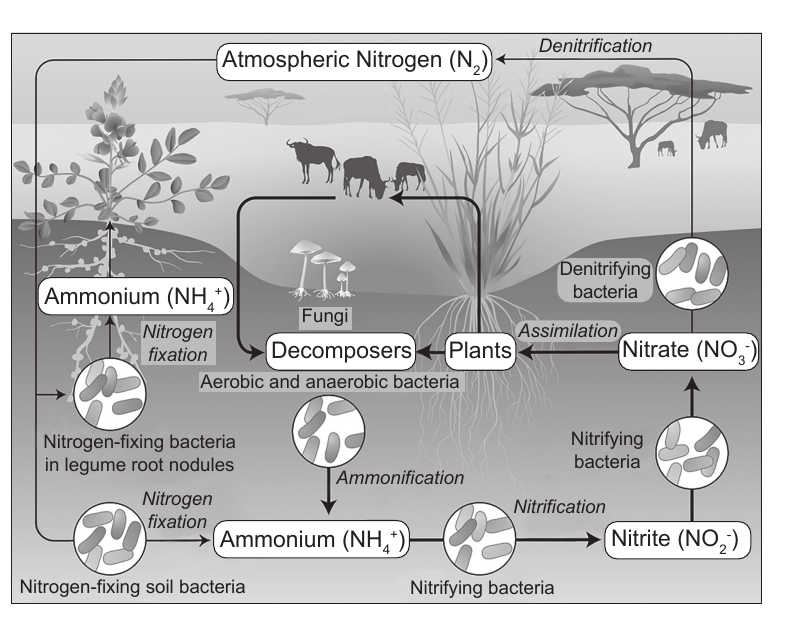
Base your answer on the information and nitrogen-cycling model. Material cycles are necessary to recycle substances needed and used by organisms in their habitat. The atmosphere is composed of about 80% nitrogen gas (N2) that cannot be used by most organisms in that form. It is through the action of many different types of bacteria that the nitrogen gas can be made available to other organisms. The diagram below represents a model of the nitrogen cycle, showing Atmospheric Nitrogen (N2) connected via nitrogen-fixing bacteria in legume root nodules and nitrogen-fixing soil bacteria to Ammonium (NH4+), which nitrifying bacteria convert to Nitrite (NO2-) then Nitrate (NO3-); nitrate is assimilated by plants, decomposed by aerobic/anaerobic bacteria back to ammonium (ammonification), and denitrifying bacteria convert nitrate back to atmospheric nitrogen (denitrification). Based on the model, which bacteria are able to convert atmospheric nitrogen gas to nitrogen compounds in the soil?
- (A) aerobic and anaerobic bacteria
- (B) nitrifying bacteria
- (C) nitrogen-fixing bacteria ✓
- (D) denitrifying bacteria
Worked solution
Nitrogen-fixing bacteria are the organisms in the model that convert atmospheric N2 into ammonium compounds usable in soil.
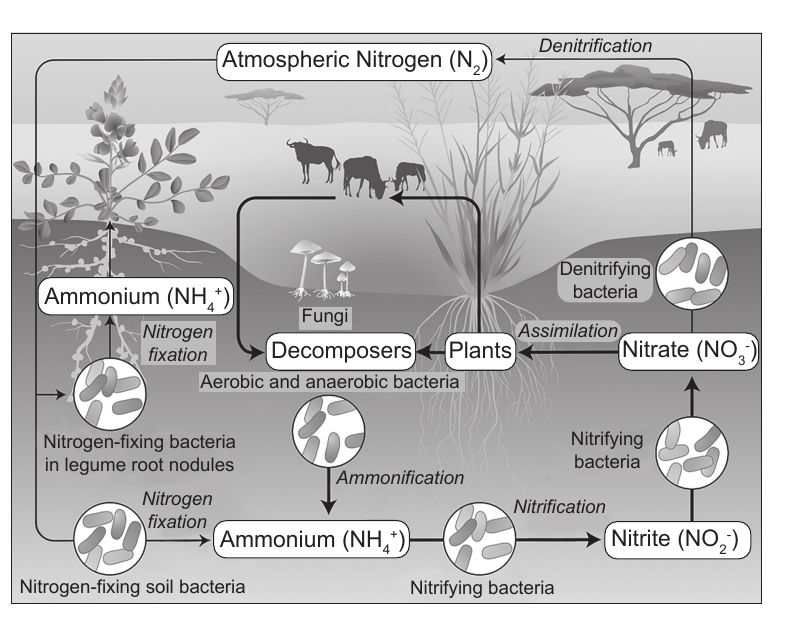
Based on the nitrogen-cycling model described above (see question 31 for full diagram description), which two organisms carry out opposite processes?
- (A) nitrifying bacteria and nitrogen-fixing bacteria in the soil
- (B) nitrogen-fixing bacteria in the soil and nitrogen-fixing bacteria in legumes
- (C) aerobic bacteria and anaerobic bacteria
- (D) denitrifying bacteria and nitrogen-fixing bacteria in the soil ✓
Worked solution
Nitrogen fixation moves nitrogen from the atmosphere into the soil, while denitrification moves it from the soil back into the atmosphere, the reverse process.
Plants can use nitrates from the soil to make amino acids such as alanine (C3H7NO2). Two other substances plants take in from their environment that would provide all of the components to make many alanine molecules are
- (A) carbon dioxide (CO2) and water (H2O) ✓
- (B) carbon dioxide (CO2) and sunlight
- (C) water (H2O) and oxygen (O2)
- (D) glucose (C6H12O6) and oxygen (O2)
Worked solution
Combined with nitrate (the nitrogen source), CO2 and H2O supply the carbon, hydrogen, and oxygen atoms needed to build alanine molecules.
If all of the aerobic and anaerobic bacteria indicated as decomposers in the model were lost from this ecosystem, the most likely effect would be
- (A) a decrease in the carrying capacity for nitrogen-fixing bacteria
- (B) an increase in the number of nitrifying bacteria
- (C) a decrease in the carrying capacity for plants ✓
- (D) an increase in activity of the nitrifying bacteria
Worked solution
Loss of decomposers cuts off a key source of recycled nitrogen (ammonification), reducing nitrogen availability and thus the number of plants the ecosystem can support.
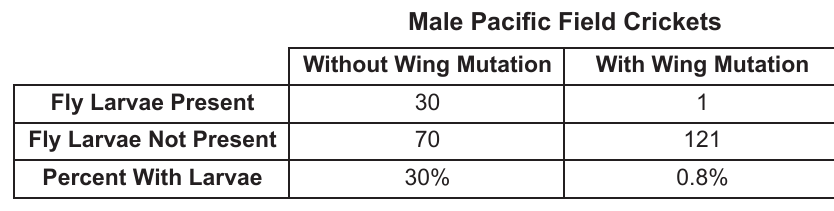
Male Pacific field crickets make a loud song that travels a long distance to attract females. They use their wings to create the sound. On the island of Kauai, the loud calls not only attract mates, but also a specific fly species. The fly deposits larvae on the cricket. As the fly larvae mature, they eat the cricket from the inside out. One summer, observers on Kauai noticed that the crickets were unusually quiet. They also noticed that the wings of these quiet crickets were shaped differently. The scientists hypothesized that the wing mutation helped crickets escape the fly. They collected the following data while testing their hypothesis: Male Pacific Field Crickets data table: Fly Larvae Present: Without Wing Mutation = 30, With Wing Mutation = 1 Fly Larvae Not Present: Without Wing Mutation = 70, With Wing Mutation = 121 Percent With Larvae: Without Wing Mutation = 30%, With Wing Mutation = 0.8% Which statement most accurately describes the relationship between the data and the original hypothesis?
- (A) The data support the hypothesis because crickets with the mutation had fewer fly larvae. ✓
- (B) The data support the hypothesis because crickets without the mutation had a greater percentage of survivors.
- (C) The data do not support the hypothesis because crickets with the mutation had more fly larvae.
- (D) The data do not support the hypothesis because crickets with the mutation had a smaller percentage of survivors.
Worked solution
The much lower percentage of larvae infestation in mutant crickets directly supports the hypothesis that the silent wing mutation helps them avoid the fly.
Scientists have noticed that crickets with the mutation are still able to attract mates. Based on the data (see question 35 for the data table), which prediction is valid if this particular fly remains part of the cricket's environment?
- (A) The number of crickets with the mutation will decrease because the trait is beneficial to them.
- (B) The number of crickets with the mutation will remain the same because the trait is neither beneficial nor harmful.
- (C) The number of crickets with the mutation will increase because the trait gives them an advantage. ✓
- (D) The number of crickets with the mutation will increase because the trait is a disadvantage.
Worked solution
Since the mutated crickets survive better and can still reproduce, natural selection will favor an increase in this trait in the population.
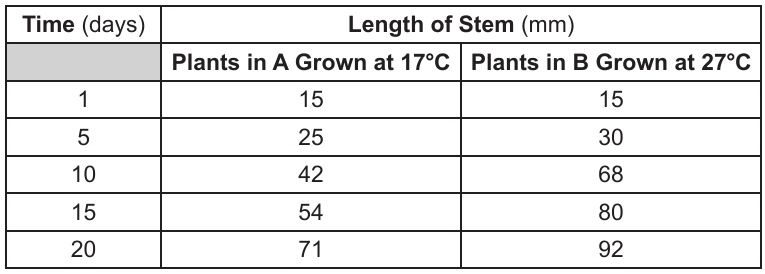
For 20 days, two groups of plants, all with stems of the same length, were grown at two different temperatures. These plants normally grow at a temperature of 25°C. All other environmental conditions were the same. The stem lengths of the plants were measured every five days, averaged, and the data recorded in the table below. Length of Stem (mm): Time (days) 1: Plants in A grown at 17°C = 15, Plants in B grown at 27°C = 15 Time (days) 5: A = 25, B = 30 Time (days) 10: A = 42, B = 68 Time (days) 15: A = 54, B = 80 Time (days) 20: A = 71, B = 92 Scientists claimed that plants growing in the Group A experimental setup at 17°C would be likely to survive if the temperature in their natural environment decreased over time to 17°C. Which statement uses data from the table to support this claim?
- (A) Plants in A survived growing at 17°C in their experimental setup and would therefore be likely to survive. ✓
- (B) Plants in A require less water. This makes them more likely to survive in cooler temperatures.
- (C) Plants in B are growing the most rapidly. A temperature of 17°C will not harm them.
- (D) Plants in B will survive and will grow faster at the cooler temperature.
Worked solution
The only statement that correctly cites the data table (continuous growth of Group A at 17°C over 20 days) as evidence of survival is choice 1; the others reference water use or Group B, which is irrelevant to Group A's survival at 17°C.
Sea Otters at Risk. A single-celled parasite is responsible for the death of a large number of sea otters. Scientists have traced the origin of the parasite to multiple sources, including domestic cat feces. Rain washes some litter box wastes, which contain cat feces, into the ocean kelp forests where sea otters live. Failure to properly dispose of contaminated cat litter is an example of
- (A) one way sea otters are negatively affecting large numbers of household pets
- (B) how humans are preventing a dangerous parasite from reproducing
- (C) a human action that inadvertently could alter the equilibrium in an ecosystem ✓
- (D) the release of a substance that could result in a rapid growth of the sea otter population
Worked solution
The scenario describes an unintended human action (improper waste disposal) introducing a harmful parasite that disrupts ecosystem balance, not otters harming pets or population growth.
Lead in the Environment. Soil contaminated with lead is a source of lead exposure in people and is a worldwide health concern. Scientists examined the relationship between exposure to lead in the topsoil and the occurrence of learning difficulties in children. Soil clings to fingers, toys, and other objects. When young children are exposed to lead, they can experience difficulty with remembering, concentrating, and learning. Lead was used as a gasoline additive until 1996, when it was banned. Emissions from cars and trucks resulted in a buildup of lead in the soil along the side of the road. In a recent study, scientists measured the concentration of lead along sections of the interstate highway system. They then compared the levels of lead in the soil along the side of the road with the number of children in the area experiencing cognitive difficulties. The scientists discovered that where the level of lead in the soil is high, the number of children with learning difficulties is also high. In order to support the claim that lead in the soil can result in learning difficulties in children, the scientists should
- (A) repeat the study comparing lead levels in the soils near rivers with those near highways
- (B) support the passage of laws to eliminate the use of lead additives in gasoline
- (C) determine if high soil concentration of other metals, such as iron, causes learning difficulties in children
- (D) determine if there is a correlation between high levels of lead in the soil and in the blood of children with learning disabilities ✓
Worked solution
To strengthen the causal claim, scientists need evidence connecting lead exposure directly to the children (blood lead levels), not just an environmental correlation with an unrelated metal or location.
After discovering where lead levels in the topsoil are high, what could parents do to reduce the chances of learning difficulties in their children?
- (A) Provide their children with only organic fruits and vegetables.
- (B) Have their children wash their hands after playing outside. ✓
- (C) Have their children attend school in a different part of the community where lead levels are lower.
- (D) Provide their family physician with information about any genetic disorders in the family.
Worked solution
Since lead exposure happens through contact with contaminated soil on hands, regular handwashing is the most direct and practical way to reduce exposure.
Beavers have been migrating north and impacting Arctic ecosystems. By building dams on streams, beavers are creating new bodies of water where there were none. These new bodies of water contribute to the thawing of the frozen permafrost soil, which is a huge natural reservoir of stored greenhouse gases. In a study of beaver dams located on Alaska's Baldwin Peninsula, there was a total of 94 dams in 2010, and by 2019 there was a total of 409 dams. Based on these numbers of beaver dams constructed between 2010 and 2019, a reasonable claim that scientists can make concerning beaver activity in the Arctic is that beavers
- (A) are accelerating the rate of global climate change ✓
- (B) are producing a more stable Arctic ecosystem through dam-building
- (C) have exceeded their carrying capacity in the Arctic
- (D) have caused more soil to freeze during the winter months
Worked solution
More dams mean more thawed permafrost releasing greenhouse gases, supporting the claim that beavers are accelerating climate change rather than stabilizing the ecosystem or freezing soil.
White-tailed deer in New York State breed once a year. The timing of the breeding season and birth of offspring is represented in the chart below. White-Tailed Deer Reproductive Cycle Timeline: a timeline from August through July showing the 'Female deer reproductive cycle' spanning roughly September through June, the 'Deer breeding season' spanning roughly August/September through November/December, and 'Birth of offspring' occurring around April/May. Which statement best helps explain why this breeding cycle is successful for deer?
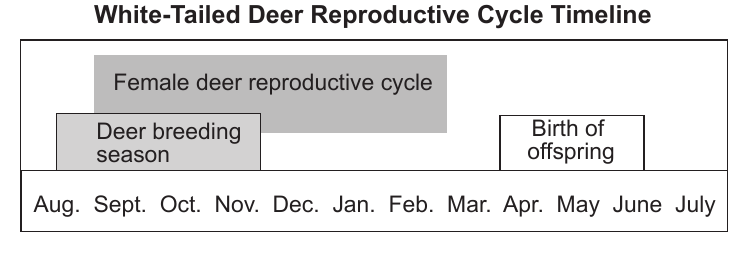
- (A) Giving birth in the spring and early summer ensures that there will be food for the offspring. ✓
- (B) Deer avoid giving birth during the fall hunting season.
- (C) Fall is the only time of the year male and female deer are in the same locations.
- (D) Large deer predators move to cooler locations during the hot summer months.
Worked solution
Timing birth to coincide with spring plant growth maximizes food availability for the doe and fawn, which is the adaptive advantage of this breeding cycle.
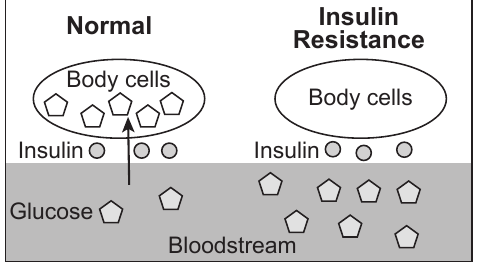
The diagram below represents human body cells and their interactions with the hormone, insulin. It shows two conditions, 'Normal' and 'Insulin Resistance.' In the Normal condition, insulin binds to body cells and glucose moves from the bloodstream into the body cells. In the Insulin Resistance condition, insulin is present but body cells do not respond, and glucose remains in the bloodstream rather than entering the cells. Insulin resistance results when the body produces insulin but cells are not able to respond to it. This resistance could result in
- (A) a lower level of glucose in the bloodstream
- (B) an increase of glucose in the cell
- (C) a failure of glucose to leave the cells
- (D) an increase of glucose in the bloodstream ✓
Worked solution
Because insulin resistance blocks glucose uptake into cells, glucose builds up in the blood rather than decreasing or entering cells.
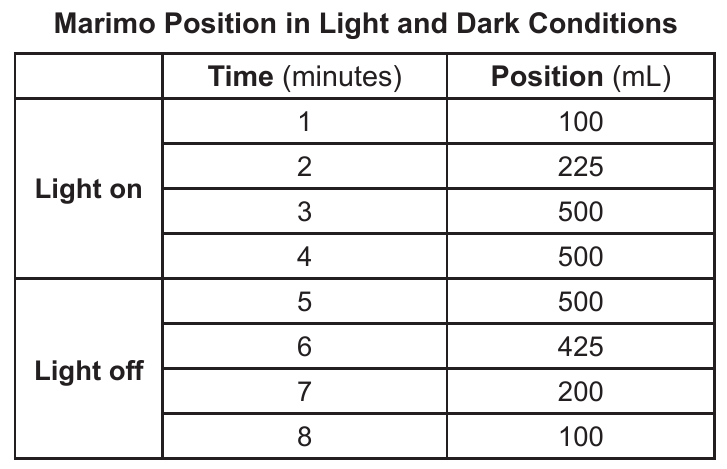
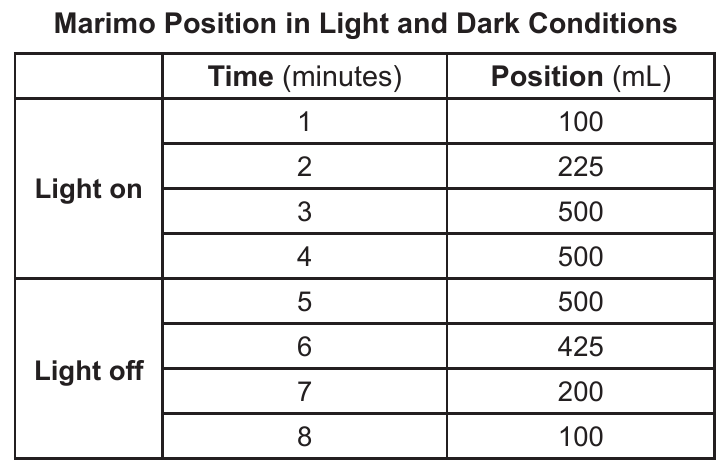
Base your answer on the information below and on your knowledge of biology. Why Do Marimo Balls Float and Sink? Marimo are fuzzy, round balls of a rare algae that is native to some cold, freshwater lakes. They have been observed to float after dawn and sink after dusk. A group of scientists conducted experiments to determine the cause of this floating and sinking action. In one experiment, a marimo ball was placed in a graduated cylinder with 500 mL of water and exposed to light for four minutes. After four minutes, the light was turned off and the marimo was kept in the dark for another four minutes. The position of the marimo was measured each minute by recording the location of the marimo in the graduated cylinder with respect to the mL lines. Marimo Position in Light and Dark Conditions data table: Light on, Time = 1 min, Position = 100 mL Light on, Time = 2 min, Position = 225 mL Light on, Time = 3 min, Position = 500 mL Light on, Time = 4 min, Position = 500 mL Light off, Time = 5 min, Position = 500 mL Light off, Time = 6 min, Position = 425 mL Light off, Time = 7 min, Position = 200 mL Light off, Time = 8 min, Position = 100 mL Directions (44-45): Using the information given in the data table, construct a line graph on the grid provided, following the instructions below. 44 Mark an appropriate scale, without any breaks in the data, on each labeled axis.
Worked solution
An appropriate scale evenly divides each axis into equal intervals that span the full range of the recorded data (0 to 8 minutes; 0 to 500 mL) without skipping or compressing any values.
Directions (44-45): Using the information given in the data table, construct a line graph on the grid provided, following the instructions below. 45 Plot the data on the grid provided. Connect the points and surround each point with a small circle. Data table (Marimo Position in Light and Dark Conditions): Light on: Time 1 min, Position 100 mL; Time 2 min, Position 225 mL; Time 3 min, Position 500 mL; Time 4 min, Position 500 mL. Light off: Time 5 min, Position 500 mL; Time 6 min, Position 425 mL; Time 7 min, Position 200 mL; Time 8 min, Position 100 mL.
Worked solution
This is a graphing task: each data point from the table must be plotted, circled, and connected in sequence to visually represent the marimo's rise during the light period and fall during the dark period.
State the relationship between the light exposure and the position of the marimo balls.
Worked solution
The data table shows the marimo's position increases (rises/floats) during light exposure and decreases (sinks) once the light is turned off, showing floating is linked to light-driven photosynthesis.
The scientists observed that when the marimo were floating, they were covered with tiny bubbles. They hypothesized that these bubbles were products of photosynthesis. Therefore, the bubbles were most likely
- (A) carbon dioxide
- (B) hydrogen
- (C) glucose
- (D) oxygen ✓
Worked solution
Photosynthesis produces oxygen gas as a byproduct, which is released as bubbles; glucose is not a gas and carbon dioxide/hydrogen are not products of photosynthesis.
Describe one advantage to the marimo algal balls having the ability to float during the day.
Worked solution
Being near the surface during daylight maximizes light exposure needed for photosynthesis, giving the marimo a survival/energy advantage.
In order to determine if the floating of marimo was due to photosynthesis, the scientists treated them with DCMU, a chemical that prevents cells from carrying out photosynthesis. The DCMU-treated marimo were exposed to light continuously for 48 hours. No bubbles were observed on the surface of the treated marimo and they did not float. Based on these results, scientists can conclude that
- (A) gas released during photosynthesis causes marimo to float ✓
- (B) warmer temperatures cause marimo to float
- (C) photosynthesis is not responsible for marimo floating
- (D) DCMU treatment increases the ability to float
Worked solution
Since blocking photosynthesis eliminated both bubble formation and floating, the gas produced by photosynthesis (oxygen) must be the cause of floating.
Which inference is reasonable, based on the data in the graph?
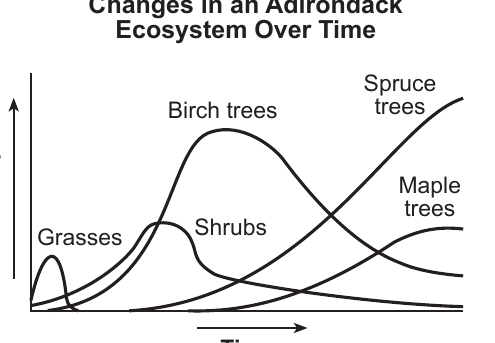
- (A) Spruce grouse, which inhabit spruce forests, became more common over the years. ✓
- (B) Mice and other grassland species remained abundant in the area for many years.
- (C) Birds living in this area in 1995 preferred shrub habitats over heavily wooded habitats.
- (D) Birch trees are likely the most common type of tree species in the area today.
Worked solution
As succession proceeded, spruce trees increased in relative mass, which would support an increase in species like spruce grouse that depend on spruce forest habitat.
Describe how the graph would likely appear 20 or more years after 1995 if the study had continued. Support your answer.
Worked solution
The data show a classic successional pattern; extending the trend, spruce (a climax species) would keep increasing while earlier successional species (birch, shrubs, grasses) would keep decreasing.
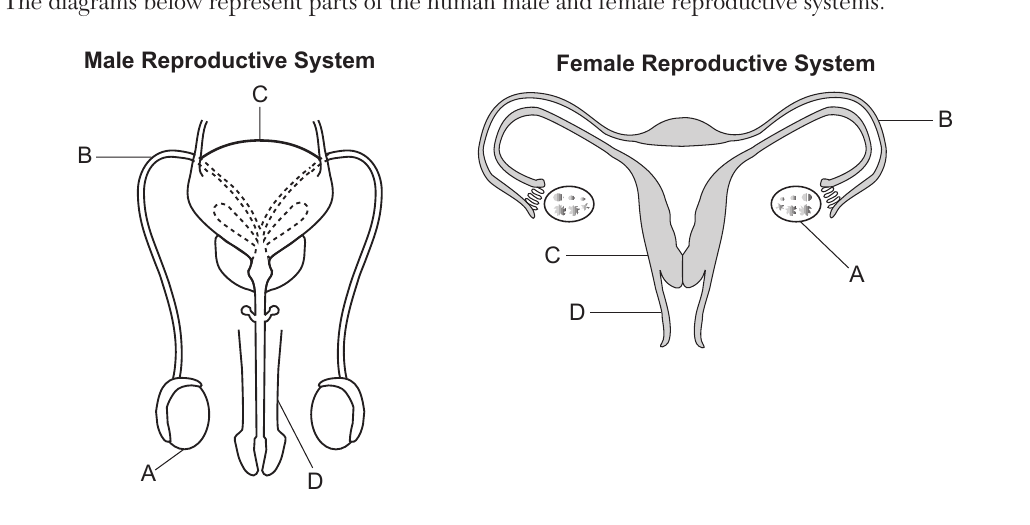
The diagrams below represent parts of the human male and female reproductive systems, with structures labeled A, B, C, D in each diagram. In the male reproductive system diagram, A labels the testis (oval structure at the bottom). In the female reproductive system diagram, A labels the ovary (oval structure at the end of the tube containing egg cells). 52 Identify one process carried out by both structures labeled A.
Worked solution
Both the testis and ovary are gonads that produce gametes (sperm/eggs) via meiosis and also secrete sex hormones.
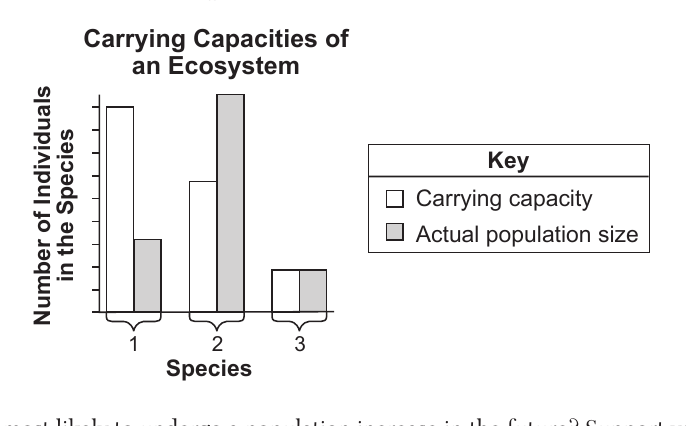
The diagram below represents the carrying capacities of an ecosystem for three different species (1, 2, and 3) and the relative population sizes for each species in the area, shown as a bar graph with a key distinguishing 'Carrying capacity' bars (white) from 'Actual population size' bars (gray). For Species 1, the carrying-capacity bar is tall and the actual-population bar is much shorter. For Species 2, the carrying-capacity bar is shorter than its actual-population bar, which is the tallest bar shown. For Species 3, both bars are short and roughly similar in height. 53 Which species is most likely to undergo a population increase in the future? Support your answer.
Worked solution
A population below its carrying capacity has available resources (food, space) to support further growth, making an increase likely for Species 1.
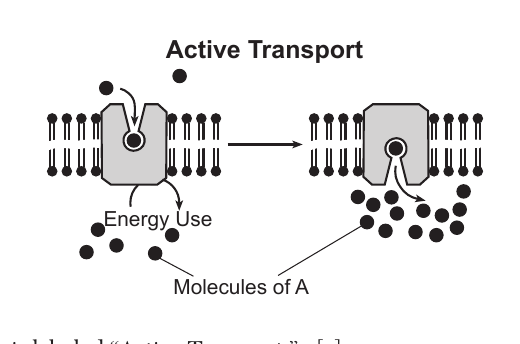
The diagram below represents the active transport of molecules of A through a portion of a cell membrane, labeled 'Active Transport.' It shows a transport protein moving molecules of A from a region where they are less concentrated (few molecules of A outside) to a region where they become more concentrated (many molecules of A accumulate on the other side), with an 'Energy Use' label at the transport protein. 54 Explain why this diagram is labeled "Active Transport."
Worked solution
Movement of a substance against its concentration gradient always requires energy, which is the defining feature of active transport.
The "Energy Use" label involves a specific molecule produced by this cell. Identify this molecule and a cellular process that produces it.
Worked solution
ATP is the energy molecule cells use to power active transport, and it is generated through cellular respiration.
Why Honey Badgers Don't Care. The honey badger, found in parts of India, Africa, and the Middle East, has been identified as "the world's most fearless creature" by the Guinness Book of World Records. Although they are primarily carnivorous, honey badgers consume a wide variety of food: rodents, insects, bee larvae, birds, and fruit. Venomous snakes, including cobras and puff adders, are also favorite items on their menu. As much as 25% of a honey badger's diet consists of venomous snakes with fangs. The adaptation to withstand snake venom has enabled them to be one of the only predators to feast on this source of meat. They hunt fairly slow-moving prey with fangs rather than fast prey with claws and teeth. Snake venom contains more than 100 proteins that could potentially poison a honey badger, meaning that honey badgers need multiple defenses. Scientists have focused their research on a nasty class of molecules in cobra venom called alpha-neurotoxins, that paralyze the muscles associated with breathing. These neurotoxins block a specific receptor and therefore prevent muscle cells from receiving signals from the nervous system. Presently, most antivenoms used to treat snake bites are made of proteins produced by the immune systems of horses and sheep exposed to specific snake venoms. These proteins attack the venom directly in people bitten by a venomous snake. 56 Explain how the ability of honey badgers to eat venomous snakes is an example of a favorable adaptation.
Worked solution
A favorable adaptation increases an organism's chance of survival and reproduction; venom resistance lets honey badgers exploit a unique food source, boosting their fitness.
State why using an antivenom made from horse proteins could result in an allergic reaction.
Worked solution
The immune system can react to any foreign protein it doesn't recognize as part of the body, triggering an allergic reaction, which is why horse-derived antivenom proteins can cause this response in humans.
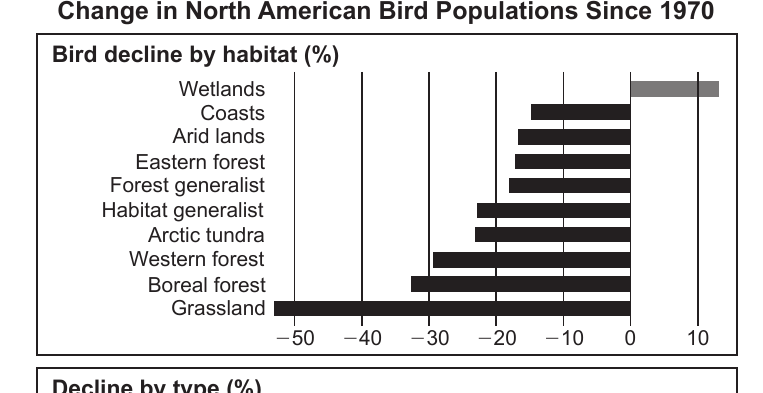
Three Billion North American Birds Have Vanished Since 1970. Recent surveys of 529 bird species revealed that since 1970 the North American continent lost 3 billion birds, 29% of the total. Birds are excellent indicators of environmental health and are vital to ecosystems. Common bird species control insects, pollinate flowers, spread seeds, and help regenerate forests. As a result, when these birds disappear, their former habitats are not the same. 58 Explain why the decline in some North American bird populations is having a negative effect on ecosystems.
Worked solution
Since birds provide key ecological services, their decline removes checks on insect populations and reduces pollination/seed dispersal, harming overall ecosystem stability.
Identify the habitat that has had the greatest decline in birds since 1970, and describe a cause of the loss of birds in that habitat.
Worked solution
The bar graph shows grassland habitats with the steepest decline, and the passage identifies converting grasslands into farmland and pesticide use as major causes.
The bobolink is a small blackbird whose population has undergone a decline of 75% in some regions. These birds nest in fields of tall grass during the summer across the northern United States and migrate long distances to winter in southern South America. 60 Describe an action people might take that could reduce the decline in the bobolink population.
Worked solution
Protecting the tall-grass nesting habitat, such as by timing hay mowing after nesting season, reduces destruction of nests and helps sustain the bobolink population.
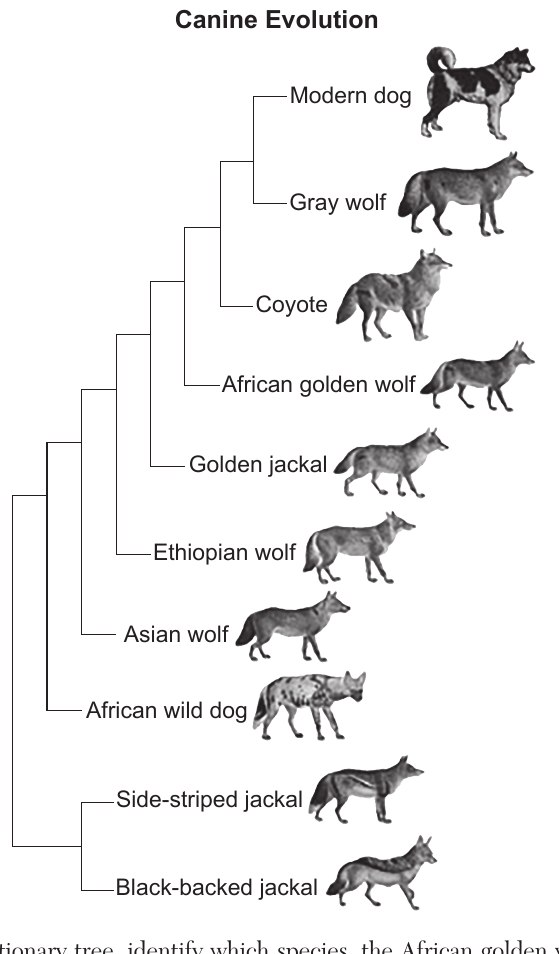
New research comparing the anatomy and behavior of dogs and wolves found that dogs have small facial muscles around their eyes which allow them to raise their inner eyebrow. This makes their eyes appear larger and more infant-like. Wolves do not have these muscles. Scientists hypothesize that dogs expressing this "puppy-dog eye" trait unconsciously stimulate a desire in humans to take care of them. Examine the evolutionary tree (cladogram) of modern dogs and their relatives below, titled 'Canine Evolution,' branching in order from the most recent branch point down to the base: Modern dog, Gray wolf, Coyote, African golden wolf, Golden jackal, Ethiopian wolf, Asian wolf, African wild dog, Side-striped jackal, Black-backed jackal. 61 According to the evolutionary tree, identify which species, the African golden wolf or the modern dog, is most closely related to the gray wolf. Support your answer with evidence from the evolutionary tree.
Worked solution
In a cladogram, species that share the most recent common ancestor (closest branch point) are the most closely related; the modern dog branches off closest to the gray wolf.
Explain how genes for a trait such as puppy-dog eyes in domesticated dogs could have increased in frequency over time.
Worked solution
This is an example of selection (here, driven by human preference) where individuals with a favorable trait reproduce more successfully, increasing the trait's frequency in the population over time.
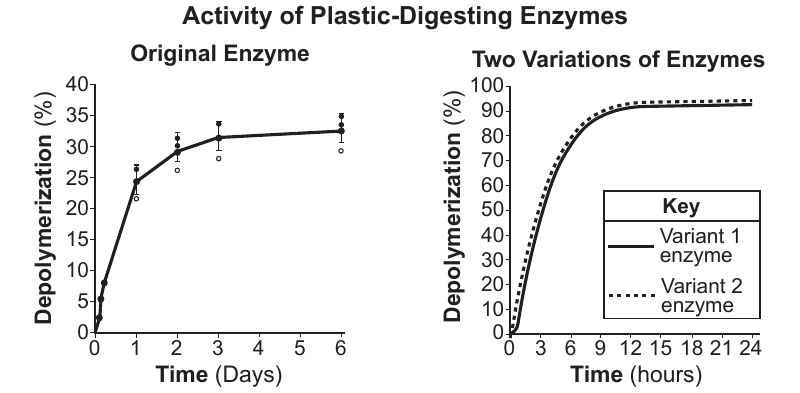
Breaking Down Plastics. Researchers collected soil contaminated with specific plastics outside a plastic bottle recycling facility. They discovered a type of bacterium in the soil that was able to depolymerize (break down) and use these plastics as a source of nutrition. A bacterial enzyme that could digest large molecules of plastic into their building blocks was isolated. Those building blocks can be used to produce new plastic products. Scientists have been working to improve the efficiency of this enzyme by altering the specific molecules the bacteria need to code for the synthesis of the enzyme. Using this method, many variations of the enzyme were produced by the altered bacteria, and these variants were tested. The graphs below show a comparison of the activity of the original enzyme and two variants produced by the scientists. Graph 1, 'Original Enzyme,' shows Depolymerization (%) rising from 0 to about 32-35% over 6 days. Graph 2, 'Two Variations of Enzymes,' shows Variant 1 enzyme and Variant 2 enzyme both rising to about 90% depolymerization within about 12-24 hours. 63 Using evidence from the graphs, support the claim that the scientists were successful in developing a more efficient enzyme.
Worked solution
Efficiency is measured by how much plastic is broken down and how quickly; the variant enzymes achieved a much higher percent depolymerization in a much shorter time than the original enzyme.
Describe a technique the scientists most likely would use to alter the specific molecules in the bacteria referred to in the reading.
Scientists are studying a species of bacteria that naturally produces an enzyme. Like all enzymes, this enzyme is a protein built from a specific sequence of amino acids, and that sequence is coded for by a specific gene in the bacteria's DNA. The researchers want to produce variant forms of the enzyme that have slightly different amino acid sequences so they can test which version works best. To make these variants, they need to change the specific gene in the bacteria that codes for the enzyme.
Worked solution
Since enzymes are proteins coded for by genes, scientists would use a genetic engineering technique (like CRISPR gene editing) to change the DNA sequence coding for the enzyme, producing variant enzymes.
Explain how using these modified enzymes can benefit the environment.
Worked solution
A faster, more efficient plastic-digesting enzyme reduces the amount of plastic waste polluting the environment and allows the breakdown products to be reused, benefiting the environment.
Explain why these enzymes will break down specific plastics but not react with other substances.
Worked solution
Enzyme specificity arises from the complementary shape between an enzyme's active site and its particular substrate, so only molecules matching that shape (the target plastic) will bind and react.
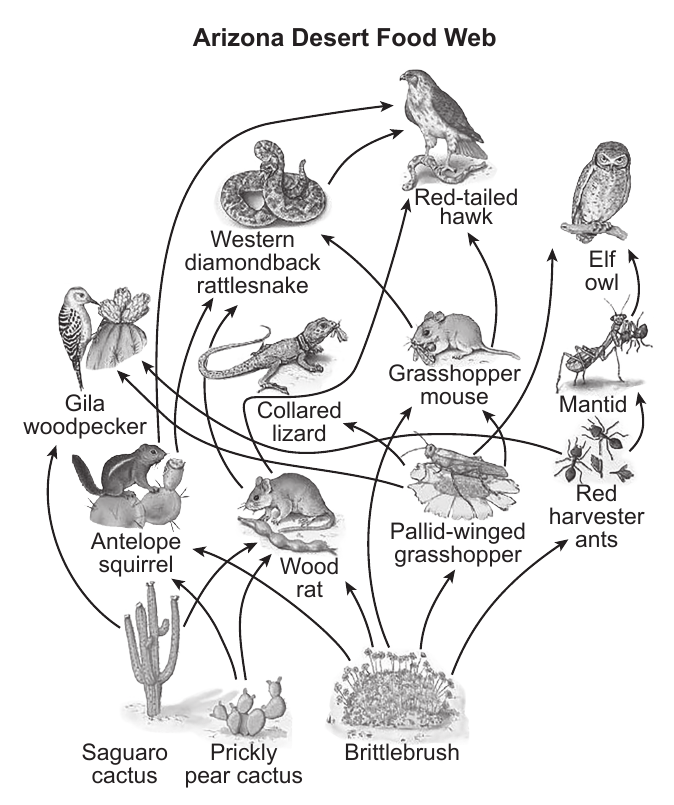
Base your answers to questions 67 through 69 on the partial Arizona desert food web represented below and on your knowledge of biology. Desert food webs are complex and often contain more food chains than a grassland or forest food web. This is important to the stability of the desert ecosystem. Relationships between organisms can be described as positive, negative, or neutral. Positive relationship: Both species benefit. Negative relationship: Either species would benefit if the other species were no longer present. Neutral relationship: The species have no effect on each other. 67 Identify the type of relationship between the collared lizard and the grasshopper mouse as positive, negative, or neutral. Support your answer with information from the food web.
Worked solution
Two consumers that feed on the same prey species are competitors; removing one would free up more of the shared food source for the other, fitting the definition of a negative relationship.
People often want to remove top-level predators from an ecosystem. There are a number of reasons for this, depending on the area and the predator. Explain how removing the red-tailed hawk would affect the prickly pear cactus population in this food web. Support your answer with information from the food web.
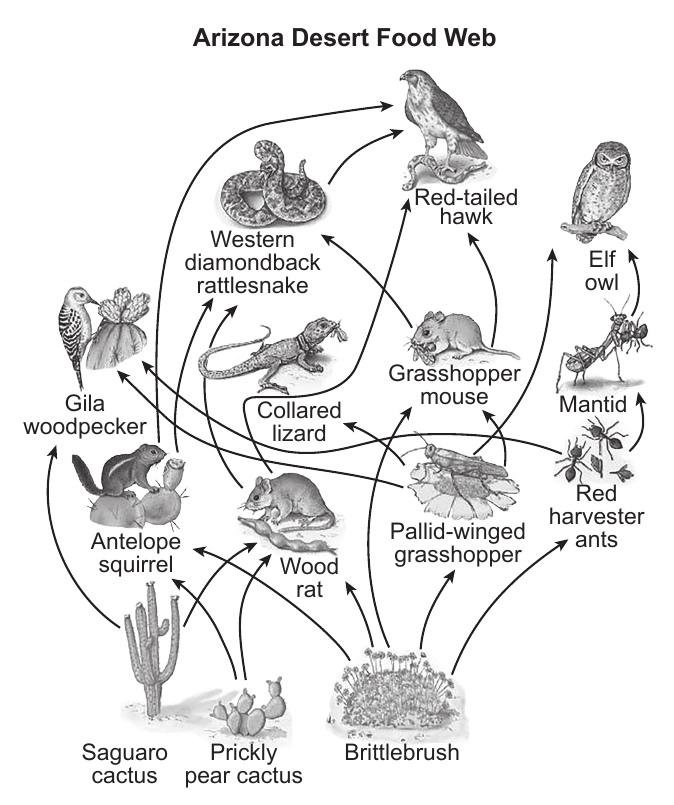
Worked solution
Removing a top predator triggers a trophic cascade: prey populations grow unchecked and increase pressure on the producers those prey consume.
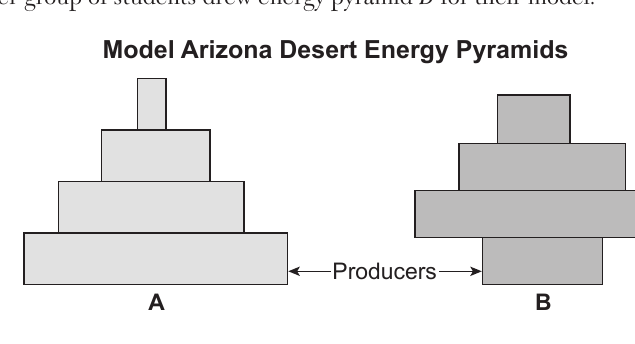
One group of students drew energy pyramid A to model where the energy is located in the Arizona desert food web. Another group of students drew energy pyramid B for their model. 69 If energy pyramid B actually represents what is happening in that area of the desert, explain what would eventually happen and why.
Worked solution
An inverted or top-heavy energy pyramid is unsustainable because energy availability decreases at each higher trophic level; without enough energy input from below, upper-level populations must decrease.
In 1980 the red wolf was declared extinct in the wild. Only one small captive population survives in North Carolina. Recently a group of canines resembling coyotes but with red fur were discovered on an island near Texas. They are clearly a kind of coyote, but could possibly contain some red wolf genetic material. 70 Scientists suggest that breeding the red-coated coyotes that might contain genetic material could help increase diversity within the existing red wolf population in North Carolina. Explain why increasing the diversity in the red wolf population could be beneficial to the species.
Worked solution
Genetic diversity is the raw material for natural selection; a more diverse population is more resilient to environmental change and less vulnerable to the negative effects of inbreeding.
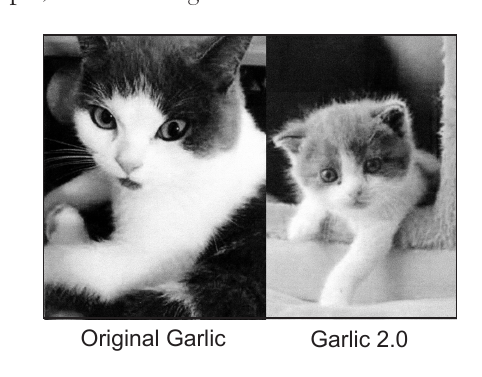
Base your answers to questions 71 and 72 on the information below and on your knowledge of biology. A cat owner was devastated by the death of his beloved cat, Garlic. He contacted a cloning company that was able to produce Garlic 2.0 using DNA from preserved cells of the original cat. However, the client was disappointed to see that while Garlic 2.0 was very similar to his original pet, there were slight differences in the cloned cat's appearance. 71 Other than age or an error in the cloning process, describe one factor that could have led to the differences observed in Garlic 2.0, as compared to the original cat.
Worked solution
Genetically identical organisms can still show phenotypic differences because gene expression is influenced by environmental conditions during development, not just the underlying DNA sequence.
The embryo that became Garlic 2.0 was implanted into another cat, a surrogate mother. 72 Explain why scientists claimed that the surrogate mother did not determine the genetic makeup of the Garlic 2.0 embryo.
Worked solution
Surrogacy involves gestation only; the genetic information of a clone comes solely from the donor nucleus, not from the surrogate that carries the pregnancy.
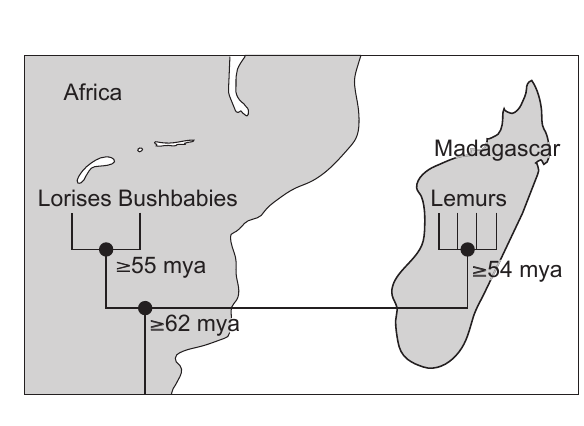
Lemurs of Madagascar Lemurs are primates found only on the island of Madagascar, which is located about 250 miles off the coast of Africa. The ancestral species of lemurs arrived 40-50 million years ago (mya), long after Madagascar became an island. Since the arrival of the single ancestral species on Madagascar, there are now over 100 species of lemurs. Which statement is a likely explanation for the current diversity of lemurs?
- (A) Genetic variation was limited because they were living on an island.
- (B) There were no natural predators and many available niches. ✓
- (C) Competition between lemurs stopped natural selection.
- (D) Habitats were destroyed after the arrival of humans.
Worked solution
Isolation on an island with abundant unfilled niches and no natural predators allows a single founding species to diversify rapidly into many species through adaptive radiation.
Which is an example of physical evidence that could be used to support a possible evolutionary relationship among lemur species?
- (A) similar amino acids
- (B) similar social behaviors
- (C) similar food choices
- (D) similar skeletal structures ✓
Worked solution
Homologous skeletal structures are classic physical evidence used to infer evolutionary relatedness among species, unlike behavioral or molecular comparisons.
Drastic environmental changes are occurring on an island. Which graph below best represents the variation in finch beak sizes that would most likely provide the greatest chance for survival?
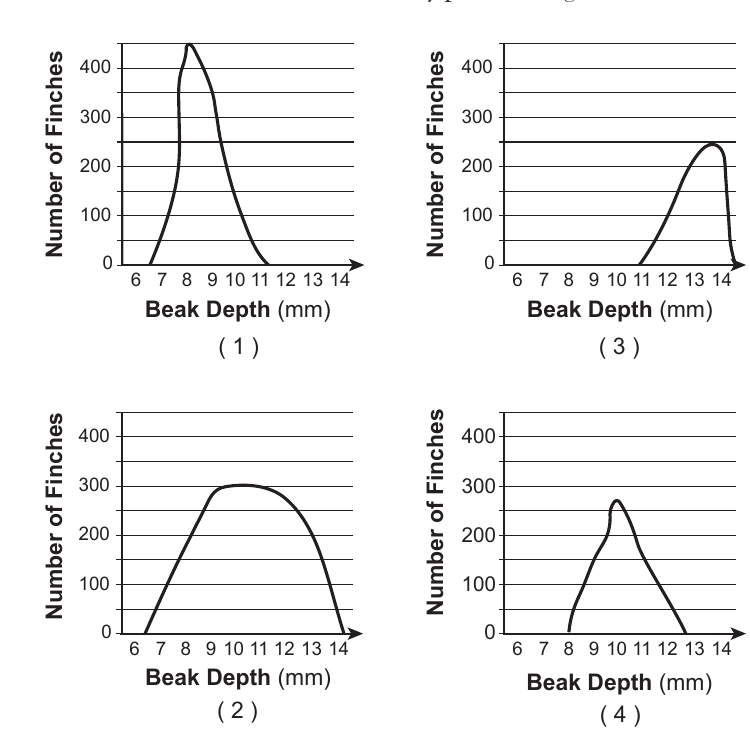
- (A) Graph (1): narrow tall peak centered around 8mm beak depth
- (B) Graph (2): broad peak spanning about 6mm to 14mm beak depth, centered near 10-11mm ✓
- (C) Graph (3): peak centered around 13mm beak depth
- (D) Graph (4): narrower peak centered around 9-10mm beak depth
Worked solution
Populations with greater phenotypic variation are more likely to contain individuals with traits (here, beak depth) suited to new environmental conditions, increasing the population's overall chance of survival.
The chart below compares some of the characteristics of four different plant species. Comparison of Four Plant Species | Plant Species | Flower Color | Enzyme X Present | Leaf Shape/Color | Number of Flower Petals | |---|---|---|---|---| | A | blue | yes | oval/dark green | 7 | | B | blue | no | oval/yellow green | 5 | | C | red | yes | oval/dark green | 7 | | D | red | no | oval/dark green | 5 | According to the information provided in the chart, which two plant species appear to be the most closely related?
- (A) A and B
- (B) B and D
- (C) C and A ✓
- (D) D and C
Worked solution
Species A and C share enzyme presence, leaf shape/color, and petal number, differing only in flower color, making them the most similar and therefore most likely closely related pair.
Base your answers to questions 77 and 78 on the information below and on your knowledge of biology. A gene segment from a species of plant has the following sequence: ATTCCGGATCGATCGCCGGATATACTCCGGTAATATC 77 This segment was cut with a restriction enzyme that recognizes CCGG and cuts between the C and G. The fragments were then analyzed using gel electrophoresis. How many bands would you expect to appear on the gel?
Worked solution
Locating all three CCGG recognition sites shows the enzyme makes 3 cuts, producing 4 fragments of different sizes, which appear as 4 separate bands on the gel.
Once the gel is running, explain why the segments would move different distances in the gel.
Worked solution
Gel electrophoresis separates DNA fragments by size because smaller fragments migrate faster/farther through the gel matrix than larger fragments under the same electric field.
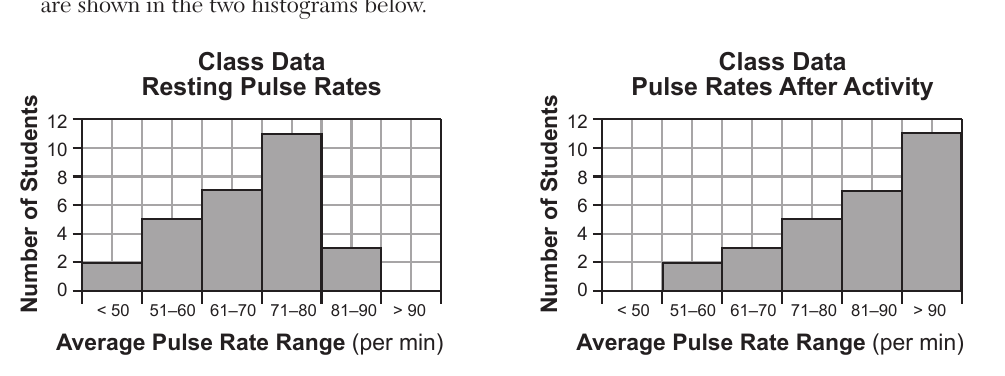
Students in a class performed an experiment. They recorded their resting pulse rates. Then, they ran in place and immediately recorded their pulse rates again. The data obtained are shown in the two histograms below. Class Data - Resting Pulse Rates (Number of Students by Average Pulse Rate Range, per min): <50: 2, 51-60: 5, 61-70: 7, 71-80: 11, 81-90: 3, >90: 0 Class Data - Pulse Rates After Activity (Number of Students by Average Pulse Rate Range, per min): <50: 0, 51-60: 2, 61-70: 3, 71-80: 5, 81-90: 7, >90: 11 79 State one hypothesis about the effects of exercise on pulse rate.
Worked solution
A hypothesis should be a testable statement predicting a relationship between exercise and pulse rate, supported by the shift in the data from lower to higher pulse rate ranges after activity.
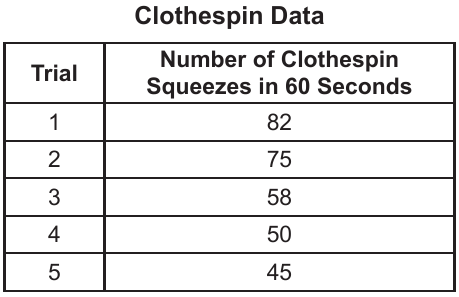
A student in a biology class squeezed a clothespin as many times as possible in a 60-second period. After resting for 20 seconds, they then repeated the experiment, for a total of five trial periods of 'squeezing/resting.' The student recorded their experimental data in the table below. Clothespin Data | Trial | Number of Clothespin Squeezes in 60 Seconds | |---|---| | 1 | 82 | | 2 | 75 | | 3 | 58 | | 4 | 50 | | 5 | 45 | The student reported feeling some burning in their finger muscles after squeezing the clothespin. The teacher explained that the burning sensation may have been due to a buildup of waste products in the finger muscles. 80 Predict the number of clothespin squeezes expected if the student had performed a sixth trial. Support your answer.
Worked solution
Because muscle fatigue increases as waste products accumulate with repeated exertion, the decreasing trend seen across trials 1-5 would be expected to continue into a sixth trial, yielding a number of squeezes below 45.
A recent newspaper headline read, 'Expert Warns About Effect of Rock Salt on Plants.' The de-icing chemical, rock salt, has been used on highways for years. The concern expressed by the expert is most likely that
- (A) the salt will enter the plants and make them too salty and unusable as food
- (B) the presence of salt in the environment will cause the plants to lose water ✓
- (C) de-icing chemicals always present a safety risk to humans
- (D) plants respond more rapidly to salt in colder temperatures
Worked solution
Excess salt in soil disrupts the normal osmotic balance, drawing water out of plant cells and causing dehydration, which is the key homeostatic concern with road salt runoff.
Some runners prepare for a race by completing a variety of warmups. These exercises are beneficial because they
- (A) can prevent the production of carbon dioxide in muscle cells
- (B) speed up the breakdown of protein that is released during respiration
- (C) reduce the need for water in muscle cell metabolism
- (D) can increase the flow of blood within the body ✓
Worked solution
Warmups increase circulation, improving oxygen and nutrient delivery to muscles and waste removal, which is why increased blood flow is the correct benefit described.
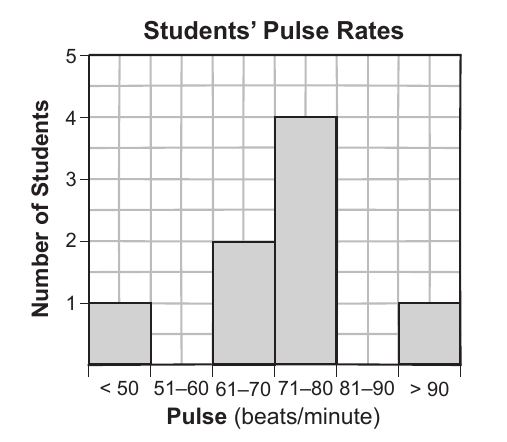
A group of students took their pulse rates. The results are shown in the graph below. Students' Pulse Rates (Number of Students by Pulse in beats/minute): <50: 1, 51-60: 0, 61-70: 2, 71-80: 4, 81-90: 0, >90: 1 A student wrote the hypothesis, 'Students who smoke tend to have a higher pulse rate than students who do not smoke.' 83 What additional information is needed to test the student's hypothesis?
Worked solution
Testing a hypothesis comparing smokers and non-smokers requires knowing each subject's smoking status so pulse rate data can be grouped and compared between the two categories.
Base your answers to questions 84 and 85 on the diagram below and on your knowledge of biology. The diagram illustrates different finch species living in a certain area. Warbler finch: probing bill, insect eater, feeds in trees Woodpecker finch: probing bill, insect eater, uses twig or cactus spine to remove insects from cactus Mangrove finch: grasping bill, insect eater, feeds in trees Vegetarian finch: crushing bill, cactus-seed eater 84 If the common ancestor of the four finches originally lived on an island with few trees, little rain, and very few insects, identify which finch it might most likely resemble and support your answer.
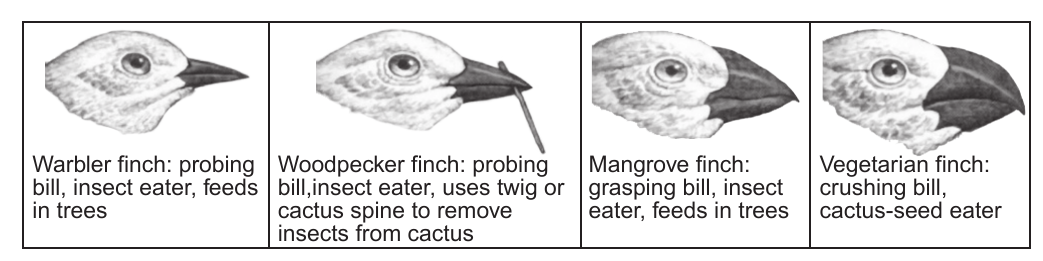
Worked solution
An ancestor in an environment lacking trees, rain, and insects would need a food source independent of those resources; cactus seeds (eaten by the vegetarian finch) fit a dry, cactus-dominated habitat.
Identify the finch in the diagram most likely to compete with the mangrove finch. Support your answer.
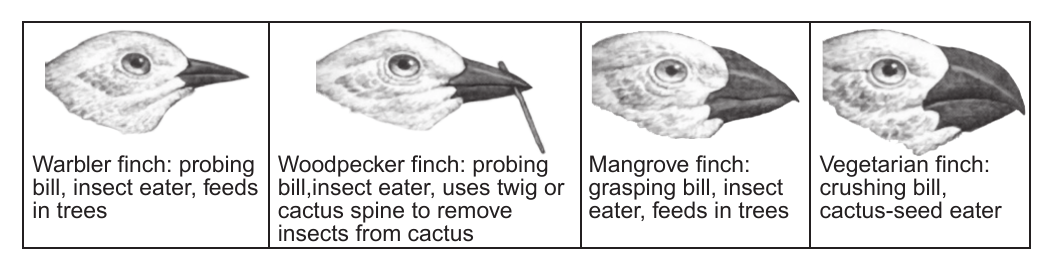
Worked solution
Organisms occupying the same niche, here insect-eating birds that forage in trees, compete for the same limited resources, making the warbler finch the closest competitor to the mangrove finch.