June 2023 Living Environment Regents — Answer Key & Worked Solutions
Every question from the June 2023 Living Environment Regents exam, with the correct answer and a full step-by-step solution. Check your work, learn the method, then convert your raw score.
These are real questions from the June 2023 Living Environment New York State Regents examination, published by NYSED. Worked solutions are written by RegentsLab.
Which two body systems provide humans with the raw materials necessary for their cells to release energy?
- (A) muscular and skeletal
- (B) endocrine and nervous
- (C) digestive and respiratory ✓
- (D) reproductive and circulatory
Worked solution
Cells release energy through cellular respiration, which requires glucose (supplied by digestion) and oxygen (supplied by respiration).
An example of an activity that best contributes to maintaining homeostasis in an organism is a
- (A) bear eating fish from a polluted stream
- (B) deer losing its fur at the start of winter
- (C) person not sweating on a 100°F day
- (D) response to a chickenpox vaccination ✓
Worked solution
Producing antibodies in response to a vaccine helps the body maintain a stable, healthy internal state, unlike the other choices which represent harmful or disrupted conditions.
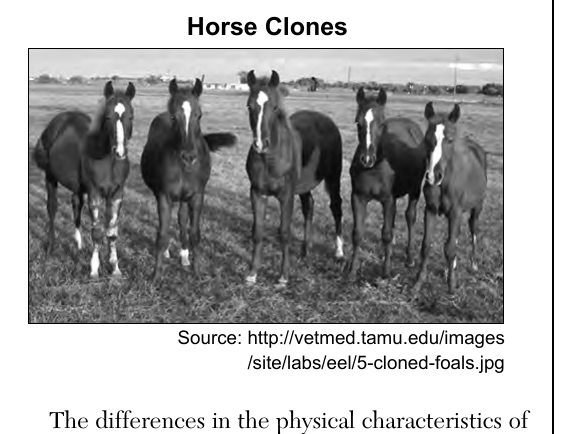
Equine cloning can be used to produce performance horses. Although the horses are clones of each other, they may still exhibit slight differences in appearance. The differences in the physical characteristics of the cloned horses are most likely the result of
- (A) environmental influences ✓
- (B) natural selection
- (C) sexual reproduction
- (D) changes in gametes
Worked solution
Since the clones have identical genes, any differences in their appearance must come from environmental factors rather than genetic ones.
Which situation is an example of an organism responding to an abiotic factor?
- (A) Plants in a forest grow toward areas where there is more sunlight available. ✓
- (B) Rabbits attract mates by performing a mating dance.
- (C) Woodpeckers peck holes in the trunks of trees to find insects for food.
- (D) Deer eat tree bark in winter when food is scarce.
Worked solution
Sunlight is a nonliving (abiotic) factor, so plants growing toward it is a direct response to an abiotic factor, unlike the other choices which involve responses to other organisms (biotic factors).
CRISPR/Cas9 is a powerful system that bacteria use to cut and remove DNA from invading viruses. Using CRISPR/Cas9, researchers have successfully corrected a disease-causing mutation for muscular dystrophy in laboratory mice. Correcting the harmful mutation using CRISPR/Cas9 is an example of
- (A) biological evolution
- (B) cloning techniques
- (C) genetic engineering ✓
- (D) selective breeding
Worked solution
Directly altering an organism's DNA using a tool like CRISPR/Cas9 to fix a mutation is genetic engineering, not selective breeding, cloning, or natural evolution.
Many animal populations living in a particular area would most likely
- (A) occupy the same niche
- (B) have similar physical requirements ✓
- (C) eat the same food
- (D) require an input of solar energy
Worked solution
Populations sharing the same area must tolerate similar physical conditions (temperature, water, oxygen), while occupying the same niche or eating identical food would cause direct competition that is not sustainable for both.
Cells possess structures that perform specific jobs. Which statement correctly pairs a cell structure with a function it performs in the cells?
- (A) The cell membrane synthesizes proteins for cell processes.
- (B) The mitochondria provide energy for cell processes. ✓
- (C) Ribosomes regulate which materials enter and leave the cell.
- (D) Vacuoles transfer genetic information from one cell to another.
Worked solution
Mitochondria carry out cellular respiration to release energy (ATP) for the cell; the other pairings describe incorrect functions for those organelles.
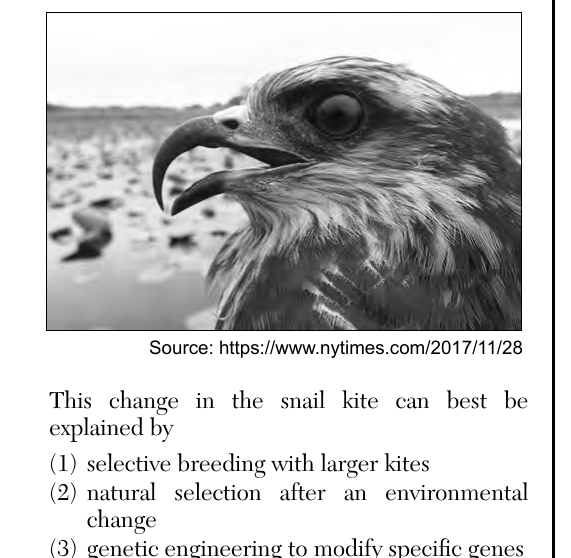
The endangered Everglade snail kite is a predatory bird which usually feeds on small snails. Conservationists feared the snail kite would face a greater decline when the Everglades was invaded by a species of larger snail that the birds had historically struggled to eat. But the snail kite population increased over several years, and the snail kites now have larger beaks and bodies. This change in the snail kite can best be explained by
- (A) selective breeding with larger kites
- (B) natural selection after an environmental change ✓
- (C) genetic engineering to modify specific genes
- (D) ecological succession due to random mutation
Worked solution
The arrival of larger snails changed the environment, and kites with larger beaks and bodies were better able to survive and reproduce, so this trait became more common through natural selection.
Scientists turned a specialized stomach cell from a mouse into a skin cell by activating a specific gene responsible for the production of skin cells. Which claim can be made, based on this evidence?
- (A) Stomach cells have the genetic information to form other types of cells. ✓
- (B) Skin and stomach cells produce identical proteins.
- (C) Stomach cells receive half their genetic information from each parent.
- (D) Skin and stomach cells have completely different genes.
Worked solution
Since activating a single gene changed a stomach cell into a skin cell, the stomach cell must have already contained the genetic information needed to become a skin cell.
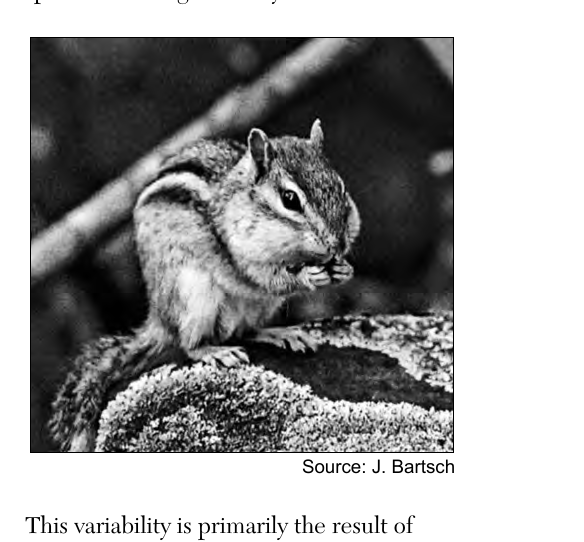
New York State is home to animals such as the Eastern chipmunk. Individuals within this species are not genetically identical. This variability is primarily the result of
- (A) asexual reproduction and mutation
- (B) mitosis and selective breeding
- (C) meiosis and recombination ✓
- (D) sexual reproduction and cloning
Worked solution
Genetic variability among individuals of a sexually reproducing species comes mainly from meiosis and the recombination of genetic material it produces.
Zebra mussels are aquatic animals found in many bodies of fresh water in New York State. These organisms are not native to North America. When these mussels first appeared, their populations increased rapidly, which led scientists to fear their potential impact on native species. Lately, it has been observed that the rate of population growth of the zebra mussels has decreased. A reason for this decrease may be
- (A) resources needed for the continued growth of their population are limited ✓
- (B) competition between zebra mussels for limited resources has decreased
- (C) the food available for zebra mussels has decreased, reducing their rate of photosynthesis
- (D) a lack of natural predators and disease-causing organisms in their new environment
Worked solution
As a population grows, limited resources such as food and space cause the growth rate to slow as it approaches the carrying capacity of the environment.
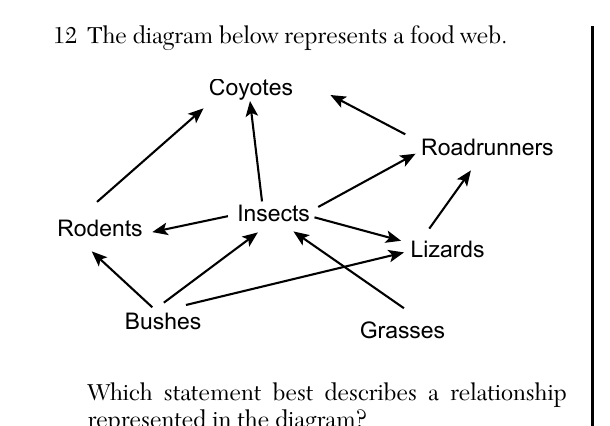
The diagram below represents a food web. Bushes point to Insects and to Rodents. Grasses point to Insects and to Lizards. Rodents point to Coyotes and to Insects. Insects point to Coyotes, to Roadrunners, and to Lizards. Lizards point to Roadrunners. Which statement best describes a relationship represented in the diagram?
- (A) Bushes are herbivores that feed on insects.
- (B) Rodents are consumers that feed on lizards.
- (C) Roadrunners are carnivores that feed on insects. ✓
- (D) Grasses are producers that are eaten by lizards.
Worked solution
An arrow points from Insects to Roadrunners in the food web, showing that roadrunners are carnivorous consumers that feed on insects.
Cell membranes inside the cells that line the stomach pump hydrogen ions from areas of low concentration inside the cells to areas of higher concentration outside the cells. Which activity produces the ATP that makes this pumping possible?
- (A) cellular respiration ✓
- (B) active transport
- (C) carbohydrate digestion
- (D) enzyme synthesis
Worked solution
Pumping ions against their concentration gradient requires energy in the form of ATP, which is produced through cellular respiration.
If scientists wanted to study the physical characteristics of an extinct animal that once lived in a specific area, the best source of information would be to investigate
- (A) plants living in habitats similar to those of long ago
- (B) the producer organisms living in that area at the current time
- (C) the animals that live in that area today
- (D) the fossil record of that area ✓
Worked solution
Because the animal is extinct, direct evidence of its physical characteristics can only come from fossils, not from currently living organisms.
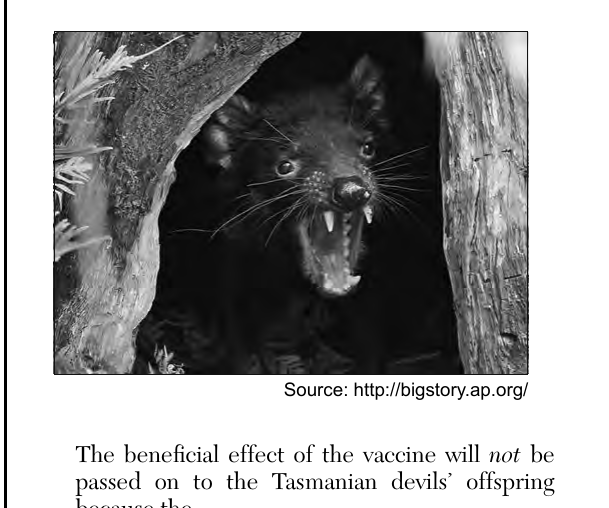
Tasmanian devils are predators found on the Tasman Peninsula of Australia. Their numbers were greatly reduced after two forms of contagious cancer appeared in the population. Scientists have found an effective cancer vaccine that has saved a number of adult Tasmanian devils. The beneficial effect of the vaccine will not be passed on to the Tasmanian devils' offspring because the
- (A) vaccine contained only a small amount of the cancer
- (B) cancer can mutate, and the vaccine would then be ineffective
- (C) cancer caused the body of the adults to produce antigens against it
- (D) vaccine did not produce a change in the sex cells of the adults ✓
Worked solution
Traits are only passed to offspring through changes in sex cells; since the vaccine does not alter the DNA of the sex cells, its protective benefit is not inherited.
Usually, snakes reproduce sexually. However, some female copperhead snakes sometimes produce offspring asexually without sperm from a male. Compared with snakes formed by sexual reproduction, the offspring of these asexually reproducing snakes
- (A) have more genetic variation
- (B) have limited genetic variation ✓
- (C) contain more DNA than the parent
- (D) grow larger than the parent
Worked solution
Because asexual reproduction does not combine genetic material from two parents, the offspring have much less genetic variation than offspring produced sexually.
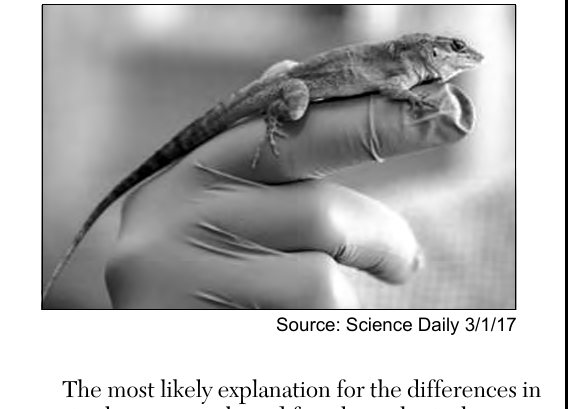
The brown anole is native to Cuba and the Bahamas. Males and females of the species share most of the same genes. They are the same size when they hatch out of their eggs. However, during the first year, the males grow to be three times larger than the females. The most likely explanation for the differences in size between male and female anoles is that
- (A) male organisms are always larger than the female members of a species
- (B) the males developed for a longer period of time
- (C) the females mutated during hatching, reducing their ability to grow
- (D) hormones can affect gene expression ✓
Worked solution
Since males and females share nearly identical genes but grow very differently, the difference must result from hormones causing different genes to be expressed (turned on or off), not from different genetic information.
Myasthenia gravis is an autoimmune disease characterized by weakness of the skeletal muscles. It occurs when normal communication between nerve and muscle cells is interrupted. The weakness is likely due to
- (A) the lack of ATP in the muscle caused by a decrease of available carbon dioxide
- (B) the brain failing to send the proper hormone signal to vacuoles within muscle cells
- (C) the failure of receptor molecules on the muscle to receive the chemical produced by nerve cells ✓
- (D) the ribosomes in the muscle cells failing to produce enough sugar for muscle contraction
Worked solution
Since the disease involves interrupted communication between nerve and muscle cells, the problem lies in the muscle cell receptors failing to properly receive the chemical signal released by nerve cells.
The removal of a short sequence of bases from a gene would most directly affect the
- (A) diffusion of materials into a cell
- (B) shape of a protein molecule ✓
- (C) pH of the cytoplasm
- (D) size of a cell's nucleus
Worked solution
Since genes code for the amino acid sequence of proteins, removing bases from a gene changes that sequence and therefore the resulting protein's shape.
As energy moves through a forest ecosystem, it flows from
- (A) heterotrophs to autotrophs
- (B) animals to plants
- (C) herbivores to carnivores ✓
- (D) carnivores to autotrophs
Worked solution
Energy flows one direction through an ecosystem, from producers to herbivores and then to carnivores, never in the reverse direction as in the other choices.
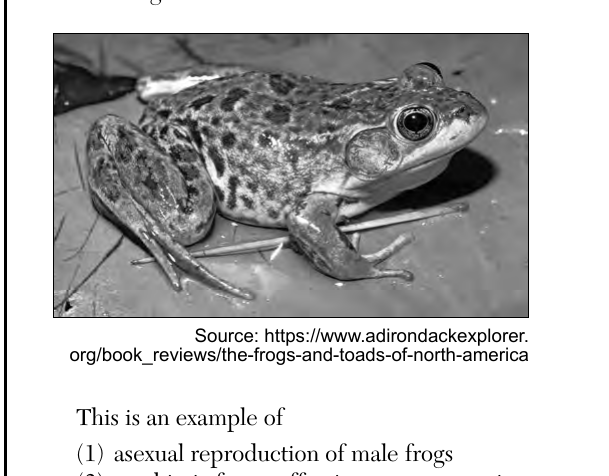
Each winter in the Adirondack Mountains, some of the salt applied to roadways gets washed into lakes. The increase in salt levels in areas where frogs breed has resulted in more male frogs hatching than females. This is an example of
- (A) asexual reproduction of male frogs
- (B) an abiotic factor affecting gene expression ✓
- (C) the normal expression of a gene for female frogs
- (D) loss of genetic information for male frogs
Worked solution
The increased salt in the water is a nonliving (abiotic) environmental factor that is influencing which sex-determining genes are expressed, resulting in more males hatching.
Which substances usually stimulate an immune response?
- (A) antibodies
- (B) antigens ✓
- (C) carbon dioxide molecules
- (D) biological catalysts
Worked solution
Antigens are foreign substances that the immune system recognizes as invaders, triggering an immune response such as antibody production.
A certain species of rough-skinned newt produces an extremely powerful toxin that helps prevent attacks by predators. However, one predator, the garter snake, can eat these newts without being affected by the toxin. Which statement best explains the resistance of garter snakes to the newt toxin?
- (A) The snakes needed to become resistant to the toxin in order to survive, so they developed a toxin-resistance gene.
- (B) As the newts became more toxic, the snakes became increasingly resistant in order to survive.
- (C) Exposure to newt toxin caused a mutation in the snakes, which increased resistance to the toxin in the snakes.
- (D) A random genetic mutation that resulted in toxin resistance increased the survival rates of the snakes that had it, and they passed it on to their offspring. ✓
Worked solution
This is classic natural selection, resistance did not arise because it was needed (choices 1-3 imply purposeful or use-driven change); rather, a pre-existing random mutation gave some snakes a survival advantage that was then passed on.
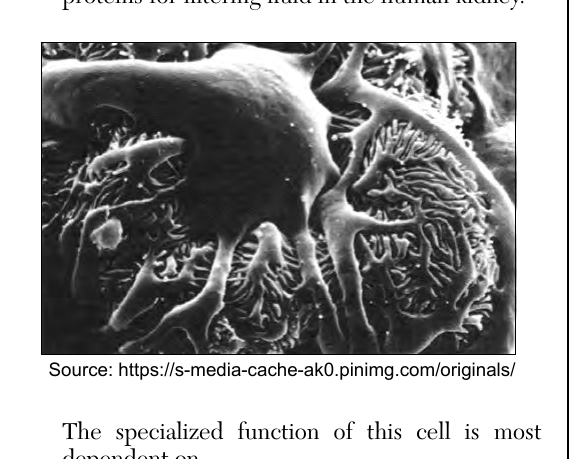
The photo below is of a magnified podocyte, a highly specialized cell that produces special proteins for filtering fluid in the human kidney. The specialized function of this cell is most dependent on
- (A) mutations that produce cells that have a specific shape for filtering the blood
- (B) the differentiation of the cell membrane and the functioning of vacuoles
- (C) the DNA codes in the cell and the activity of ribosomes ✓
- (D) mitochondria in the cell that produce filtering organelles for the kidney
Worked solution
A cell's specialized function depends on which genes are expressed and translated into proteins by ribosomes, not on mutations or on unrelated organelles like mitochondria.
Maintaining stability in an ecosystem most likely depends on
- (A) a high level of diversity and few resources
- (B) little diversity and rapid ecological succession
- (C) a high level of diversity and multiple ecological niches ✓
- (D) little diversity and multiple extinctions
Worked solution
Ecosystem stability is generally associated with high biodiversity and many available niches, which provide redundancy and resilience against disturbances.
Photosynthesis and cellular respiration both involve the gases carbon dioxide and oxygen. Which statement best identifies how these gases are involved in the two processes?
- (A) Photosynthesis and cellular respiration both use carbon dioxide and release oxygen.
- (B) Cellular respiration uses oxygen and releases carbon dioxide, while photosynthesis uses carbon dioxide and releases oxygen. ✓
- (C) Cellular respiration uses carbon dioxide and releases oxygen, while photosynthesis uses oxygen and releases carbon dioxide.
- (D) Photosynthesis and cellular respiration both use oxygen and release carbon dioxide.
Worked solution
Photosynthesis consumes carbon dioxide and releases oxygen, while cellular respiration consumes oxygen and releases carbon dioxide, the two processes are complementary.
Antibodies produced against one pathogen infecting the human body may not work against a different pathogen because antibodies are
- (A) only produced once in the body so they can't work on any other infection
- (B) unable to produce effective antibiotics against the infection
- (C) made of DNA the second pathogen doesn't contain
- (D) specific for the shape of the proteins present on a particular pathogen ✓
Worked solution
Antibody-antigen binding is highly specific, based on the complementary shape between the antibody and the particular protein markers on a pathogen's surface.
A multicellular organism has cells that perform various roles in that organism. This is most likely due to the
- (A) differentiation of cells during embryonic development ✓
- (B) specialization of gametes
- (C) cloning of cells during embryonic development
- (D) specialization of zygotes
Worked solution
Differentiation during embryonic development causes genetically identical cells to take on different structures and functions, producing the variety of specialized cells in a multicellular organism.
The following describes a response that occurs in the guard cells of a plant. When the Sun is shining and a large amount of water is available, the guard cells open the leaf pores. When the Sun is shining but little water is available, the guard cells close the leaf pores. The changes in the guard cells' activity illustrate
- (A) an immune response intended to limit water use
- (B) passive transport in response to the Sun shining
- (C) a feedback mechanism to control water loss ✓
- (D) genetic manipulation caused by the presence or absence of water
Worked solution
The opposite guard cell responses to water availability show a feedback mechanism that regulates transpiration (water loss) to maintain homeostasis in the plant.
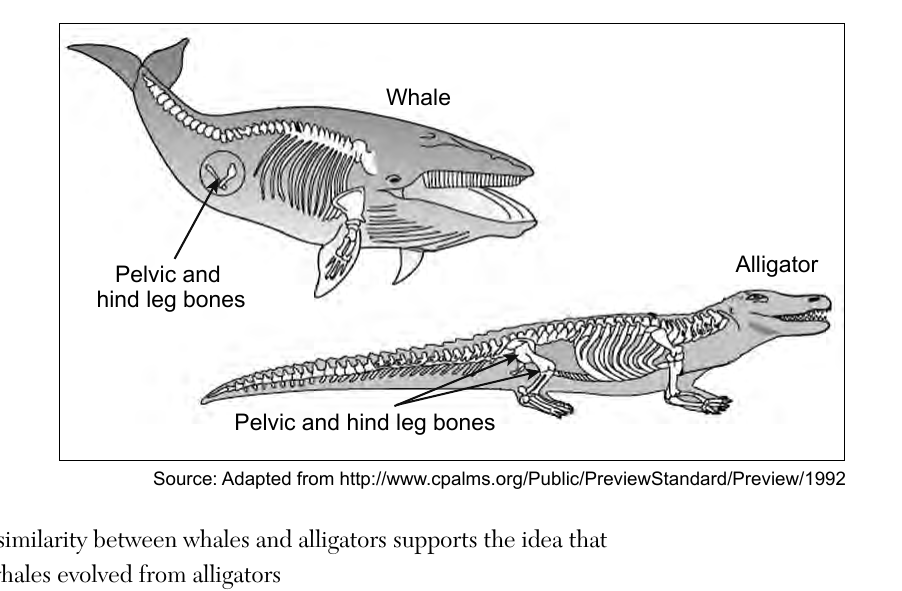
Today's whales and alligators both have pelvic and hind leg bones, yet these bones only function in alligators. This similarity between whales and alligators supports the idea that
- (A) whales evolved from alligators
- (B) alligators evolved from whales
- (C) alligators and whales share a common ancestor ✓
- (D) alligators and whales share the same genetic mutations
Worked solution
Vestigial pelvic and hind leg bones in whales are homologous to the functional versions in alligators, evidence that both descended from a common ancestor that had functional leg bones.
Base your answer on the information below. Warming Water Leaves Fish Gasping for Air and Shrinking in Size. As fish grow into adulthood, their body mass increases and so does their demand for oxygen. However, the gills, through which oxygen is obtained, do not increase in size at the same rate as the body. Scientists have observed that as the ocean waters become warmer, there is less dissolved oxygen in the water. The result is that the average size of many fish species becomes smaller. The most likely reason decreased levels of oxygen in the water result in a decrease in the body size of some fish species is
- (A) due to the presence of more plant species carrying out photosynthesis
- (B) the species producing more ATP molecules and less oxygen
- (C) due to an increase in the size of the gills bringing in more carbon dioxide
- (D) the species being unable to meet the energy requirements of a larger body size ✓
Worked solution
Because gill surface area cannot keep pace with a growing body's oxygen demand, and warm water further reduces available dissolved oxygen, fish cannot generate enough energy (via cellular respiration) to sustain a larger body size.
One human activity that most directly contributes to the decrease in the amount of oxygen present in ocean water is
- (A) overfishing, causing a lack of biodiversity
- (B) planting more trees, causing more soil erosion
- (C) introducing foreign species, causing more competition
- (D) industrialization, which releases large amounts of carbon dioxide into the atmosphere ✓
Worked solution
Industrial CO2 emissions drive global warming, and warmer ocean water holds less dissolved oxygen, directly decreasing oxygen availability in ocean water.
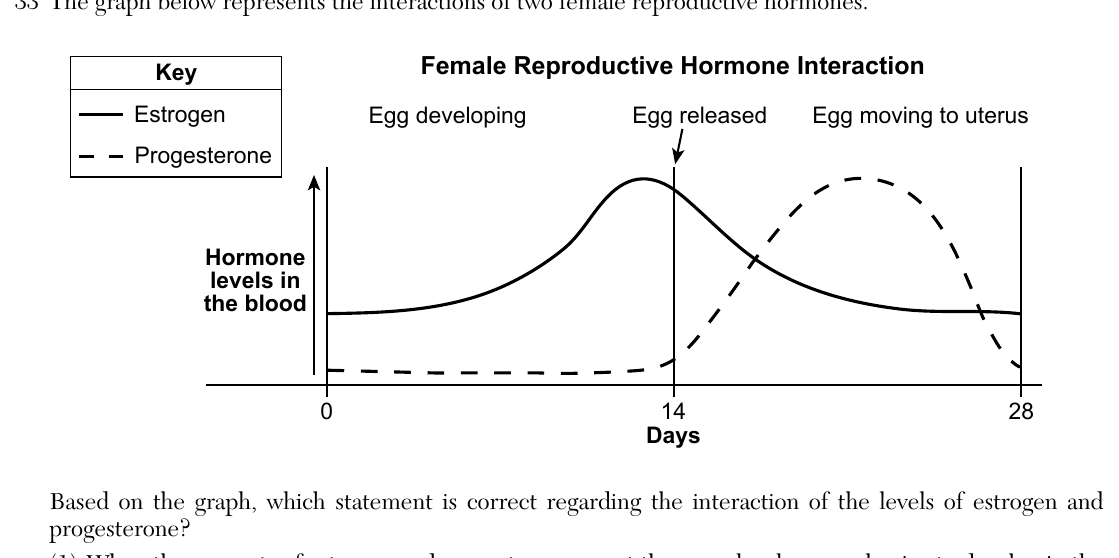
The graph below represents the interactions of two female reproductive hormones. Based on the graph, which statement is correct regarding the interaction of the levels of estrogen and progesterone?
- (A) When the amounts of estrogen and progesterone are at the same level, an egg begins to develop in the ovary.
- (B) When an egg is released from the ovary, the level of estrogen is higher than the level of progesterone. ✓
- (C) The level of progesterone controls the cycle since it is always higher than the level of estrogen.
- (D) After an egg is released from the ovary, the level of estrogen keeps increasing, causing the level of progesterone to decrease.
Worked solution
At the moment of egg release (day 14) the graph shows estrogen at its peak while progesterone is still near its baseline, so estrogen is higher than progesterone at ovulation.
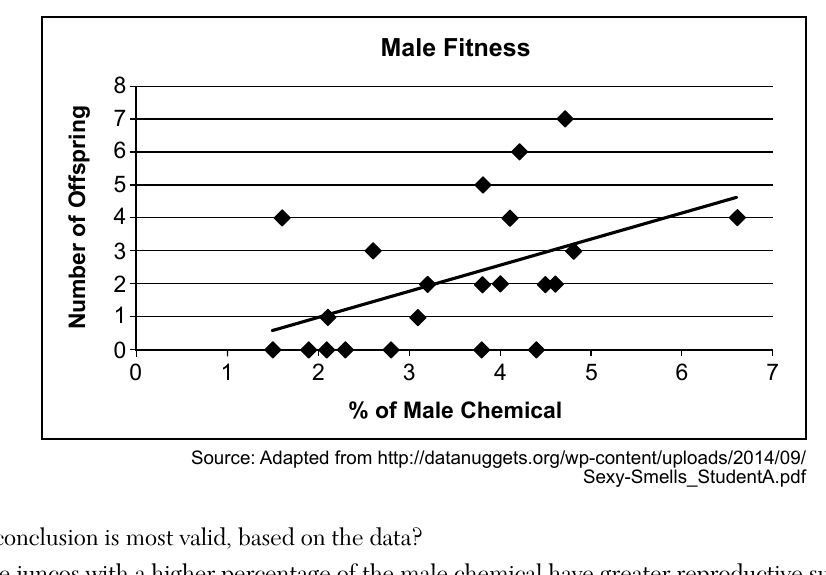
Base your answer on the information below. Fitness of Male Juncos. Animals communicate with each other in many ways. For example, many male birds have bright colors to signal their fitness to females. Scientists hypothesized that female birds also use their sense of smell to gather information about the fitness of their potential mates. To test this, scientists gathered male juncos and determined the amount of a chemical produced by the male birds that is sensed by the female birds. Scientists then collected data on the number of offspring produced by each male during one breeding season. The results are shown in the chart below. Which conclusion is most valid, based on the data?
- (A) Male juncos with a higher percentage of the male chemical have greater reproductive success. ✓
- (B) Male juncos with a lower percentage of the male chemical have greater reproductive success.
- (C) The percentage of the male chemical has no effect on the reproductive success of the male juncos.
- (D) There is a negative relationship between the percentage of male chemical produced and the reproductive success of the male juncos.
Worked solution
The scatter plot's upward trend line shows a positive correlation between percent of male chemical and number of offspring, indicating males producing more of the chemical tend to have greater reproductive success.
Pikas are small mammals found in the grassland ecosystems of the Tibetan plateau. Pikas are prey for many of the predators also inhabiting the Tibetan grasslands, which serves as an important watershed for the area. This watershed drains large amounts of groundwater during the rainy season. Pikas have large burrow systems that help to quickly drain the groundwater. The burrows also serve as nesting sites for numerous bird species. Because they compete with livestock for grass, many people want the pikas totally removed from the Tibetan plateau. If the pika populations are completely removed from the grasslands of the Tibetan plateau, the most likely result will be that the grassland ecosystems will become
- (A) unstable, because predators will have fewer prey, the birds will have fewer nesting sites, and groundwater supplies will be disrupted ✓
- (B) more stable, because the pikas will be replaced by other species, the birds will adapt to nesting above ground, and the soil will become more fertile since it is not drained by groundwater
- (C) unstable, because predators will migrate to nearby ecosystems, birds will nest in nearby trees, and other small animals will make burrows in the soil
- (D) more stable, because the pikas will no longer be eating the grasses, the birds will migrate to other ecosystems during the nesting season, and small lakes will form because the water will not drain without the pika burrows
Worked solution
Pikas play multiple interconnected ecological roles (prey, burrow-nesting habitat, groundwater drainage), so removing them would disrupt several ecosystem functions simultaneously, causing instability.
Jean-Baptiste Lamarck was a French naturalist who proposed the idea that modern-day organisms developed new characteristics through a process known as the inheritance of acquired traits. As more evidence became available, this theory was eventually replaced by Charles Darwin's theory of evolution. This modification of scientific knowledge illustrates that
- (A) scientists do not communicate with each other and often make mistakes
- (B) all scientific explanations are tentative and subject to change or improvement ✓
- (C) scientists often ignore evidence that does not help prove their theory
- (D) hypotheses seldom change even when new discoveries are made
Worked solution
The replacement of Lamarck's theory by Darwin's theory as new evidence emerged demonstrates the nature of science: explanations are tentative and can be revised or replaced.
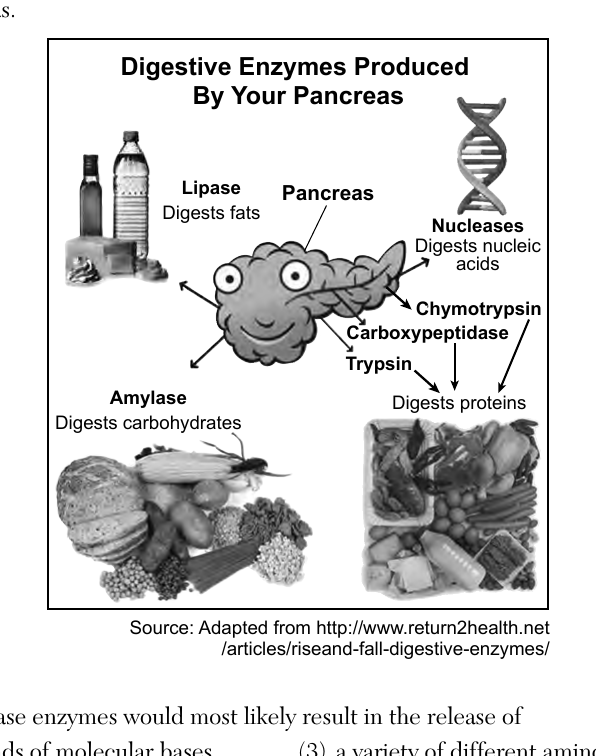
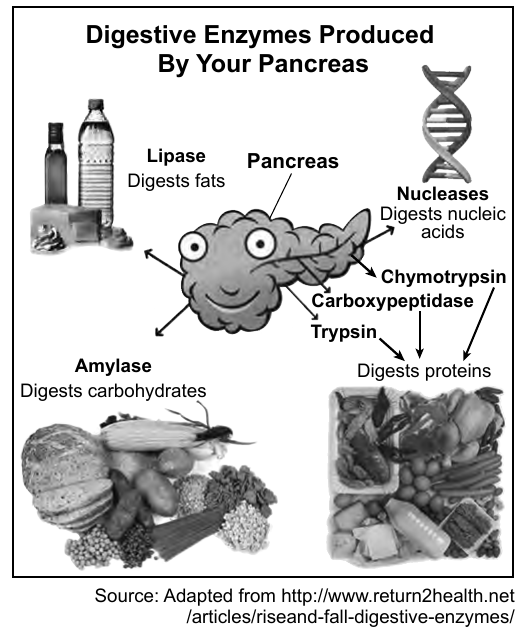
Base your answers to questions 37 through 39 on the information and diagram below. The diagram provides information about some of the digestive enzymes produced by the human pancreas. The activity of nuclease enzymes would most likely result in the release of
- (A) four different kinds of molecular bases ✓
- (B) glucose
- (C) a variety of different amino acids
- (D) hormones
Worked solution
Nucleases break down nucleic acids, which are made of nucleotides containing one of four nitrogenous bases, so digestion releases these molecular bases.
The end products resulting from the action of amylase would most likely be
- (A) starches and proteins
- (B) carbon dioxide and water
- (C) amino acids
- (D) simple sugars ✓
Worked solution
Amylase breaks down starch, a carbohydrate polymer, into its simple sugar subunits.
Another important molecule not shown in the diagram is also produced by the pancreas. It functions to decrease glucose levels in the blood. This molecule is
- (A) progesterone
- (B) insulin ✓
- (C) testosterone
- (D) ATP
Worked solution
Insulin, produced by the pancreas, is the hormone responsible for lowering blood glucose levels by promoting glucose uptake into cells.
The process of meiotic division in human males is represented below. This process produces four sperm cells, each with
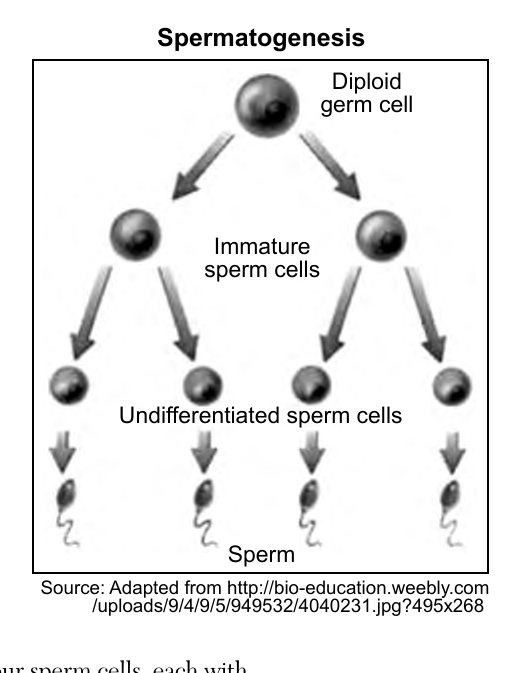
- (A) all of the genetic information contained in the diploid germ cell
- (B) one-quarter of the genetic information contained in the diploid germ cell
- (C) twice the genetic information found in the diploid germ cell
- (D) one-half of the genetic information found in the diploid germ cell ✓
Worked solution
Meiosis is a reduction division that halves the chromosome number, so each of the four resulting sperm cells contains half the genetic information of the original diploid germ cell.
A student viewed a slide of an onion root tip with a compound light microscope. The photograph below represents what he saw. In order to observe whether or not this root tip was growing, the student should
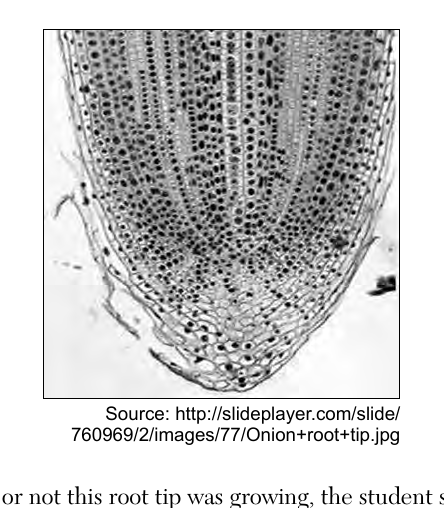
- (A) switch to a higher magnification and look for evidence of cell division ✓
- (B) switch to a lower magnification and look for evidence of cell division
- (C) switch to a lower magnification and add a stain to the onion root tip cells
- (D) switch to a higher magnification and add salt solution to the onion root tip cells
Worked solution
Growth at a root tip results from mitosis, so increasing magnification to look for cells undergoing division provides direct evidence of growth activity.
Which statement is an example of a hypothesis that can be tested through experimentation?
- (A) The number of times a dog wags its tail is a direct measure of how happy the dog is.
- (B) Is the ability of a fish to taste food affected by how clear the water is where it lives?
- (C) A plant's fear of herbivores increases as the plant grows older.
- (D) Bacterial growth will rapidly increase as the temperature increases. ✓
Worked solution
A valid testable hypothesis is a declarative, measurable statement about a relationship between variables; only the bacterial growth/temperature statement fits this, the others are a question, an assumption, or an unmeasurable claim.
Deforestation is a major cause of soil loss. Without trees and other plants to hold the soil in place, it either washes or blows away. Governments, international organizations, and others are working to decrease the rate of deforestation. In addition to slowing the rate of soil loss, another potential benefit of this action would be
- (A) a decrease in atmospheric carbon dioxide levels ✓
- (B) more land available for agriculture
- (C) a decrease in the amount of firewood for heating
- (D) more locations for the construction of new homes
Worked solution
Preserving forests maintains more trees that absorb carbon dioxide through photosynthesis, which helps decrease atmospheric carbon dioxide levels, an added benefit beyond reducing soil loss.
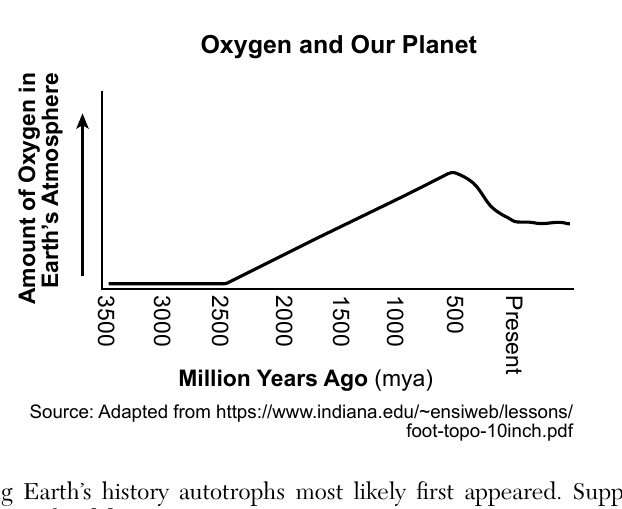
Base your answer on the information and graph below and on your knowledge of biology. The graph shows the amount of oxygen in Earth's atmosphere from 3500 million years ago to present. Scientists can use this information to learn more about the evolution of different species. Identify when during Earth's history autotrophs most likely first appeared. Support your answer using information from the graph.
Worked solution
Because the graph shows atmospheric oxygen was flat and low until about 2500 million years ago and then began rising, and because oxygen is a byproduct of photosynthesis, this rise indicates that photosynthetic autotrophs most likely first appeared around 2500 million years ago.
Base your answers to questions 45 through 49 on the information and data table below and on your knowledge of biology. Whitebark Pines in Yellowstone Park Scientists claim that mountain pine beetles have been blamed for the death of mature whitebark pine trees in the Greater Yellowstone forest ecosystem. The beetles burrow into the trees to lay their eggs. When the eggs hatch, the larvae feed on the tree, cutting off the flow of water. As a result, the trees become stressed and begin to die. An increase in the temperature is contributing to the increase in beetles. Cooler temperatures tend to keep the beetle population controlled. Many organisms, including squirrels, birds, and even grizzly bears, have been impacted by the decrease in the numbers of trees. Many organisms use whitebark pine seeds for food. The data table below shows the proportion of live mature whitebark pine trees compared with their population in 2000. Mature Whitebark Pine Trees in the Greater Yellowstone Ecosystem | Year | Proportion of Live Mature Whitebark Pine Trees Compared with Their Population in 2000 | | --- | --- | | 2000 | 1.00 | | 2002 | 1.00 | | 2004 | 0.70 | | 2006 | 0.60 | | 2008 | 0.40 | | 2010 | 0.25 | | 2012 | 0.25 | Directions (45-46): Using the information in the data table, construct a line graph on the grid, following the directions below. 45 Mark an appropriate scale, without any breaks in the data, on each labeled axis.
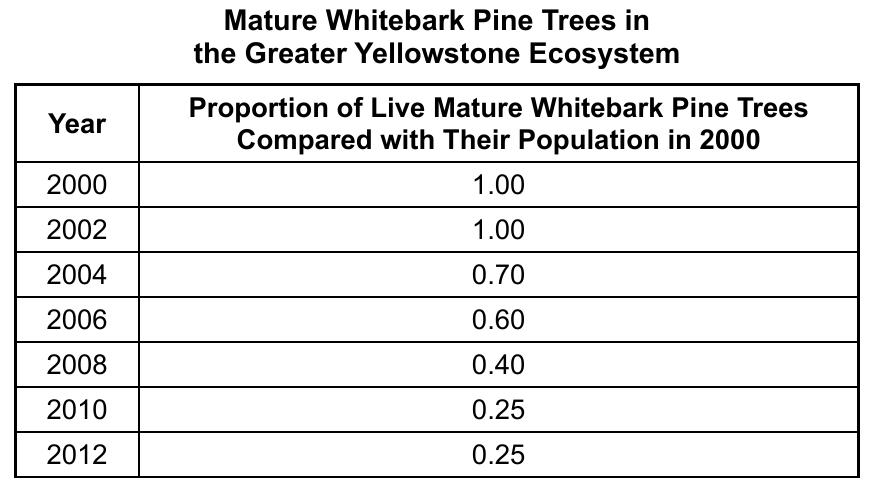
Worked solution
An appropriate scale uses equal intervals that span the full range of the data on each axis without skipping or compressing any values (no breaks).
Plot the data on the grid. Connect the points and surround each point with a small circle. (Example shown: points connected by a line, with each point circled.)
Worked solution
Each year/proportion pair from the data table is plotted at the correct grid location, the points are connected in sequence with straight lines, and each point is circled as shown in the example.
Note: The answer to question 47 should be recorded on your separate answer sheet. 47 The nutritional roles of the whitebark pine trees and the beetles are best described as
- (A) producer and carnivore
- (B) producer and herbivore ✓
- (C) predator and decomposer
- (D) herbivore and parasite
Worked solution
The pine trees are autotrophic producers, and the beetles consume plant tissue, making them herbivores.
Warmer climatic temperatures are one of the reasons for the increase in the pine beetle population. State one action that humans can take to help to reduce this warming trend.
Whitebark Pines in Yellowstone Park Scientists claim that mountain pine beetles have been blamed for the death of mature whitebark pine trees in the Greater Yellowstone forest ecosystem. The beetles burrow into the trees to lay their eggs. When the eggs hatch, the larvae feed on the tree, cutting off the flow of water. As a result, the trees become stressed and begin to die. An increase in the temperature is contributing to the increase in beetles. Cooler temperatures tend to keep the beetle population controlled. Many organisms, including squirrels, birds, and even grizzly bears, have been impacted by the decrease in the numbers of trees. Many organisms use whitebark pine seeds for food. The data table below shows the proportion of live mature whitebark pine trees compared with their population in 2000. Mature Whitebark Pine Trees in the Greater Yellowstone Ecosystem | Year | Proportion of Live Mature Whitebark Pine Trees Compared with Their Population in 2000 | | --- | --- | | 2000 | 1.00 | | 2002 | 1.00 | | 2004 | 0.70 | | 2006 | 0.60 | | 2008 | 0.40 | | 2010 | 0.25 | | 2012 | 0.25 | Directions (45-46): Using the information in the data table, construct a line graph on the grid, following the directions below.
Worked solution
Any specific human action that reduces greenhouse gas emissions, such as switching to renewable energy or reducing fossil fuel combustion, is acceptable.
Note: The answer to question 49 should be recorded on your separate answer sheet. 49 The dependent variable in this study is the
Whitebark Pines in Yellowstone Park Scientists claim that mountain pine beetles have been blamed for the death of mature whitebark pine trees in the Greater Yellowstone forest ecosystem. The beetles burrow into the trees to lay their eggs. When the eggs hatch, the larvae feed on the tree, cutting off the flow of water. As a result, the trees become stressed and begin to die. An increase in the temperature is contributing to the increase in beetles. Cooler temperatures tend to keep the beetle population controlled. Many organisms, including squirrels, birds, and even grizzly bears, have been impacted by the decrease in the numbers of trees. Many organisms use whitebark pine seeds for food. The data table below shows the proportion of live mature whitebark pine trees compared with their population in 2000. Mature Whitebark Pine Trees in the Greater Yellowstone Ecosystem | Year | Proportion of Live Mature Whitebark Pine Trees Compared with Their Population in 2000 | | --- | --- | | 2000 | 1.00 | | 2002 | 1.00 | | 2004 | 0.70 | | 2006 | 0.60 | | 2008 | 0.40 | | 2010 | 0.25 | | 2012 | 0.25 | Directions (45-46): Using the information in the data table, construct a line graph on the grid, following the directions below.
- (A) proportion of mountain pine beetles
- (B) increasing temperature of the area
- (C) time that the study was conducted
- (D) proportion of live mature whitebark pine trees ✓
Worked solution
The dependent variable is the measured outcome that changes in response to time, which here is the proportion of live mature whitebark pine trees.
Base your answers to questions 50 and 51 on the information below and on your knowledge of biology. Pepsin is a protein-digesting enzyme. It is produced inside cells that line the stomach and then secreted into the stomach cavity, where it begins to work. When first produced, the pepsin exists in an inactive form called pepsinogen. Pepsinogen cannot work because it has an extra segment that keeps it from interacting with the proteins it would normally digest. When it is secreted into the stomach cavity, the acid there causes the pepsinogen molecule to lose this extra segment, which changes it into the active pepsin that can begin to digest food proteins. Note: The answer to question 50 should be recorded on your separate answer sheet. 50 Which statement most accurately summarizes the function of pepsin?
- (A) It prevents harmful substances from entering the stomach.
- (B) It regulates the transport of starch across the cell membrane.
- (C) It controls the rate at which certain chemical reactions occur. ✓
- (D) It prevents the production of harmful by-products in stomach cells.
Worked solution
As an enzyme, pepsin's function is to catalyze (control the rate of) the chemical reaction that breaks down proteins.
Explain why the extra segment prevents pepsinogen from interacting with food proteins.
Pepsin is a protein-digesting enzyme. It is produced inside cells that line the stomach and then secreted into the stomach cavity, where it begins to work. When first produced, the pepsin exists in an inactive form called pepsinogen. Pepsinogen cannot work because it has an extra segment that keeps it from interacting with the proteins it would normally digest. When it is secreted into the stomach cavity, the acid there causes the pepsinogen molecule to lose this extra segment, which changes it into the active pepsin that can begin to digest food proteins.
Worked solution
The extra segment changes the three-dimensional shape of the molecule so the active site is blocked, preventing the substrate (food protein) from binding.
Base your answers to questions 52 and 53 on the information below and on your knowledge of biology. Trixie's Pedigree Pet owners today have access to genetic technologies that can provide them with information about their pets. For example, ancestry charts (pedigrees) can be developed for dogs by analyzing specific DNA sequences that are present in their cells. The presence of these DNA sequences can be used to determine the types of breeds present in the dogs' ancestors. The chart represents the family tree of a dog named Trixie, showing her great-grandparents, grandparents, and parents (a Pekingese/Mixed Breed line and an Australian Shepherd line), resulting in Trixie from a Pekingese Mix crossed with an Australian Shepherd. 52 Explain why it only requires a sample of cheek cells present in the dog's saliva, rather than using a mix of cells present in different tissues of the dog, to determine the breeds making up the dog's ancestry.
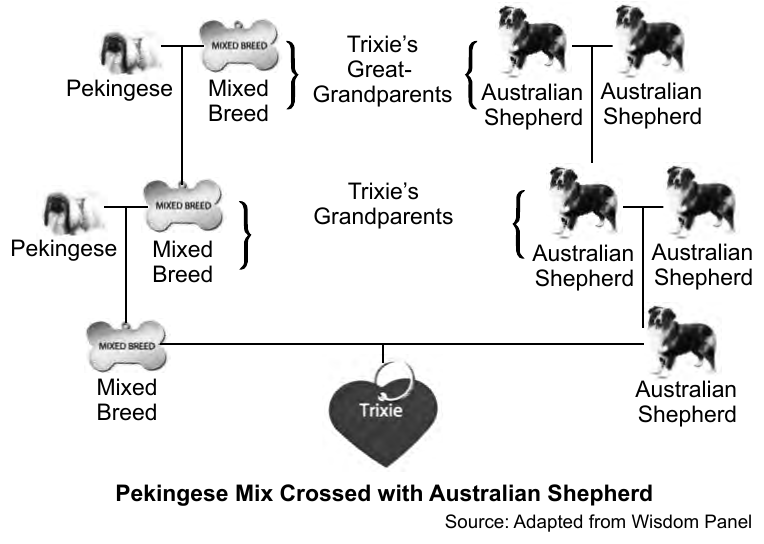
Worked solution
Because mitosis produces genetically identical cells throughout the body, DNA from cheek cells is the same as DNA in any other tissue, making a single sample sufficient.
State one possible reason why Trixie could express a trait that was not expressed by any of her ancestors.
Worked solution
A trait can appear in an offspring for the first time if it is recessive and hidden (masked) in heterozygous ancestors, or due to a new mutation.
Base your answers to questions 54 and 55 on the information below and on your knowledge of biology. Biobag System After decades of research, scientists have developed a biobag system with the potential to save extremely premature babies. They have successfully removed eight lamb fetuses from their mothers and placed them into biobags. Eventually, the fetuses developed into healthy sheep. The biobag is a clear plastic bag filled with a solution of water containing various salts. A machine outside the bag is attached to the blood vessels in the lamb's umbilical cord. The lamb's umbilical cord brings in nutrients, and its heart pumps blood through an external oxygenator that removes carbon dioxide from the blood and adds oxygen. The biobag models early development in the reproduction of mammals. In the future, this system may be able to be used with human premature babies. The biobag system could allow them to continue to develop for a longer period of time. 54 Two parts of the biobag system are the plastic bag and the external oxygenator. Select one of these parts and circle it below. Identify the structure in the reproductive system that the part of the biobag system you selected represents, and state the function of that part. Circle one: Plastic bag / External oxygenator
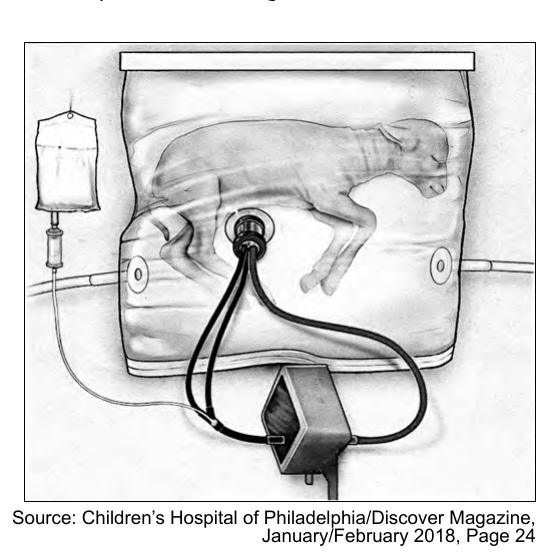
Worked solution
The external oxygenator performs gas exchange for the fetus, the same role played by the placenta, which exchanges oxygen, carbon dioxide, nutrients, and wastes between mother and fetus. (Alternatively, the plastic bag represents the amniotic sac/amnion, which contains fluid that cushions and protects the developing fetus.)
State one reason why medical advances that might be helpful to people are tested first on organisms such as sheep.
Worked solution
Animal testing allows researchers to evaluate safety and effectiveness of a new procedure without exposing humans to unknown risks.
Part C Base your answers to questions 56 through 58 on the information below and on your knowledge of biology. Acid Rain Acid rain comes in many forms: wet deposition, such as rain, snow, sleet, hail, and fog, and dry deposition, such as deposits of acid particles, aerosols, and gases. It is formed when sulfur dioxide (SO2) and nitrogen oxides (NOx) combine with moisture in the atmosphere to produce sulfuric acid and nitric acid. Damage to aquatic and forest ecosystems, serious human illness, and the slow destruction of buildings and bridges have all been linked to acid rain. Two sources that contribute to producing acid rain include: - Emissions from airplanes, automobiles, and industries - Emissions of SO2 and NOx from power plants 56 Explain why a change in the pH of lakes and forests as a result of acid rain can upset the dynamic equilibrium of these ecosystems.
Worked solution
A pH change beyond the tolerance range of organisms interferes with their normal life processes, disturbing the balance of populations that make up the ecosystem's dynamic equilibrium.
Identify one specific action individuals could take to significantly reduce the amount of acid rain falling in New York State.
Worked solution
Any specific individual action that reduces the burning of fossil fuels (e.g., carpooling, using public transit, using renewable energy) is acceptable.
Explain how the specific action you identified in question 57 would decrease the formation of acid rain.
Worked solution
Reducing fossil fuel combustion directly lowers the emissions of the gases that combine with atmospheric moisture to create acid rain.
Base your answers to questions 59 through 61 on the information below and on your knowledge of biology. Lionfish Invasion Lionfish are native to the Indian and Pacific Oceans. They have recently been found along the southeast coast of the U.S., the Caribbean, and in parts of the Gulf of Mexico. Experts speculate that the lionfish invasion was caused by people dumping unwanted lionfish into the Atlantic Ocean from home aquariums. Lionfish have venomous spines and feed on small crustaceans and many fish, including the young of important commercial fish species such as snapper and grouper. The current invasion of lionfish most likely started with the dumping of about 12 fish. Today, there are thousands of them over a wide area. 59 State one specific reason why these invasive fish have been able to rapidly increase their population and range over the last 20 years.
Worked solution
Because lionfish are not native, predators in the Atlantic do not recognize or hunt them, removing a natural check on their population growth. (Abundant food/prey and lack of competition are also acceptable reasons.)
Explain why the amount of genetic diversity within the invasive lionfish population would be expected to be quite low.
Worked solution
Starting from only about 12 individuals means the entire invasive population's DNA traces back to a small gene pool, so there is little genetic variation among them.
State two ways invasive species can disrupt ecosystems.
Worked solution
Invasive species disrupt ecosystems by outcompeting native organisms for resources and/or by preying on native species that are not adapted to defend against them; introducing disease or altering habitats are also acceptable answers.
Base your answers to questions 62 through 64 on the information below and on your knowledge of biology. New Drug "Wakes up" Immune System to Fight Pancreatic Cancer Pancreatic cancer makes up three percent of all cancers. Recently, scientists announced the discovery of a new drug that has helped extend the lives of some patients with pancreatic cancer. Pancreatic tumors usually have a protective protein layer surrounding them. The protein is produced by the tumor cells. This protective protein shield seems to deactivate white blood cells that would normally recognize and target the tumor cells for destruction. The new drug reactivates these white blood cells, stimulating them to attack the tumor again. A specific chemotherapy drug blows holes in the protective protein layer around the tumor. This action then allows the activated white blood cells to directly attack the tumor. 62 State whether the new drug used without the chemotherapy drug would enable the immune system to successfully attack the cancer cells. Support your answer.
Worked solution
Since the protein shield still blocks access to the tumor without the chemotherapy drug that creates holes in it, reactivated white blood cells alone cannot reach and destroy the cancer cells.
Explain the role of white blood cells in the process of killing cancer cells.
Worked solution
White blood cells are part of the immune system's defense that recognizes and destroys abnormal cells such as tumor cells once they can access them.
Explain why this new cancer treatment would most likely be less effective if the cancer patient also had AIDS.
New Drug "Wakes up" Immune System to Fight Pancreatic Cancer Pancreatic cancer makes up three percent of all cancers. Recently, scientists announced the discovery of a new drug that has helped extend the lives of some patients with pancreatic cancer. Pancreatic tumors usually have a protective protein layer surrounding them. The protein is produced by the tumor cells. This protective protein shield seems to deactivate white blood cells that would normally recognize and target the tumor cells for destruction. The new drug reactivates these white blood cells, stimulating them to attack the tumor again. A specific chemotherapy drug blows holes in the protective protein layer around the tumor. This action then allows the activated white blood cells to directly attack the tumor.
Worked solution
Because the treatment relies on white blood cells to destroy the tumor, a weakened immune system (as in AIDS) with fewer functioning white blood cells would make the treatment less effective.
Base your answers to questions 65 through 67 on the information below and on your knowledge of biology. The Cougars of Zion National Park Researchers claim that the crowds of visitors at Utah's Zion National Park have led to the displacement of cougars, the area's top predator, resulting in a devastating series of changes to the region's biodiversity. The researchers compared Zion Canyon's ecosystem with a nearby habitat called North Creek, where human visits are infrequent and the cougars still thrive. In Zion Canyon, there are many more deer, the cougar's main prey, and fewer cottonwood trees than in North Creek. Zion also has a reduced number and diversity of butterflies, amphibians, and wetland plants. To measure the impact of the shrinking cougar population, researchers collected data on Zion Canyon's deer populations dating back to the 1930s, when tourism began to increase. Currently, with over three million visitors per year, the cougars, which usually avoid humans, are becoming increasingly rare. The researchers also estimated the age and abundance of cottonwoods, a favorite food of young deer, and found a healthy mix of old and young cottonwoods in North Creek, where cougars are common. 65 Students drew a few models of the food chain in Zion National Park, as described in the reading. A: Cottonwoods -> Deer -> Cougar B: Deer -> Cottonwoods -> Cougar C: Cougar -> Deer -> Cottonwoods Record the letter of the model that represents the actual food chain in Zion National Park and explain why the model you chose is correct.
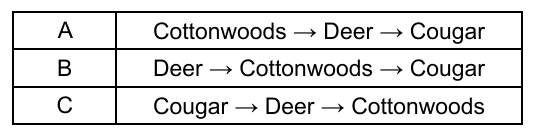
Worked solution
Energy flows from producer (cottonwoods) to herbivore (deer) to predator (cougar), matching model A and the roles described in the passage.
Destabilization is a phenomenon that has been observed in a variety of ecosystems when the number of predators has been significantly reduced. Explain how the destabilization caused by the loss of cougars in Zion National Park has resulted in a decrease in the cottonwood trees.
Worked solution
Removing the top predator allows the prey (deer) population to grow unchecked, and the increased deer herbivory on young cottonwoods reduces the cottonwood population, illustrating a trophic cascade.
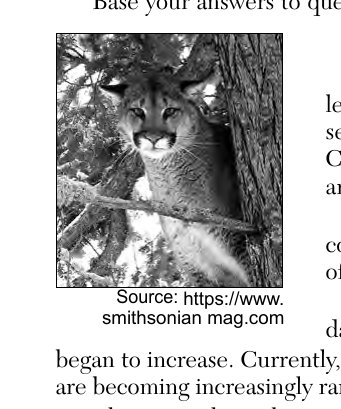
Base your answers on the following: 'The Cougars of Zion National Park.' Researchers claim that the crowds of visitors at Utah's Zion National Park have led to the displacement of cougars, the area's top predator, resulting in a devastating series of changes to the region's biodiversity. The researchers compared Zion Canyon's ecosystem with a nearby habitat called North Creek, where human visits are infrequent and the cougars still thrive. In Zion Canyon, there are many more deer, the cougar's main prey, and fewer cottonwood trees than in North Creek. Zion also has a reduced number and diversity of butterflies, amphibians, and wetland plants. To measure the impact of the shrinking cougar population, researchers collected data on Zion Canyon's deer populations dating back to the 1930s, when tourism began to increase. Currently, with over three million visitors per year, the cougars, which usually avoid humans, are becoming increasingly rare. The researchers also estimated the age and abundance of cottonwoods, a favorite food of young deer, and found a healthy mix of old and young cottonwoods in North Creek, where cougars are common. 67 The researchers claimed the decrease in the cougar population is a result of the increase in the number of visitors in the park. Describe evidence the researchers could use to support their claim.
Worked solution
A valid piece of supporting evidence is the correlation between rising visitor numbers over decades and the decline in cougar numbers, contrasted with the low-visitor North Creek site where cougars still thrive.
Base your answers on the following: 'Meet the Sentinels.' Canaries are the most familiar example of a sentinel species, which are animals and plants that serve as harbingers [indicators] of danger to human health and the environment. In the case of canaries, if odorless carbon monoxide were present in a high enough concentration in a coal mine, the small bird would die first and give miners time to escape. Cats, too, have been sentinels. In the 1950s, people in the town of Minamata, Japan, began to notice that local cats were acting strangely; the cats were unable to walk straight and uncontrollably jumped about. After some time, people began to act similarly. The cause of the 'dancing cat fever' was quickly connected to the release of methylmercury in the wastewater of a local chemical factory. The discharge fed into the city's harbor, where it bioaccumulated in [tissues of] fish and shellfish. Although several thousand people were affected with what became known as Minamata disease, the outcome could have been worse were it not for the warning from the dancing cats. 68 Bald eagle populations declined when a pesticide called DDT was used to kill insects. Once DDT was banned in 1972, the population of bald eagles rebounded. State one reason why the bald eagles could be considered a sentinel species like canaries in coal mines.
Worked solution
A sentinel species reveals hidden environmental danger through its own decline; bald eagles' population crash revealed the toxic effects of DDT before it was widely recognized as harmful to humans.
Explain why the banning of certain pesticides might cause a problem for humans.
Worked solution
Pesticides, despite their environmental harm, often control organisms that threaten human health or agriculture, so removing them can allow those problems to resurface.
Describe one specific human action, other than banning its use, that could reduce the chance that a toxic chemical could contaminate the environment.
Worked solution
Proper treatment and containment of industrial waste before disposal keeps toxic substances out of ecosystems, reducing bioaccumulation risk.
Base your answers on the following: 'Dinosaur Extinction.' The hypothesis that an asteroid strike led to the mass extinction of dinosaurs is widely accepted. It is understood that the asteroid strike caused a massive and quick shift in Earth's temperature and blocked much of the sunlight. While devastating for the dinosaurs, this dramatic event provided opportunities for other species. For example, surviving birds and mammals underwent a time of rapid evolution, which led to the thousands of birds and mammal species present on Earth today. 71 Describe one way the temporary blocking of the sunlight could have impacted the survival of the dinosaurs.
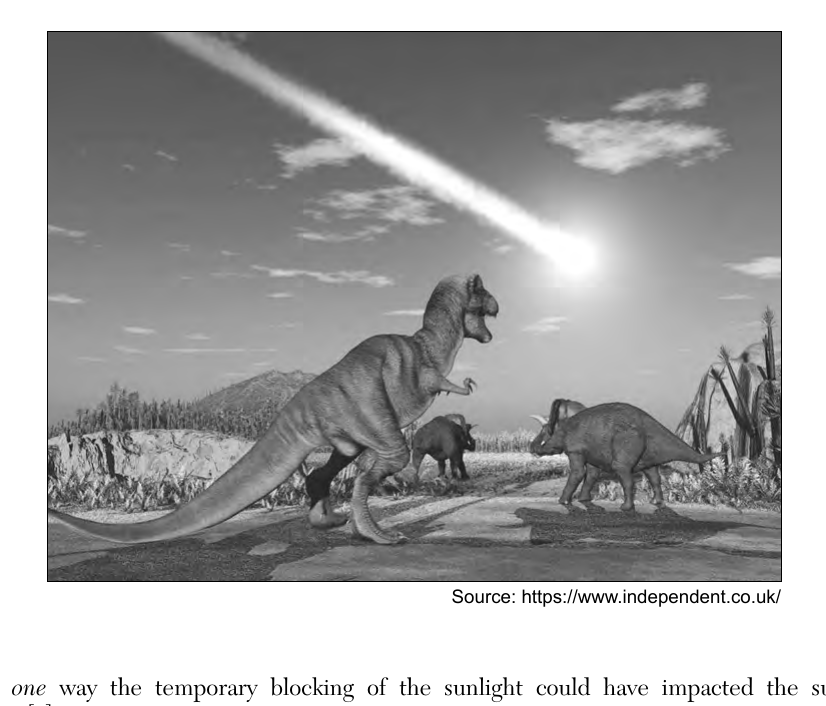
Worked solution
Blocked sunlight disrupted the base of the food chain (producers), causing a cascade of starvation up through herbivores and carnivores, ultimately dooming the dinosaurs.
Suggest one possible explanation for why some birds were able to survive the mass extinction.
Worked solution
Genetic variation meant some birds already possessed traits, such as generalist diets or small size requiring less food, that allowed them to survive the harsh post-asteroid conditions.
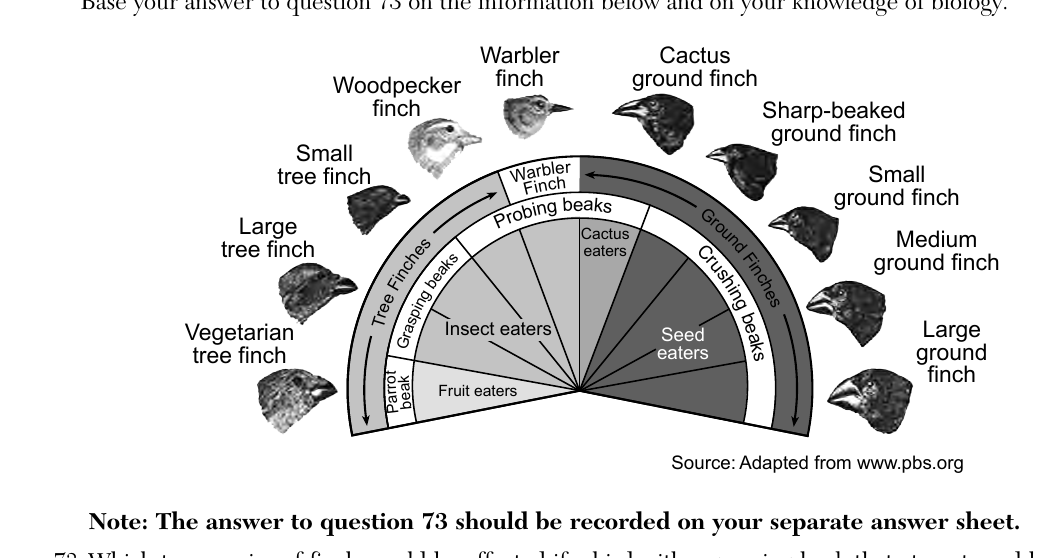
Base your answer on the diagram of Darwin's finches, which shows finch species grouped by beak type (probing, grasping, crushing beaks) and feeding habit (insect eaters, seed eaters, fruit eaters, ground insects). Note: The answer to question 73 should be recorded on your separate answer sheet. 73 Which two species of finch would be affected if a bird with a grasping beak that ate ants and beetles was introduced into their habitat?
- (A) large ground finch and warbler
- (B) woodpecker finch and small ground finch
- (C) large tree finch and small tree finch ✓
- (D) cactus finch and medium ground finch
Worked solution
The large tree finch and small tree finch both have grasping beaks and eat insects, placing them in direct competition with a newly introduced grasping-beaked, insect-eating bird for the same food resource.
Note: The answer to question 74 should be recorded on your separate answer sheet. 74 Comparisons between species can be done using both structural and molecular evidence. An example of using structural evidence is comparing
- (A) seed characteristics ✓
- (B) enzyme characteristics
- (C) amino acid sequences
- (D) DNA banding patterns
Worked solution
Structural evidence relies on comparing physical/anatomical traits, such as seed characteristics, while enzyme, amino acid, and DNA comparisons are molecular evidence.
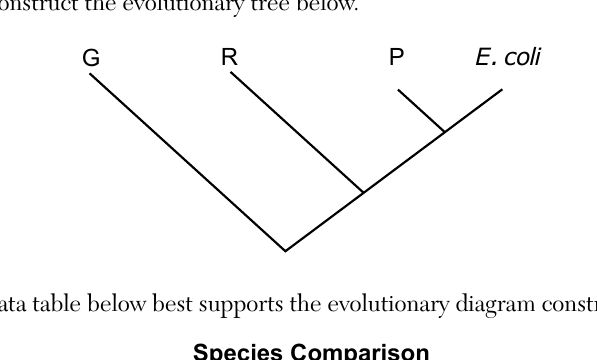
The DNA from three different bacterial species are compared with a specific strain of E. coli bacteria. These data were used to construct the evolutionary tree below, which shows Species G branching off first (most distant), then Species R, then Species P branching closest to E. coli. Which row in the data table below best supports the evolutionary diagram constructed by the scientists?
- (A) Row (1): E. coli 100%, G 99%, R 95%, P 93%
- (B) Row (2): E. coli 100%, G 93%, R 95%, P 99% ✓
- (C) Row (3): E. coli 100%, G 99%, R 93%, P 99%
- (D) Row (4): E. coli 100%, G 95%, R 99%, P 93%
Worked solution
Since the tree shows G diverging first (most distantly related) and P diverging last (most closely related to E. coli), the percent identical DNA must increase from G to R to P, which only Row (2) satisfies.
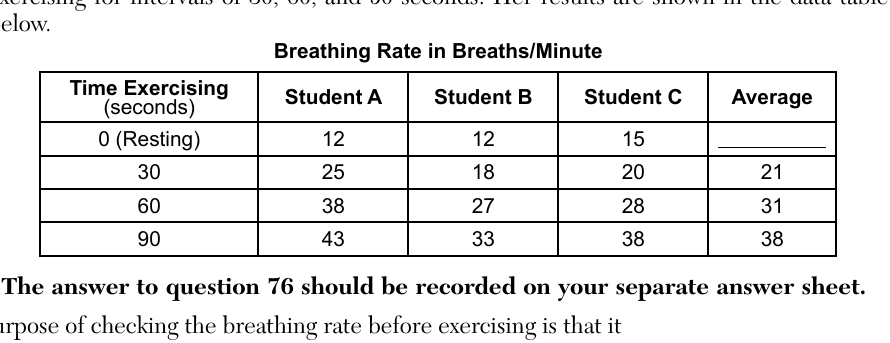
Base your answers on the following: A student conducted an experiment to determine the effect of exercising on breathing rate. The student measured the breathing rate of three classmates at rest and again after exercising for intervals of 30, 60, and 90 seconds. Breathing Rate in Breaths/Minute | Time Exercising (seconds) | Student A | Student B | Student C | Average | | --- | --- | --- | --- | --- | | 0 (Resting) | 12 | 12 | 15 | ___ | | 30 | 25 | 18 | 20 | 21 | | 60 | 38 | 27 | 28 | 31 | | 90 | 43 | 33 | 38 | 38 | Note: The answer to question 76 should be recorded on your separate answer sheet. 76 The purpose of checking the breathing rate before exercising is that it
- (A) serves as a control for the experiment ✓
- (B) is needed to form a hypothesis
- (C) can be changed to form a conclusion
- (D) can be used to predict the results
Worked solution
The resting breathing rate acts as the control, providing a baseline against which the effect of the independent variable (exercise) can be measured.
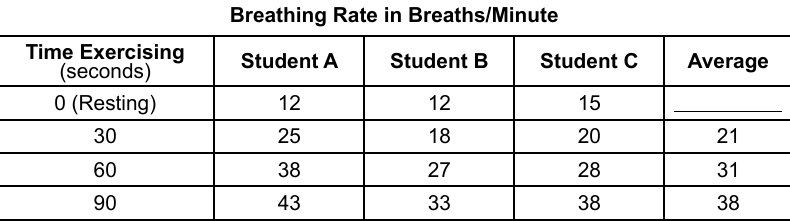
Calculate the average resting breathing rate for this group of students. Record your answer in the appropriate space in the data table above.
Worked solution
Adding the three resting rates (12, 12, 15) and dividing by 3 gives an average resting breathing rate of 13 breaths per minute.
State one biological benefit of the breathing rate increasing while exercising.
Worked solution
Faster breathing increases oxygen delivery for cellular respiration and speeds carbon dioxide removal, both needed to meet the muscles' higher energy demand during exercise.
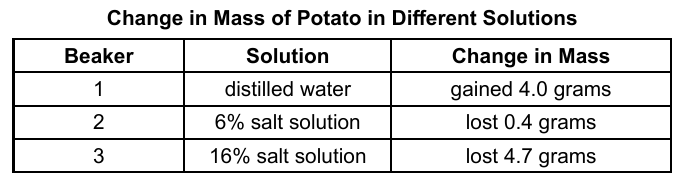
Base your answers on the following: Three potato slices with the same mass were each placed in three beakers, each labeled with its number and contents. After 30 minutes, the potato slices were removed from the solutions, dried with a paper towel, and the mass was determined. The results are shown in the table below. 79 Identify a process that caused these changes in mass of each of the three slices.
Worked solution
The gain or loss of mass in the potato slices resulted from water moving into or out of the cells by osmosis, depending on the surrounding solution's solute concentration.
Explain why the potato slice in distilled water (Beaker 1) was the only one to gain mass after 30 minutes.
Worked solution
Because distilled water contains fewer solutes than the potato cells' interior, water moved into the cells by osmosis, causing a net gain in mass, unlike the higher-concentration salt solutions which drew water out.
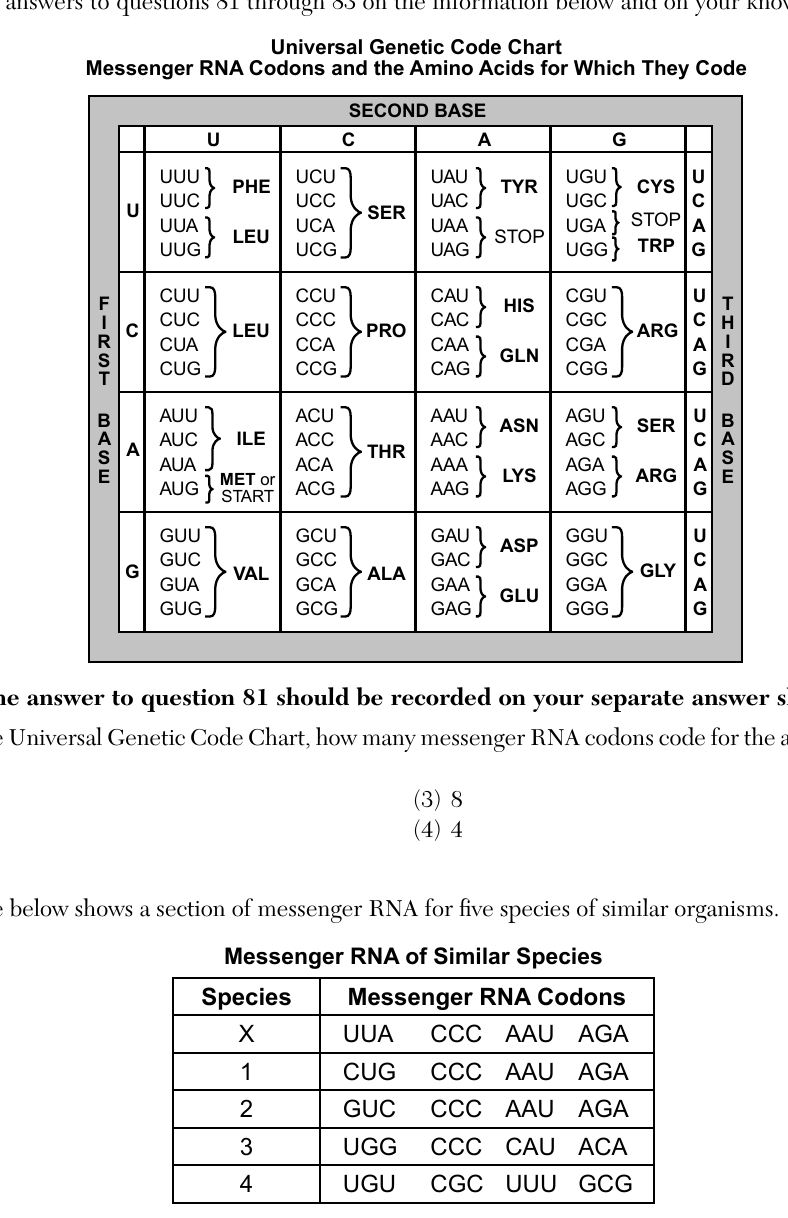
Base your answers on the Universal Genetic Code Chart (Messenger RNA Codons and the Amino Acids for Which They Code). Note: The answer to question 81 should be recorded on your separate answer sheet. 81 Using the Universal Genetic Code Chart, how many messenger RNA codons code for the amino acid leucine (LEU)?

- (A) 6 ✓
- (B) 2
- (C) 8
- (D) 4
Worked solution
On the genetic code chart, leucine is coded for by UUA, UUG, CUU, CUC, CUA, and CUG, a total of six codons.
The table below shows a section of messenger RNA for five species of similar organisms. Note: The answer to question 82 should be recorded on your separate answer sheet. 82 What is the DNA sequence that codes for the messenger RNA codons shown in Species X?
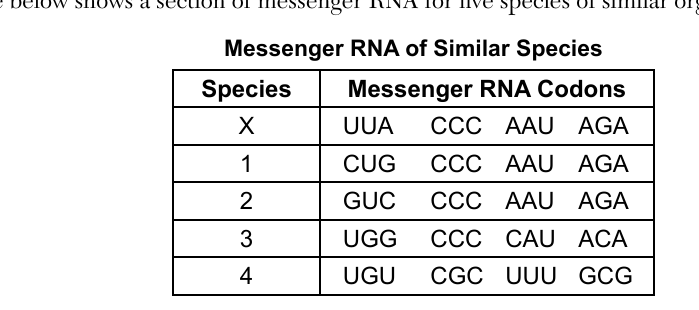
- (A) AAT GGG ATT TCT
- (B) ACC AAT GGG TCT
- (C) AAT GGG TTA TCT ✓
- (D) TCT AAT GGG TCT
Worked solution
Applying complementary base pairing (A-T, G-C) to each base of the mRNA codons for Species X (UUA CCC AAU AGA) gives the DNA sequence AAT GGG TTA TCT.
Write the number of the species in the table that would produce the same sequence of amino acids as Species X.
Worked solution
Although Species 1's first codon (CUG) differs from Species X's (UUA), both code for leucine due to the redundancy of the genetic code, so the two species produce the same amino acid sequence: Leu-Pro-Asn-Arg.
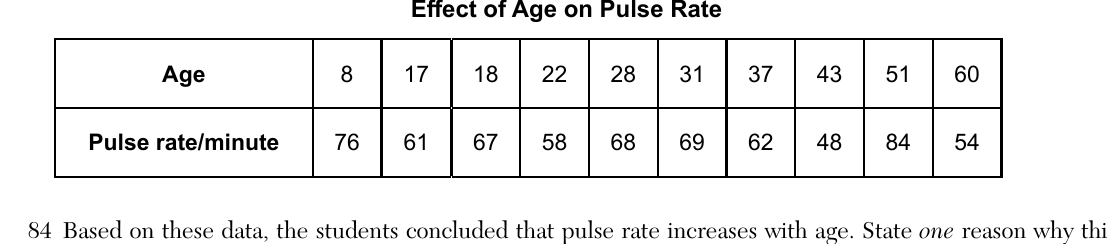
Base your answer on the following: A group of students designed an experiment to determine if an individual's age had any effect on pulse rate. The data collected are recorded in the table below. 84 Based on these data, the students concluded that pulse rate increases with age. State one reason why this conclusion might be questioned.
Worked solution
The data are inconsistent (pulse rate does not rise steadily with age, e.g., it dips at 43 and spikes at 51) and only one subject was tested per age group, so the sample size is too small to draw a reliable general conclusion.
Identify an organ of the human body where diffusion occurs, and identify one specific molecule that diffuses between that organ and the blood.
Worked solution
In the lungs, oxygen diffuses from the alveoli into the surrounding capillaries (blood) down its concentration gradient, and carbon dioxide diffuses the opposite way.