January 2025 Living Environment Regents — Answer Key & Worked Solutions
Every question from the January 2025 Living Environment Regents exam, with the correct answer and a full step-by-step solution. Check your work, learn the method, then convert your raw score.
These are real questions from the January 2025 Living Environment New York State Regents examination, published by NYSED. Worked solutions are written by RegentsLab.
When you cut your finger, new skin quickly grows that repairs and replaces the damaged skin cells. Information directing this process is located in the
- (A) mitochondria in neighboring skin cells, which provide the energy needed for mitotic cell division
- (B) mitochondria in neighboring skin cells, which provide the energy needed for meiotic cell division
- (C) DNA of neighboring cells, which divide by mitotic cell division ✓
- (D) DNA of neighboring cells, which divide by meiotic cell division
Worked solution
Repairing skin requires producing genetically identical replacement cells, which happens through mitotic cell division directed by the DNA in the dividing cells.
ATP is produced in the
- (A) vacuoles
- (B) nuclei
- (C) mitochondria ✓
- (D) ribosomes
Worked solution
Mitochondria are the organelles responsible for cellular respiration, the process that produces ATP, the cell's energy currency.
Some trees release toxins into the soil that can kill the plants nearby. This ability can best be described as
- (A) a means of establishing a consistent soil pH
- (B) a benefit to the ecosystem, since it results in increased biodiversity
- (C) a trait acquired by the species to eliminate the consumers that feed on them
- (D) an evolutionary advantage, reducing competition for water, nutrients, and sunlight ✓
Worked solution
Releasing toxins removes competitors, giving the tree more access to water, nutrients, and sunlight, which is an evolutionary advantage, not an acquired trait or a benefit to biodiversity.
When the frequency of a gene in a population changes, the most likely result would be
- (A) ecological succession
- (B) biological evolution ✓
- (C) species extinction
- (D) genetic mutation
Worked solution
A change in gene (allele) frequency within a population over time is the definition of biological evolution.
During the 1880s, in an attempt to control the rat population, the Asian mongoose was brought to the Hawaiian Islands. However, there was a flaw in the plan. Rats are active at night, while mongooses feed on birds and eggs during the day. They had little effect on the rat population. The mongoose population rapidly increased and caused the extinction of many bird species native to the islands. Bringing mongooses to the Hawaiian Islands is an example of
- (A) a technological fix to solve problems caused by population growth
- (B) developing a research plan to study unintended outcomes
- (C) humans altering ecosystems, resulting in unintended consequences ✓
- (D) an imported species solving an ecological problem
Worked solution
The mongoose introduction was a deliberate human action that altered the ecosystem and produced harmful, unintended consequences (bird extinctions) rather than solving the original rat problem.
Many companies today are looking for ways to reduce the use of finite resources. They are working to recycle, reuse, and repair products to reduce dumping and pollution. Which statement best describes a positive result of these changes?
- (A) Fossil fuels will be renewed for future generations to utilize.
- (B) Finite resources will not be depleted as quickly. ✓
- (C) These activities can result in unstable ecosystems.
- (D) Destruction of ecosystems will result in a loss of biodiversity.
Worked solution
Recycling, reusing, and repairing products conserves finite resources, meaning they are used up more slowly, a clear positive outcome.
Which characteristic would give one species the greatest advantage over other species?
- (A) higher number of surviving offspring ✓
- (B) lower number of matings
- (C) lower adaptation to the environment
- (D) higher rate of disease
Worked solution
Evolutionary advantage is measured by reproductive success; a species that produces more surviving offspring passes on more of its genes to future generations.
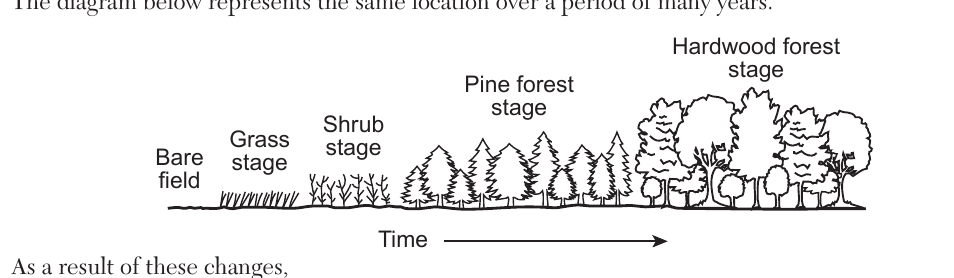
The diagram below represents the same location over a period of many years. It shows a sequence of stages over time: Bare field, then Grass stage, then Shrub stage, then Pine forest stage, then Hardwood forest stage. As a result of these changes,
- (A) biodiversity in the area decreases
- (B) the community becomes more stable ✓
- (C) the community becomes less stable
- (D) biodiversity is not affected
Worked solution
This sequence depicts ecological succession, which proceeds toward a climax community (hardwood forest) that is more diverse, complex, and stable than earlier stages.
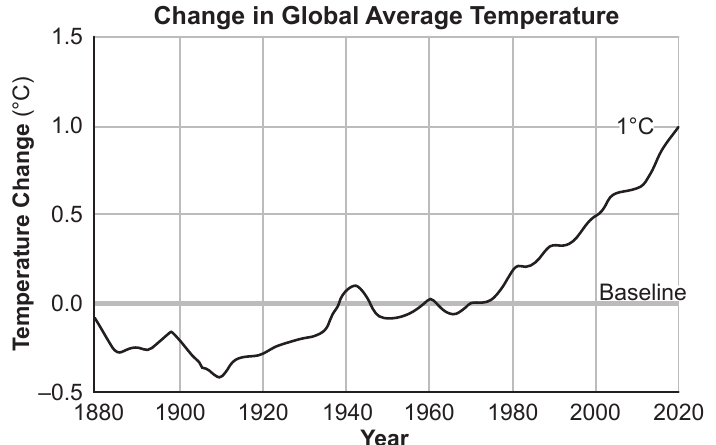
Between 1880 and 2020, Earth's temperature increased slightly more than 1 degree C. The graph below, titled 'Change in Global Average Temperature,' plots Temperature Change (degrees C) on the y-axis from -0.5 to 1.5 against Year on the x-axis from 1880 to 2020, with a baseline at 0.0 degrees C. The line fluctuates near or below the baseline from 1880 to about 1910, dips to about -0.4 degrees C around 1910, then rises with fluctuations to reach about 1.0 degrees C by 2020 (labeled '1 degree C' at the endpoint). The best explanation for this increase is
- (A) a decrease in the amount of sunlight reaching Earth each year
- (B) an increase in the amount of solar radiation reflected back into space
- (C) changing concentrations of gases in the atmosphere ✓
- (D) volcanic activity releasing ash and dust into the atmosphere
Worked solution
The long-term warming trend shown is best explained by increasing concentrations of greenhouse gases in the atmosphere, which trap more heat, not by decreased sunlight, increased reflection, or volcanic ash.
Two different species of animal prefer the same plant for food. One eats the leaves of the plant, the other prefers the fruit. By eating different parts of the same plant these species can successfully coexist because they do not
- (A) compete for limited resources ✓
- (B) live in the same area
- (C) reproduce at the same time of year
- (D) interact in a predator-prey relationship
Worked solution
By eating different parts of the plant, the two species occupy slightly different niches and avoid competing directly for the same limited food resource.
Different techniques are used to study cells. Fluorescent (glowing) tags allow scientists to visualize specific proteins as they are synthesized inside cells. Which part of a cell would be studied when using this technology to visualize protein synthesis?
- (A) nucleus
- (B) ribosome ✓
- (C) cell wall
- (D) cell membrane
Worked solution
Proteins are synthesized on ribosomes, so fluorescent tagging of proteins as they are made would be used to study ribosomes.
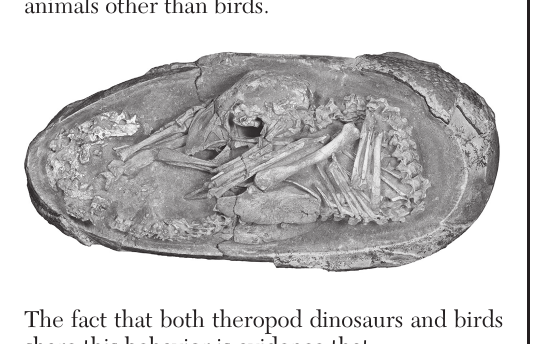
The image below shows a recently discovered fossil of an unhatched egg of a theropod dinosaur. The dinosaur is in a prehatching position similar to bird embryos in unhatched eggs today. Prior to finding the fossil, this behavior was never seen in animals other than birds. The fact that both theropod dinosaurs and birds share this behavior is evidence that
- (A) birds and theropod dinosaurs are related and share a common ancestor ✓
- (B) animals that develop in eggs must use this behavior to survive
- (C) this behavior decreases reproductive success
- (D) behaviors like this must be learned from parents
Worked solution
A shared, specific inherited behavior between theropod dinosaurs and birds is evidence of a close evolutionary relationship and common ancestry, not a universal requirement for survival or a learned behavior.
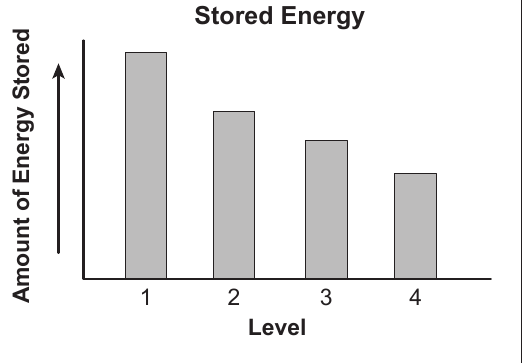
The graph below, titled 'Stored Energy,' represents the amount of stored energy in each level of an energy pyramid. The y-axis is 'Amount of Energy Stored' and the x-axis is 'Level,' with four bars for levels 1, 2, 3, and 4. The bar for level 1 is tallest, and each successive bar (2, 3, 4) is progressively shorter, with level 4 the shortest. The amount of stored energy between level 1 and level 4 decreases because
- (A) there are more organisms at level 4
- (B) level 1 has more consumers
- (C) at each level some energy is released as heat ✓
- (D) there are more producers at each level
Worked solution
Energy decreases moving up trophic levels because organisms use most of the energy for life processes and release it as heat, so only a fraction is stored and passed to the next level.
In a sexually reproducing species of plant, which change could occur that would have an effect on the species in the future?
- (A) changes in the egg cells in the ovaries of the plants' flowers ✓
- (B) variations that occur in the root cells of the plants in a field
- (C) differences in leaf cells that are exposed to solar radiation
- (D) a change in the DNA sequence caused by ultraviolet radiation in the cells of the plants' stems
Worked solution
Only mutations occurring in reproductive (gamete) cells such as egg cells can be passed on to offspring; changes in somatic cells like roots, leaves, or stems are not inherited.
Many factors go into producing goods that are used by people in their everyday lives. In manufacturing, the production of goods and use of energy
- (A) is always positive because it is the only way for goods to be produced
- (B) can only be negative because it generates a lot of pollution
- (C) is neither positive nor negative because the energy is necessary
- (D) can have both positive and negative effects ✓
Worked solution
Manufacturing goods provides benefits to people but also causes negative effects like pollution and resource depletion, so it has both positive and negative impacts.
The illustration below represents two cellular processes, A and B. Cellular Process A shows one circle at the top with two arrows pointing down to two separate circles below it. Cellular Process B shows two circles at the top with arrows pointing down and converging into one circle below. Select the row in the table that correctly identifies the cellular process.
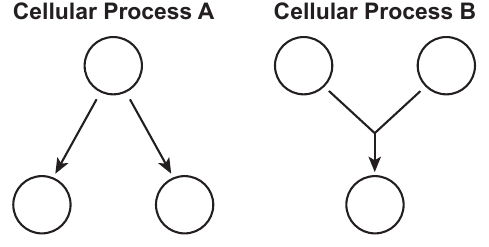
- (A) Row (1): meiosis, differentiation
- (B) Row (2): recombination, cloning
- (C) Row (3): fertilization, recombination
- (D) Row (4): mitosis, fertilization ✓
Worked solution
Process A shows one cell dividing into two, which is mitosis; Process B shows two cells combining into one, which is fertilization.
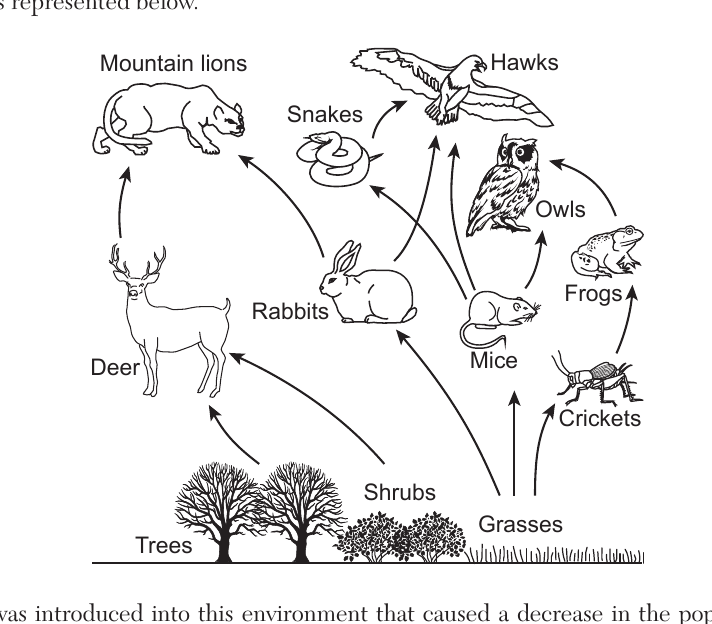
A food web is represented below, showing organisms Mountain lions, Snakes, Hawks, Owls, Frogs, Crickets, Rabbits, Mice, Deer, Shrubs, Grasses, and Trees connected by feeding arrows (producers at the bottom feeding herbivores, which feed various predators up to top carnivores like hawks and mountain lions). A chemical was introduced into this environment that caused a decrease in the population of mice. This would most likely cause
- (A) an increase in the deer population
- (B) an increase in the shrub population
- (C) a decrease in the tree population
- (D) a decrease in the snake population ✓
Worked solution
Since snakes prey on mice in this food web, a decrease in the mouse population reduces the food supply for snakes, most likely causing a decrease in the snake population.
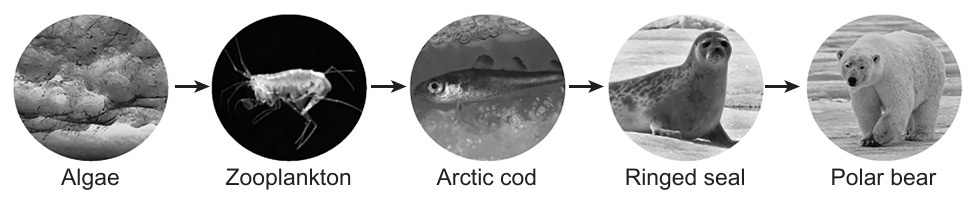
Populations of organisms making up an Arctic food chain are represented below: Algae, then Zooplankton, then Arctic cod, then Ringed seal, then Polar bear (each connected by an arrow to the next, in that order). Which statement concerning this food chain is the most accurate?
- (A) The greatest amount of energy in this food chain is located in the polar bear population.
- (B) Zooplankton, which provide food for the cod, are the main producers in this chain.
- (C) A reduction in the algae populations would most likely affect the survival of all the other populations in this food chain. ✓
- (D) The organisms in this chain can all produce their own energy during long periods of cold weather.
Worked solution
Algae are the producers and base of this food chain; a decline in algae reduces the energy available to every organism above it in the chain.
The protein in a hamburger is broken down into amino acids. Which two processes are involved in the breakdown of the protein and the absorption of the amino acids into the bloodstream?
- (A) synthesis and mitosis
- (B) digestion and diffusion ✓
- (C) mitosis and digestion
- (D) active transport and replication
Worked solution
Digestion breaks the protein down into amino acids, and diffusion moves those small molecules from the digestive tract into the bloodstream.
Tuatara are the last survivors of an ancient group of reptiles that lived at the same time as the dinosaurs. Tuatara contain a very large genome. The genome, its complete set of genes, is about two-thirds bigger than the human genome. One possible explanation for why the tuatara has survived since prehistoric times is that their large genome
- (A) has enabled them to live on a part of Earth that has not gone through any environmental changes since the time of the dinosaurs
- (B) provided the members of the species that gave them advantages for survival in changing environments ✓
- (C) can mutate when the species needs to develop characteristics that will adapt the members to live in areas that are very cold or very warm
- (D) can rearrange genes so that the species evolves when environmental changes occur
Worked solution
A larger genome provides more genetic variation among individuals, increasing the chance that some members possess traits advantageous for surviving environmental change; organisms cannot deliberately mutate or evolve on demand.
Two primary chemical messengers used in communication within the human body include
- (A) antibodies and pathogens
- (B) organic catalysts and toxins
- (C) enzymes and antigens produced by body cells
- (D) hormones and chemicals produced by nerve cells ✓
Worked solution
The two main chemical communication systems in the body are the endocrine system, using hormones, and the nervous system, using chemical messengers released by nerve cells.
Holstein cows have become the most widespread breed of dairy cow in the United States. They have been selectively bred to have many characteristics beneficial to dairy farmers. Holsteins are known for their ability to produce large quantities of milk. In addition, they are often calm and agreeable animals. Which statement best describes a potential risk of the selective breeding process to future generations of Holstein dairy cows?
- (A) Genetic diversity in the breed may become limited over time. ✓
- (B) It increases the chances of having even more desired characteristics.
- (C) It results in many highly productive and long-lived animals.
- (D) It improves the health of future generations of Holstein cattle.
Worked solution
Selective breeding for desired traits repeatedly favors similar genes, which reduces genetic diversity in the population over generations and increases risk from disease or environmental change.
An organism that normally has 32 chromosomes in its body cells is found to be producing gametes with either 15 or 17 chromosomes. It has not been able to successfully reproduce. The most likely reason for its inability to reproduce would be errors during the process of
- (A) mitosis
- (B) differentiation
- (C) meiosis ✓
- (D) cloning
Worked solution
Meiosis is the process that halves the chromosome number to form gametes; an error (nondisjunction) during meiosis produces gametes with an incorrect number of chromosomes, preventing normal fertilization and reproduction.
Which sequence correctly identifies the flow of energy through an ecosystem?
- (A) producers → consumer → herbivore
- (B) consumer → decomposer → producer
- (C) carnivore → herbivore → producer
- (D) producer → consumer → decomposer ✓
Worked solution
Energy flows in one direction, from producers to consumers to decomposers, unlike matter which cycles.
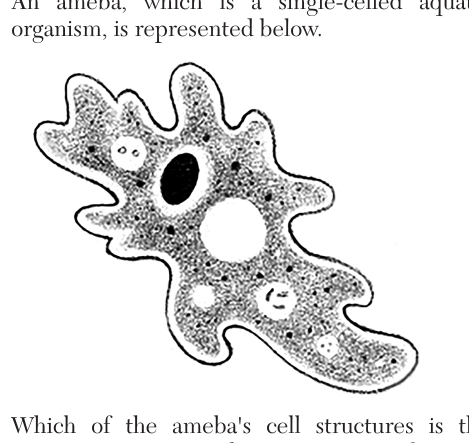
An ameba, which is a single-celled aquatic organism, is represented in a diagram showing its internal structures (nucleus, vacuoles, and other organelles). Which of the ameba's cell structures is the most important in obtaining oxygen from its environment?
- (A) cell membrane ✓
- (B) ribosome
- (C) mitochondrion
- (D) cell wall
Worked solution
The cell membrane is the structure through which dissolved oxygen diffuses into the cell from the surrounding water; the mitochondrion uses that oxygen but does not obtain it from the environment.
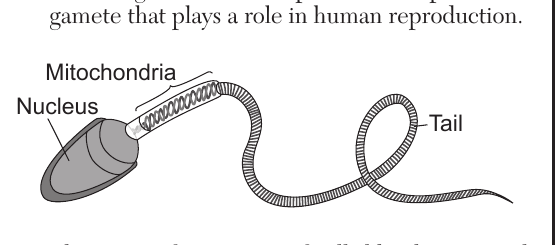
The diagram below represents a specialized gamete that plays a role in human reproduction, with the nucleus, mitochondria, and tail labeled. The proper functioning of cells like these is vital for human reproduction because
- (A) its mitochondria provide the nutrition to support the embryo
- (B) the tail makes it possible to deliver all the genetic information needed in a zygote
- (C) the cell differentiates to form specialized structures such as tissues and organs
- (D) its nucleus carries half the genetic information needed to form a zygote ✓
Worked solution
A sperm cell's nucleus contains a haploid set of chromosomes; when it fertilizes an egg (also haploid), the resulting zygote receives the full diploid genetic information.
If the amounts of carbon dioxide and water available increase, it is most likely that the first response by the producer organisms would be to
- (A) increase glucose synthesis ✓
- (B) increase DNA synthesis
- (C) decrease amino acid synthesis
- (D) decrease nucleic acid synthesis
Worked solution
Carbon dioxide and water are the direct raw materials of photosynthesis, so an increase in their availability first increases the rate of glucose (sugar) synthesis in producers.
There are high numbers of stray and feral cats in communities across the United States. In order to humanely control these cat populations, many areas are participating in programs to trap, spay, and release the animals. When a female cat is spayed, organs are surgically removed to prevent the animal from being able to reproduce. Which two organs are most likely removed from the female cat during this surgery?
- (A) uterus and placenta
- (B) ovaries and uterus ✓
- (C) ovaries and stomach
- (D) placenta and testes
Worked solution
Spaying removes the ovaries, which produce eggs and reproductive hormones, and the uterus, preventing the cat from becoming pregnant.
When you purchase a fishing license in New York State, you are told to check the Advisory Tables before consuming any of the fish you catch. The tables list the fish species you should not eat and others you can eat up to four times per month, due to the presence of toxic chemicals in the fish. A likely reason the table recommends that children under the age of 15 and young women should not eat any of the fish caught in some bodies of water is that
- (A) young women and children already have a large amount of these chemicals in their bodies
- (B) the chemicals may affect their development or harm potential unborn children ✓
- (C) the chemicals do not affect males, so they can eat up to four of the fish per month
- (D) the fish species on the list are in danger of extinction
Worked solution
Children are still developing and young women may become pregnant, so toxic bioaccumulated chemicals pose a greater risk of harming development or a future fetus in these groups.
Examples of two abiotic resources present in an ecosystem are
- (A) nitrogen and carbon dioxide in the atmosphere ✓
- (B) animal species and water
- (C) the plant species and soil minerals
- (D) populations of decomposers and pH of the soil
Worked solution
Nitrogen gas and carbon dioxide are both nonliving atmospheric gases, making them abiotic resources, whereas the other choices each include a living component.
Organisms A and B represent microorganisms viewed through a microscope. Organism A is viewed with a 10x objective and fills the field of view; Organism B is viewed with a 40x objective and fills the field of view. Although both seem to occupy the same field of view, which organism is actually larger?
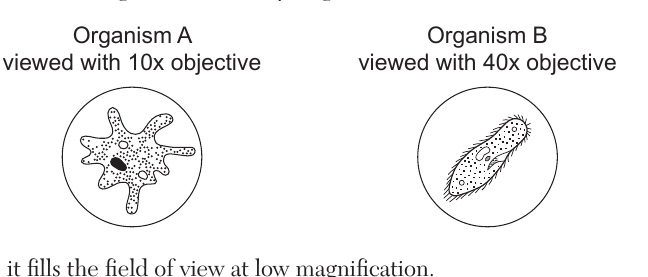
- (A) A is larger since it fills the field of view at low magnification. ✓
- (B) B is larger since the magnification is lower.
- (C) A is larger since the magnification is higher.
- (D) B is larger since it fills the field of view at high magnification.
Worked solution
Field of view diameter shrinks as magnification increases, so filling the field at low power (10x) requires a physically larger specimen than filling the smaller field at high power (40x); therefore A is actually larger.
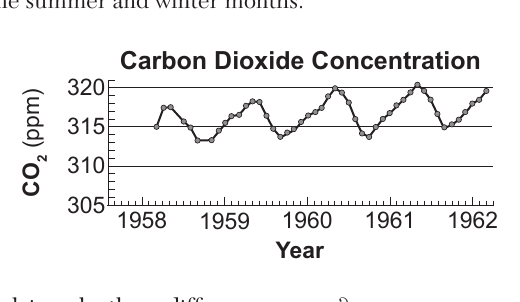
The data represented in the graph below show differences in the concentration of carbon dioxide (CO2) in the atmosphere during the summer and winter months. The graph, titled 'Carbon Dioxide Concentration,' plots CO2 (ppm) on the y-axis from 305 to 320 against Year on the x-axis from 1958 to 1962, showing a repeating up-and-down (sawtooth) pattern each year. Which statement best explains why these differences occur?
- (A) The rate of respiration in plants increases during the summer, releasing more CO2 into the atmosphere.
- (B) The activity of decomposers increases during the winter months, removing large amounts of CO2 from the atmosphere.
- (C) The increased exposure of plants to sunlight during the winter results in increased CO2 production.
- (D) The activity of autotrophs increases during the summer, removing CO2 from the atmosphere. ✓
Worked solution
The annual dips in CO2 correspond to increased photosynthetic activity of autotrophs during the growing season (summer), which removes CO2 from the atmosphere faster than it accumulates.
Altering the DNA of a muscle cell in a mouse by substituting one base pair with another could likely
- (A) change all the DNA sequences in the mouse
- (B) change one amino acid in a protein a muscle cell produces ✓
- (C) alter the carbohydrates that the muscle cells' ribosomes produce
- (D) alter the DNA of the offspring of the mouse
Worked solution
A point mutation in one gene changes only the codon(s) affected, potentially altering a single amino acid in the protein encoded by that gene, not the entire genome or the DNA of offspring (since this is a somatic muscle cell, not a gamete).
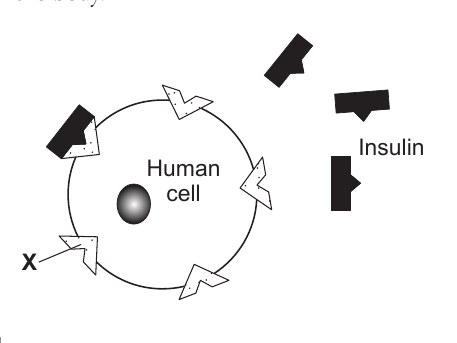
Base your answer on the diagram representing the interaction of a human cell and the hormone insulin, which maintains a healthy blood glucose level in the body. The diagram shows insulin molecules approaching the outer surface of a human cell, where arrow-shaped structures labeled X are embedded in the cell's outer boundary. Structure X is best described as a
- (A) signal molecule that is attached to the cell wall
- (B) protein molecule that releases energy that can be used by the cell
- (C) carbohydrate molecule that sends signals to other cells
- (D) receptor molecule that allows the cell to respond to changes ✓
Worked solution
Structure X binds insulin at the cell surface, identifying it as a receptor molecule that allows the cell to detect and respond to the hormone signal.
Some individuals cannot produce insulin. As a result, their cells will
- (A) produce another molecule to take over the function of insulin
- (B) synthesize more glucose for energy production
- (C) not respond appropriately to changes in blood glucose levels ✓
- (D) divide at a faster rate than when insulin is available
Worked solution
Insulin is required for cells to properly respond to rising blood glucose by taking up sugar; without it, cells fail to respond appropriately, leading to poor regulation of blood glucose levels (as in diabetes).
Two different human disorders are compared in the table below. Blood Disorder That Affects Hemoglobin: caused by a gene mutation; individuals with two copies of the mutated gene have the disorder; this disorder is more common in some populations than others; individuals are born with this disorder. Skin Disorder With a Sore That Does Not Heal: caused by a gene mutation; some individuals exposed to UV radiation develop the disorder; there are environmental factors associated with the disorder; abnormal skin cells reproduce rapidly in exposed individuals. Which statement describes the patterns of inheritance for these two disorders?
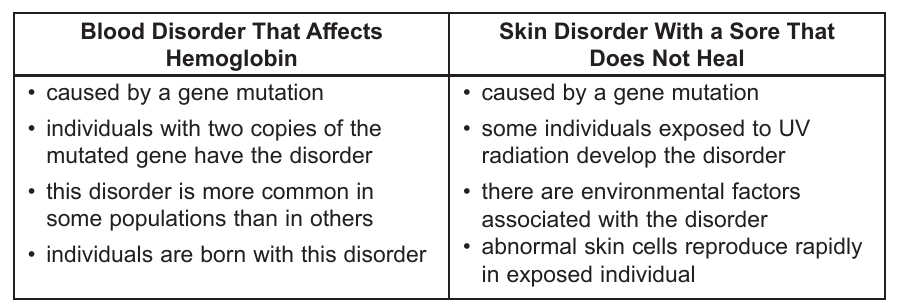
- (A) The blood disorder is not inherited but the skin disorder is inherited.
- (B) Both the blood and skin disorders are not inherited but can be passed to offspring.
- (C) The blood disorder can be inherited, and there are factors associated with the skin disorder that may be inherited. ✓
- (D) Both the blood and skin disorders can be inherited, with offspring always showing symptoms associated with the disorders.
Worked solution
The blood disorder follows a clear inherited pattern (present at birth, requires two mutant alleles), while the skin disorder is influenced by an inherited predisposition combined with environmental exposure (UV radiation), so it does not always appear regardless of environment.
Base your answer on the diagram and information below. Gray wolves have been identified as a keystone species, which is a species that is critical to the health of the Yellowstone ecosystem. The food web shows gray wolves preying on coyotes and elk; coyotes prey on voles; voles and elk feed on plants (grass, grain, fruits). The ecosystem will be disrupted with the loss of this keystone species because the loss would lead to
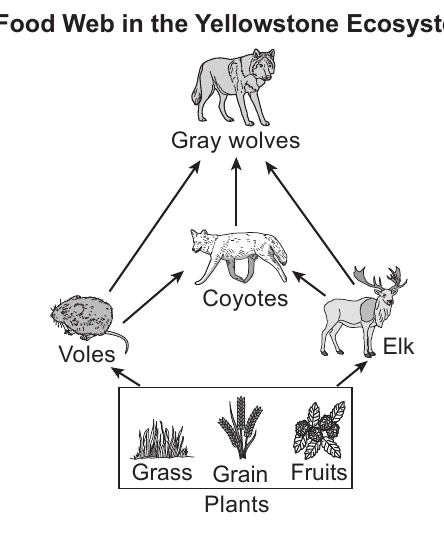
- (A) a decrease in the elk population
- (B) a decrease in the coyote population
- (C) an increase in the plant populations
- (D) a decrease in the plant populations ✓
Worked solution
Losing the keystone predator (wolves) removes a check on elk, coyote, and vole populations; their unchecked growth leads to overgrazing and a decrease in the plant populations.
Due to human concerns, wolves were removed from the Yellowstone ecosystem for approximately 70 years, from the 1920s until 1995. Scientists felt that, as a keystone species, it was important to reintroduce the wolves to
- (A) increase the stability of the natural environment ✓
- (B) limit the use of pesticides to control plant populations
- (C) increase the reproductive rate of the elk population
- (D) stimulate growth of the coyote population
Worked solution
As a keystone species, wolves help regulate prey populations (elk, coyotes) and, indirectly, plant populations, so reintroducing them restores balance and stability to the ecosystem.
Hydrangeas are plants with flowers that can change color. If the pH of the soil in which the plants are growing is altered, the flower color can vary from pink to blue. What is the best explanation for this phenomenon?
- (A) The genes of the hydrangea plants are mutated by the change in pH.
- (B) Some of the genes of the hydrangea plants die off due to the pH change.
- (C) The genes of the hydrangea plants can be turned on and off by different soil pH levels. ✓
- (D) The genes of the hydrangea plant change chromosomes with different soil pH levels.
Worked solution
Soil pH affects the availability of aluminum ions, which influences gene expression (turning color-related genes on or off) rather than causing mutations or destroying genes.
Base your answer on the information and graph below. In the 1990s, ranchers on Maggie Creek in Nevada moved the areas where their cattle were grazing to help vegetation regrow on the eroding creek banks. The graph 'Effect of Restoration at Maggie Creek, Nevada' shows the percentage of area with green vegetation across dates (January 1 through December 1) for three time periods: 1985-1994, 1995-2005, and 2006-2016. How many more months did the Maggie Creek area have some green vegetation cover in 2006-2016, compared with the number of months of green cover in 1985-1994?
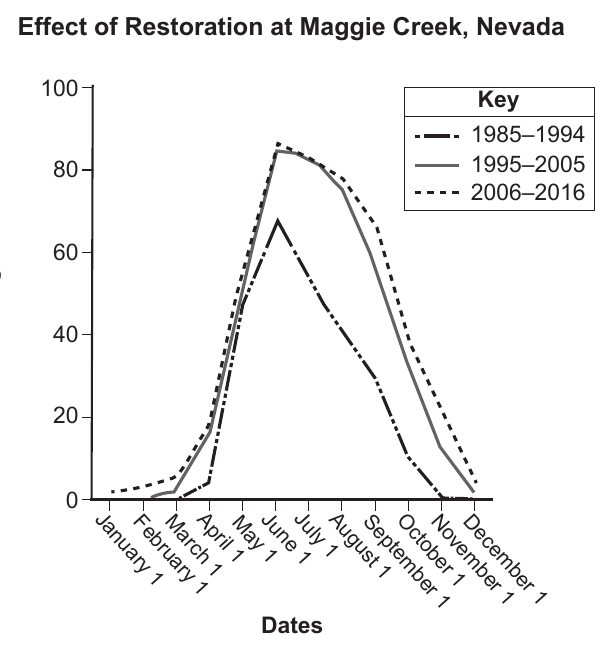
- (A) 5 months
- (B) 7 months
- (C) 3 months ✓
- (D) 10 months
Worked solution
Reading across the x-axis, the 2006-2016 curve stays above 0% green cover for about 3 more months than the narrower 1985-1994 curve, reflecting improved vegetation persistence after restoration.
The change in the environmental conditions of Maggie Creek over time is an example of how
- (A) human actions in one state can cause an ecosystem to develop into a stable grassland community in another state
- (B) grazing animals will eventually have a positive environmental effect on the land where they are kept
- (C) changing agricultural practices can help to restore environmental stability to certain locations ✓
- (D) once humans interfere with environmental factors, stability cannot be restored in an ecosystem
Worked solution
By altering where cattle grazed, ranchers reduced erosion and allowed vegetation to regrow, showing that adjusting agricultural practices can help restore stability to a damaged ecosystem.
Base your answer on the information below. PCBs are chemicals once used in electrical equipment, now banned because they have been found to cause cancer. These chemicals have made their way into the ocean and accumulated in the tissues of organisms; as larger organisms eat smaller ones, PCB levels become more concentrated, with organisms higher in the food chain containing the greatest levels. A student examined a diagram of an Antarctic food web (killer whale, leopard seal, elephant seal, emperor penguin, squid, Antarctic silverfish, blue whale, krill, zooplankton and phytoplankton) and claimed that the greatest concentration of PCBs would be found in leopard seals. Based on information provided in the Antarctic food web, one reason blue whales may contain a lower concentration of PCBs than killer whales is that blue whales
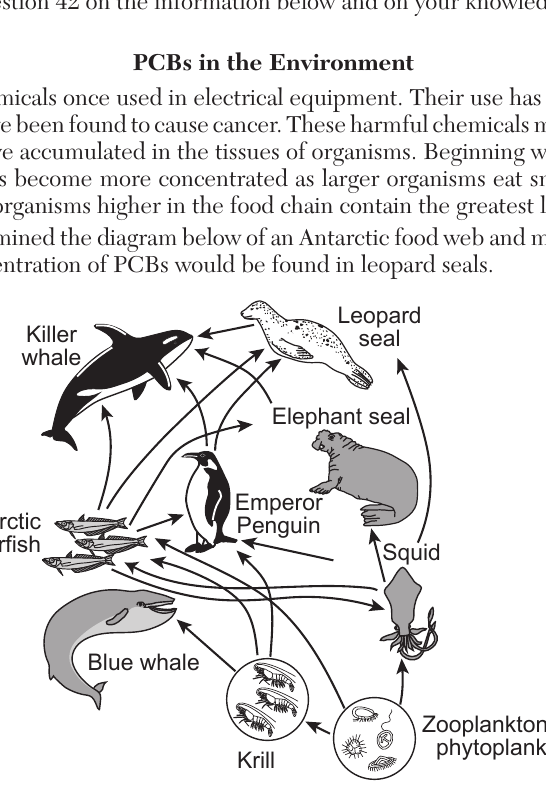
- (A) eat krill, which have a lower accumulation of PCBs than penguins and elephant seals ✓
- (B) eat only plants that contain PCBs
- (C) are eaten by killer whales that accumulate PCBs from blue whales and other species
- (D) do not live as long as killer whales, and therefore their PCB concentration is lower
Worked solution
Because blue whales feed directly on krill (a low trophic level), they accumulate far less PCB through biomagnification than killer whales, which prey on animals like seals and penguins that are already higher in the food web.
C. explodens, a species of ant that resides in the tropical jungles of Borneo, can explode when their nest is threatened. The nests contain adult ants, eggs, and larvae. When an adult ant comes in contact with an enemy ant, the C. explodens ant latches onto it and squeezes its own abdominal muscles until its abdomen bursts open, releasing a toxic goo. Which statement best describes this phenomenon?
- (A) The ants needed a way to protect their offspring, so they developed a way to release a toxic goo to kill enemies.
- (B) This behavior has resulted in greater reproductive success of the ants, since it kills the enemies who would have fed on their offspring. ✓
- (C) The offspring of the ants will not inherit the exploding abdomen trait because this trait is not genetic.
- (D) The ant species will likely become extinct, since most of them die while protecting the nest.
Worked solution
By sacrificing itself to kill an enemy threatening the nest, an ant increases the survival of its genetically related colony members (including eggs and larvae), increasing overall reproductive success of the colony; the behavior was not 'developed' with intent, and it is a genetically based (heritable) trait.
Base your answer on the diagram below and on your knowledge of biology. The diagram represents an evolutionary pathway for certain organisms over many years, with a time axis (dashed horizontal lines) marked Present time, 25 million years ago, 50 million years ago, 75 million years ago, and 100 million years ago. Branch points and lineages are shown connecting labeled dots (X, A, B, C, D, E, F, G, H, I, J, K, L, M, N, O, P, Q) from a common ancestor X at 100 million years ago up to several lineages that reach the present time. Identify the organism in the diagram that became extinct about 60 million years ago.
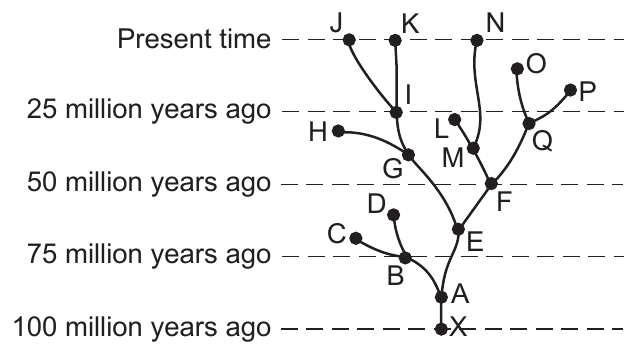
Worked solution
On a branching evolutionary diagram, extinction is shown wherever a lineage's line ends (a branch tip) without continuing further up toward the present. The branch that terminates at the height corresponding to roughly 60 million years ago, between the 50- and 75-million-year marks, is labeled F, so F is the organism that went extinct at that time.
Base your answer to questions 45 through 48 on the information below and on your knowledge of biology. The Common Loon Loons are aquatic birds found on freshwater lakes throughout Canada and the northern part of the United States from early spring through fall. They inhabit lakes over five acres in size, with clear water and a good supply of fish for food. They migrate to coastal areas for the winter. In most states where loons are found, they are at risk of becoming extinct and require management to ensure the health of the population. To help keep track of how many loons are living on specific lakes, state wildlife specialists train volunteer citizen scientists how to monitor loon populations during breeding season. This provides additional data that helps researchers determine loon population trends and factors affecting their survival. During the breeding season, a pair of loons typically produces one or two chicks per year. The chicks are slow to mature. They are usually seven years old before their first successful breeding season. Loons have dense bones rather than the hollow bones characteristic of most birds. Their wings are comparatively small for their body size. Adults weigh an average of 8-12 lbs. Another trait of loons is their large, webbed feet and legs set far back on their bodies. To fly, they run on top of the water, and flap their wings to gain enough momentum for liftoff. The data table below shows the number of adult loons and chicks counted in the southern part of Maine between 1985 and 2020. Number of Loon Adults and Chicks Counted in Southern Maine 1985-2020 | Year | Chicks | Adults | | --- | --- | --- | | 1985 | 200 | 1470 | | 1995 | 260 | 2650 | | 2010 | 280 | 2780 | | 2017 | 453 | 2817 | | 2019 | 372 | 2820 | | 2020 | 414 | 2974 | Directions (45-46): Using the information given in the data table, construct a line graph on the grid provided, following the directions below. 45 Mark an appropriate scale, without any breaks in the data, on each labeled axis.
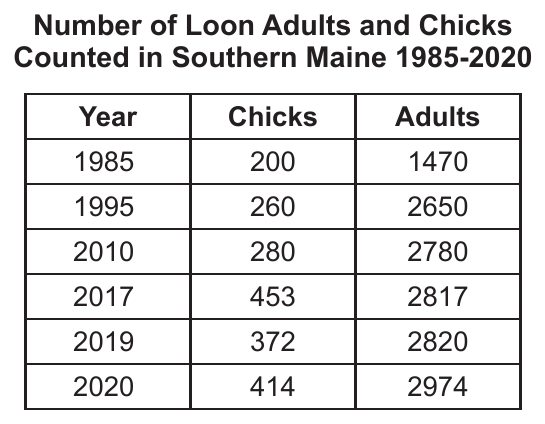
Worked solution
An appropriate scale uses equal intervals with no gaps or breaks so that every data value can be plotted accurately on the grid.
Plot the data for both the adults and the chicks following the directions below: - Plot the data for the loon adults on the grid and connect the points. Surround each point for the loon adults with a small triangle. - Plot the data for the loon chicks on the grid and connect the points. Surround each point for the loon chicks with a small circle.
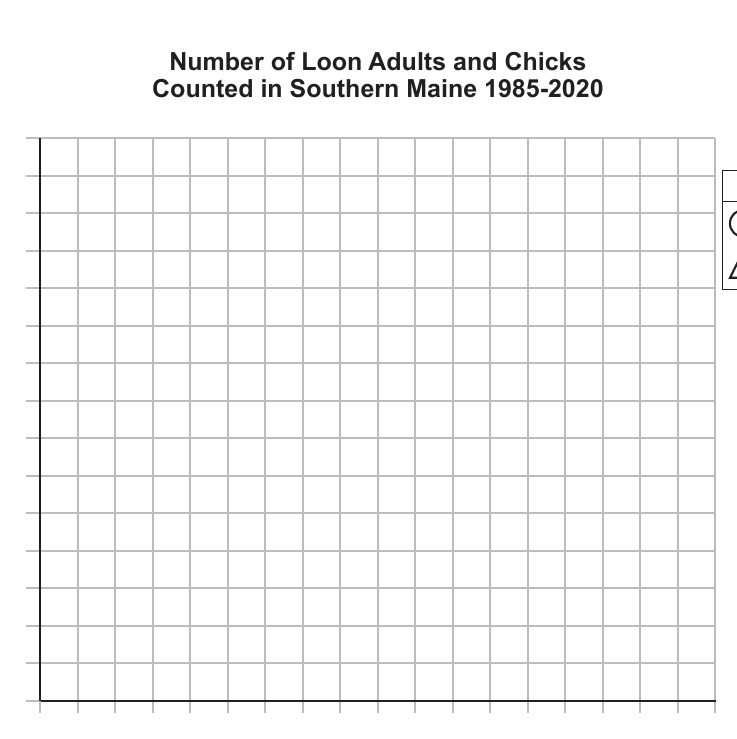
Worked solution
Correctly plotting requires locating each data pair on the scaled axes and using the specified point symbols, connected in chronological order.
Below are two graphs showing the number of loon adults, immature loons, and chicks observed during the annual loon census conducted by the Audubon Society of New York on the lakes and ponds throughout the Adirondack Park in New York State. 2001 Annual Loon Census: #Adults = 308, #Chicks = 59, #Immature Loons = 6 2020 Annual Loon Census: #Adults = 551, #Chicks = 70, #Immature Loons = 17 47 The best explanation for why loon populations did not show a rapid change in size during the Maine and New York studies is that loons
- (A) produce three or four chicks per year
- (B) take seven years to reach sexual maturity ✓
- (C) live mainly on large lakes
- (D) were counted by volunteers, not wildlife experts
Worked solution
Because loons take about seven years to reach breeding age and raise very few young per year, their populations grow or decline gradually rather than rapidly, matching the slow, steady trends seen in both the Maine and New York data.
Compare the trend in loon population sizes over time represented in the two New York graphs above to the trend observed in the data table for the southern part of Maine. Support your answer with information from the New York graphs and Maine data table.
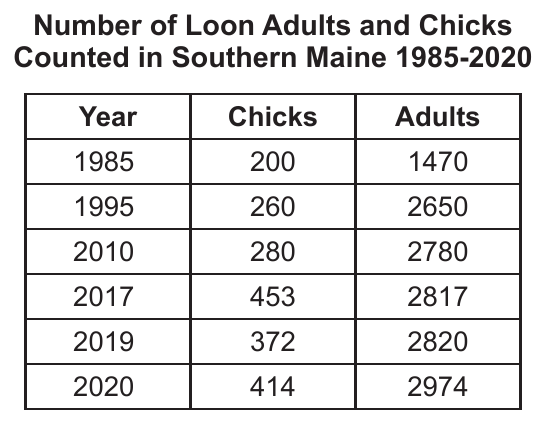
Worked solution
Comparing the earliest and most recent counts in both the New York bar graphs and the Maine data table shows both populations increasing over time, indicating a similar overall growth trend.
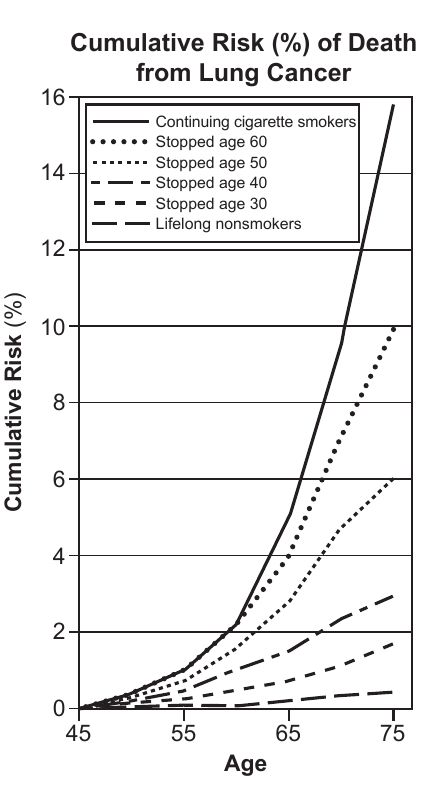
Base your answer to question 49 on the graph below and on your knowledge of biology. The graph shows the effects of stopping smoking at different ages along with the cumulative risk (%) of death from lung cancer up to age 75 in men. The study took place in the United Kingdom. The graph plots Cumulative Risk (%) (y-axis, 0 to 16) against Age (x-axis, 45 to 75) for six groups: Continuing cigarette smokers (rises to about 16% by age 75), Stopped age 60 (rises to about 10%), Stopped age 50 (rises to about 6%), Stopped age 40 (rises to about 3%), Stopped age 30 (rises to about 2%), and Lifelong nonsmokers (stays near 0-1%). 49 Doctors claim that the earlier someone stops smoking, the lower the risk of dying of lung cancer. Which statement best describes evidence that supports this claim?
- (A) Men that smoked 40 cigarettes per day have the same risk as smoking 20 cigarettes per day at any age.
- (B) Men that continued to smoke had an approximately 16% risk of death, and those that stopped at age 30 had a lower risk. ✓
- (C) Men that never smoked had the same risk as those that smoked until the age of 30.
- (D) Men that stop smoking at age 40 have a greater risk of bladder cancer than lung cancer.
Worked solution
The graph directly shows continuing smokers reaching about 16% cumulative risk while those who quit at age 30 have a much lower risk, supporting the claim that quitting earlier lowers lung cancer death risk.
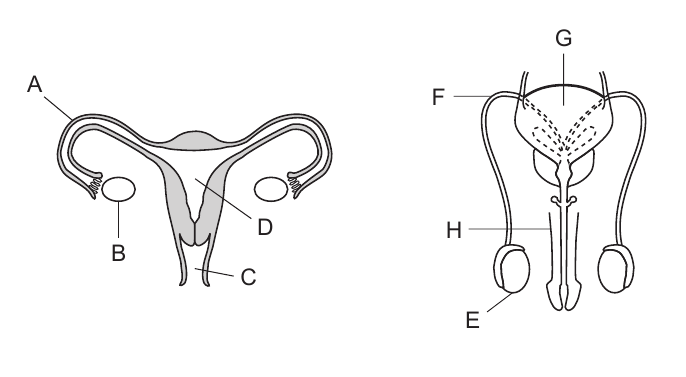
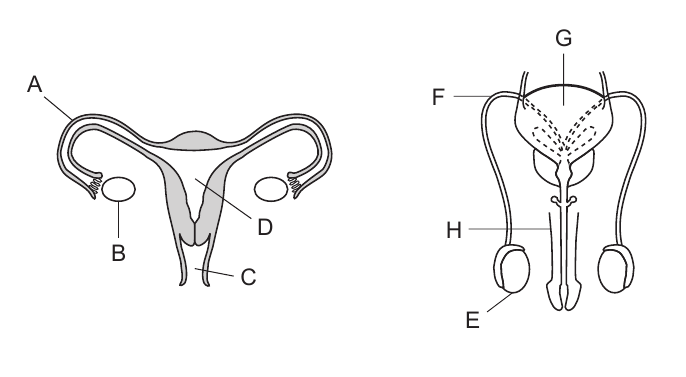
Base your answers to questions 50 and 51 on the diagram below and on your knowledge of biology. The diagram represents the reproductive systems of the human female and male. In the female diagram, structure A is the upper coiled tube (oviduct/fallopian tube), B is a small oval structure beneath A (an ovary), D is an arrow pointing into the central pear-shaped organ (uterus), and C is at the bottom (cervix/vagina). In the male diagram, G is at the top (bladder region), F points to a duct near the top, H points to the central shaft (urethra/penis), and E is a small oval structure at the bottom (a testis). 50 The two labeled structures that function to produce gametes and hormones are
- (A) A and F
- (B) B and E ✓
- (C) C and H
- (D) D and G
Worked solution
The ovary (B) and testis (E) are the gonads, the only structures shown that produce both gametes (eggs and sperm) and sex hormones.
Pelvic inflammatory disease and sexually transmitted infections can lead to a blockage of the structure represented by letter A. Explain how this blockage would interfere with the formation of a zygote.
Worked solution
Blocking the fallopian tube prevents the egg from traveling to meet sperm, so fertilization and zygote formation cannot take place.
Detritivores are animals that consume and break down dead plant and animal matter from ecosystems. Explain why the decline and extinction of many species of detritivores may have negative consequences on the stability of an ecosystem.
Worked solution
Detritivores are essential for recycling nutrients from dead organisms; their loss disrupts nutrient cycling, which destabilizes the ecosystem.
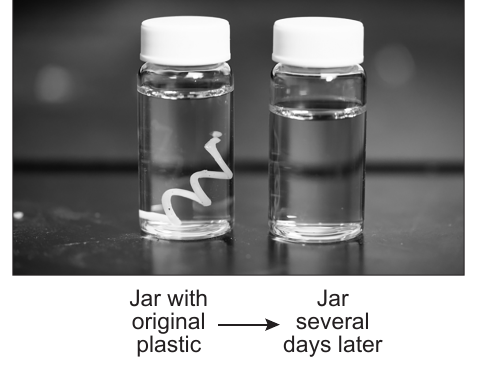
Base your answers to questions 53 and 54 on the information and photograph below and on your knowledge of biology. A research team of students added water and an experimental enzyme to a jar containing a piece of the type of plastic that is commonly used in food packaging. Several days later, the plastic was no longer visible. 53 Identify one factor that would influence the rate at which the experimental enzyme breaks down this type of plastic.
Worked solution
Like all enzymes, the rate of this reaction depends on factors such as temperature, pH, or the concentrations of enzyme and substrate.
The research team claimed that the experimental enzyme would break down all plastics. The students repeated the experiment with a different type of plastic. This time, the plastic was not broken down by the enzyme. 54 Explain why the enzyme is not able to break down all types of plastics.
Worked solution
Enzyme specificity means an enzyme's active site only fits certain substrates; a plastic with a different molecular shape will not bind to and be broken down by that enzyme.
Base your answer to question 55 on the information below and on your knowledge of biology. Ultrasonic repellents are electronic devices designed to repel and remove household pests. When plugged in, they produce ultrahigh-frequency sound waves to chase away mice, rats, fleas, cockroaches, silverfish, and spiders. The sound these devices make cannot be heard by humans. These pest-control devices are often used in environments where the use of poison is prohibited or not recommended. 55 Identify one concern, other than its effectiveness, that people might have before using it in their home.
Worked solution
A reasonable concern is the unintended effect of the ultrasonic sound on pets or other household organisms that can hear frequencies humans cannot.
Base your answers to questions 56 and 57 on the information, photograph, and illustration below and on your knowledge of biology. Mouse DNA and Epigenetics In 2000, scientists at Duke University designed an experiment using mice that carry a gene for yellow fur color. Mice with the yellow fur gene also have a large appetite and a tendency to develop cancer and diabetes. The scientists wanted to see if they could reduce the chances of the offspring of the yellow mice developing these diseases by changing the expression of the gene for yellow fur color. They began by changing the diet of yellow female mice to a diet containing food rich in methyl groups. Methyl groups are small clusters of chemicals that can attach to a gene and turn it off. Their offspring, that had methylated DNA, were found to be thin, have brown fur, and had less chance of developing cancer and diabetes. The researchers concluded that the offspring were born with an epigenetic alteration to their DNA. Epigenetic alterations are inheritable changes in gene expression patterns independent of the primary DNA sequence. The expression of the gene is altered but the DNA sequence usually remains unchanged. In addition to diet, other factors such as hormones, physical activity, stress, tobacco, and alcohol use can also cause epigenetic changes. 56 Sometimes identical twins have different physical traits. Using the experiment Duke scientists performed on mice with the yellow fur color gene as a model, explain how epigenetics could be the cause of differences observed in identical twins.
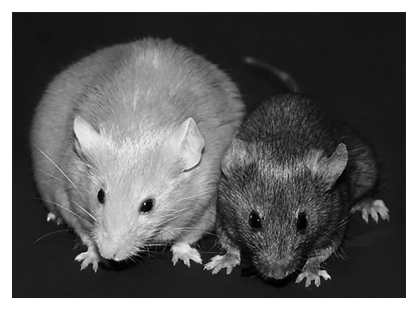
Worked solution
Just as diet altered gene expression (via methylation) and changed fur color in genetically similar mice, different environmental exposures can epigenetically alter gene expression differently in identical twins, producing different traits.
Explain why epigenetic changes are not usually considered to be mutations.
Worked solution
Because epigenetic modifications leave the underlying DNA sequence unchanged and only affect gene expression, they are not classified as mutations.
Base your answer to question 58 on the information below and on your knowledge of biology. A Scorpion's Secret Weapon Ingredient Getting stung by a scorpion is painful. The pain serves as a warning to its predators to stay away. Scorpion venom contains toxins that are recognized by the pain receptors on nerve cells. These receptors are the same as those that cause a burning feeling when you touch something hot. But, being stung by a scorpion is much more painful than touching a hot object. The venom itself doesn't cause all of the pain. It also contains an acid that changes the pH of the area surrounding the affected nerve cells. The change in pH increases the intensity of the pain message. 58 In a population of scorpions, a mutation occurred that resulted in the venom having no effect on its predators. Explain why the number of predators that feed exclusively on scorpions would decrease over time. Justify your answer.
Worked solution
The venom's role was to deter predators with pain. With no effect, predators are no longer warned off and overconsume scorpions; since the predators are specialists that eat only scorpions, the resulting decline in their sole prey causes their own population to decrease.
Base your answers to questions 59 through 61 on the information below and on your knowledge of biology. Scientists have studied the medicinal herb, Fritillaria delavayi (fritillary), which is very difficult to cultivate. This herb is used in Chinese traditional medicine to treat lung conditions such as bronchitis and bad coughs. This threatened herb grows wild among the rocks in dry, cold, mountainous places in China. Most fritillary have bright green leaves and sunny yellow flowers. The scientists have noticed something unusual: In places where people often gather and harvest the herb, more and more plants of the same species have a dull brown flower color. Many people have trouble finding this dull brown variety that blends in with the rocky area where it grows. 59 Identify the original source of the brown variation.
Worked solution
New traits like flower color variation ultimately originate from random gene mutations that occur within a population.
Fritillary grows very slowly, taking five years to reproduce. Predict which flower color will be more common in areas accessible by humans after 20 years. Support your answer.
Worked solution
Because camouflaged brown plants survive human harvesting better than visible yellow plants, natural/human-driven selection would increase the proportion of brown-flowered fritillary over successive generations.
Human efforts to cultivate this endangered species have not been successful. What argument could be made to justify continued efforts to preserve this species by cultivation?
Scientists have studied the medicinal herb, Fritillaria delavayi (fritillary), which is very difficult to cultivate. This herb is used in Chinese traditional medicine to treat lung conditions such as bronchitis and bad coughs. This threatened herb grows wild among the rocks in dry, cold, mountainous places in China. Most fritillary have bright green leaves and sunny yellow flowers. The scientists have noticed something unusual: In places where people often gather and harvest the herb, more and more plants of the same species have a dull brown flower color. Many people have trouble finding this dull brown variety that blends in with the rocky area where it grows.
Worked solution
Preserving a threatened species with medicinal and ecological value protects against irreversible loss of biodiversity and a useful natural resource.
Three different food chains present in a food web are represented below. (a) prickly pear cactus -> antelope squirrel -> western diamondback rattlesnake -> red-tailed hawk (b) saguaro cactus -> wood rat -> western diamondback rattlesnake (c) brittlebush -> grasshopper mouse 62 Identify the food chain, (a), (b) or (c), in which there would be the least amount of energy available to the last consumer in the feeding sequence. Support your answer.
Worked solution
Because energy decreases at each trophic transfer, the food chain with the most links (a) leaves the smallest amount of energy for its final consumer.
Base your answers to questions 63 and 64 on the information below and on your knowledge of biology. Woman Gives Birth After Uterus Transplant Women with uterine factor infertility (UFI) either don't have a uterus or have a uterus that doesn't function. A uterus transplant has emerged as a potential solution for these women. In 2019, the first baby in North America was delivered by a mother who received a uterus transplant. 63 Describe a role of the uterus in the process of human reproduction.
Worked solution
The uterus provides the site of implantation and the environment for fetal development during pregnancy.
During pregnancy, the women are given medication to prevent the transplanted uterus from being rejected. After the baby is born, the transplanted uterus is removed. 64 Explain why a woman's body would reject a transplanted uterus if she does not take the medication.
Worked solution
Without immunosuppressant medication, the recipient's immune system recognizes the transplanted uterus's antigens as foreign and attacks the tissue, causing rejection.
Base your answers to question 65 on the information and graph below and on your knowledge of biology. Human actions have affected the biodiversity of multiple ecosystems on Earth. The graph 'Species Extinctions and Human Population Size' plots Time (1800 to 2010) on the x-axis, with Species Extinctions (0 to 60000) on the left y-axis and Human Population in millions (0 to 8000) on the right y-axis. Both the Species Extinctions curve and the Human Population curve rise slowly from 1800 to about 1950, then rise sharply from 1950 to 2010, reaching roughly 56,000 extinctions and roughly 7,000+ million people by 2010. 65 Make a claim as to how human actions have affected biodiversity. Support your claim with evidence from the graph.
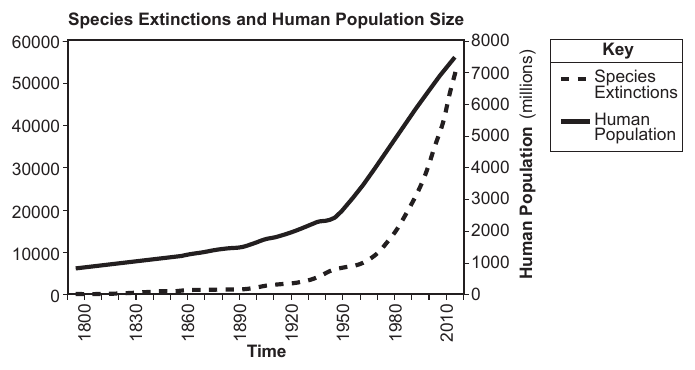
Worked solution
The graph shows species extinctions rising in step with human population growth, supporting the claim that increased human activity has reduced biodiversity.
Base your answer to question 66 on the diagram below and on your knowledge of biology. The diagram represents a feedback mechanism in humans: Higher blood sugar leads to 'Pancreas secretes more of a hormone', which leads to Lower blood sugar, which leads to 'Pancreas secretes less of a hormone', which leads back to Higher blood sugar, forming a continuous cycle. 66 An individual with a healthy pancreas eats a starchy snack. Explain why the pancreas would secrete more hormone a short time later. Support your answer with information from the diagram.
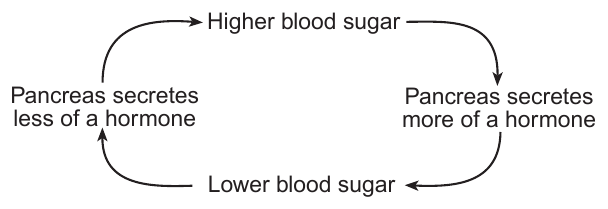
Worked solution
The starchy snack raises blood glucose, and per the feedback diagram, higher blood sugar directly triggers the pancreas to secrete more hormone (insulin) to restore normal blood sugar levels.
Base your answer to question 67 on the information and diagram below and on your knowledge of biology. The diagram represents two molecules, A and B, resulting from the digestion of foods, moving into a cell. 67 Explain how the lack of nutrients can impact the cellular process needed to move molecule A into this cell.
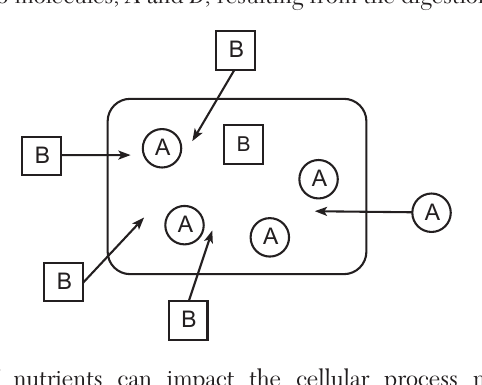
Worked solution
The diagram shows molecule A moving into the cell against its concentration gradient, which requires active transport powered by ATP from cellular respiration; without nutrients to fuel respiration, this energy-requiring process is impaired.
Base your answers to questions 68 through 70 on the information below and on your knowledge of biology. Mitochondria Mitochondria are organelles present in most complex cells. 68 Explain why mitochondria are essential to the survival of complex organisms.
Worked solution
Mitochondria supply the ATP that cells need to perform life-sustaining activities; complex organisms cannot survive without this constant energy supply.
Unlike most other organelles, mitochondria contain their own DNA. This DNA is in the form of a double-stranded, ring-shaped molecule that can replicate. The number of mitochondria in a cell can increase when mitochondria reproduce. Mitochondrial DNA mutates. Some of these mutations have been linked to certain diseases in humans. Mitochondrial DNA is passed on to children through their mothers. The chart below illustrates this process. Mitochondrial Inheritance 69 Provide evidence from the mitochondrial inheritance chart that supports the claim that mitochondria are usually inherited from the mother.
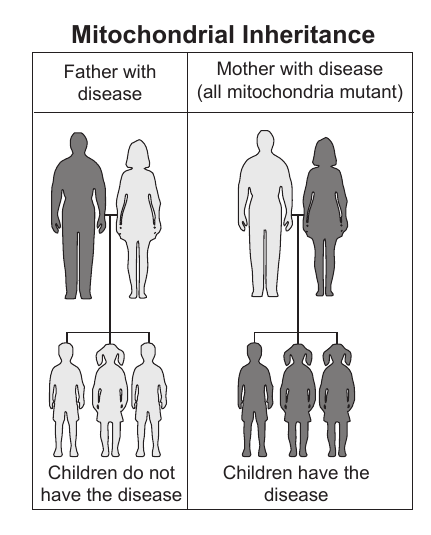
Worked solution
The chart's contrasting outcomes for father-affected versus mother-affected crosses directly demonstrate that mitochondrial traits pass only through the mother.
Different cells in the human body contain different numbers of mitochondria. The chart below shows the approximate number of mitochondria present in various cells. Number of Mitochondria in Various Cells (per cell) Liver cell: 2,500 Skeletal muscle cell: 1,200 White blood cell in lung: 700 Dermal cell (just under the skin): 200 White adipose cell (fat storage): 100 Red blood cell: 0 70 State which cell type would probably be most affected by mitochondrial diseases. Support your answer.
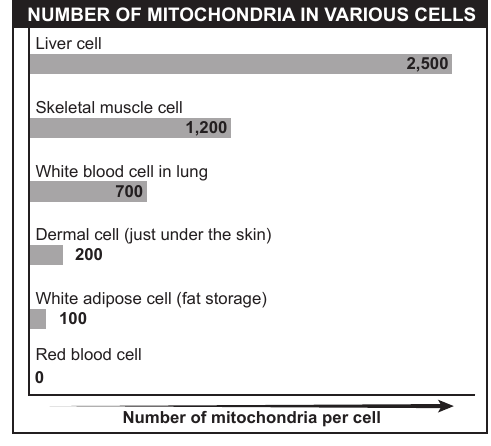
Worked solution
Since mitochondrial disease impairs energy production, the cell type most dependent on large numbers of mitochondria (the liver cell, with 2,500 per cell) would be affected the most.
Base your answers to questions 71 and 72 on the information below and on your knowledge of biology. Why Is the Sky White? One method researchers are investigating to decrease the impact of climate change is stratospheric aerosol scattering. This involves using airplanes or balloons to spray tiny particles of sulfate aerosols or calcium carbonate into the upper atmosphere. The particles reflect sunlight back into space. Climate modeling has shown that the use of this technology could lead to a decrease in extreme temperatures and the intensity of tropical storms. It could also reduce ice loss and sea-level rise as well. However, there are risks associated with this technology. While the models show global benefits, local benefits might vary considerably. Also, since this technology doesn't address carbon emissions, as it continues to get warmer there will be a need to spray more and more particles into the atmosphere. This could change the appearance of the sky from blue to white. There are also concerns that introducing sulfate aerosols into the upper atmosphere could damage the ozone layer. 71 State one reason for supporting the use of this technology.
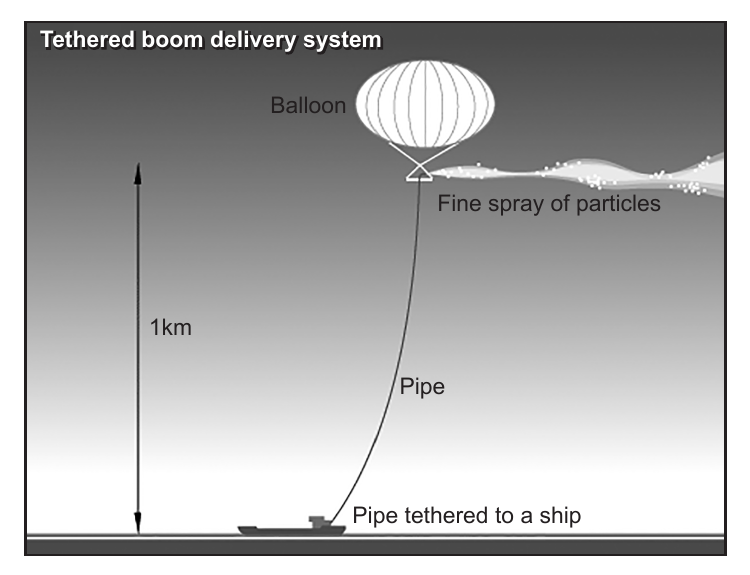
Worked solution
The passage states the technology's modeled benefits directly, so any one of the stated global benefits (lower extreme temperatures, weaker storms, less ice loss/sea-level rise) is an acceptable supporting reason.
Explain why it would be important to continue efforts to reduce carbon emissions even if this technology were to be used.
Why Is the Sky White? One method researchers are investigating to decrease the impact of climate change is stratospheric aerosol scattering. This involves using airplanes or balloons to spray tiny particles of sulfate aerosols or calcium carbonate into the upper atmosphere. The particles reflect sunlight back into space. Climate modeling has shown that the use of this technology could lead to a decrease in extreme temperatures and the intensity of tropical storms. It could also reduce ice loss and sea-level rise as well. However, there are risks associated with this technology. While the models show global benefits, local benefits might vary considerably. Also, since this technology doesn't address carbon emissions, as it continues to get warmer there will be a need to spray more and more particles into the atmosphere. This could change the appearance of the sky from blue to white. There are also concerns that introducing sulfate aerosols into the upper atmosphere could damage the ozone layer.
Worked solution
Because the technology only masks the temperature effects of greenhouse gases without lowering carbon dioxide levels, reducing emissions directly is still necessary to address the underlying cause and its other effects.
When the proportion of a gene for a specific trait in a population of finches increases over time, the most likely cause of this increase would be
- (A) selective breeding
- (B) species extinction
- (C) natural selection ✓
- (D) ecological succession
Worked solution
A shift in allele frequency within a population over generations, without human intervention, is the definition of natural selection.
A scientist conducts an experiment in order to
- (A) choose variables
- (B) test a hypothesis ✓
- (C) collect data
- (D) identify a control
Worked solution
The other choices describe procedural steps within an experiment, but the fundamental purpose of running the experiment is to test a hypothesis.
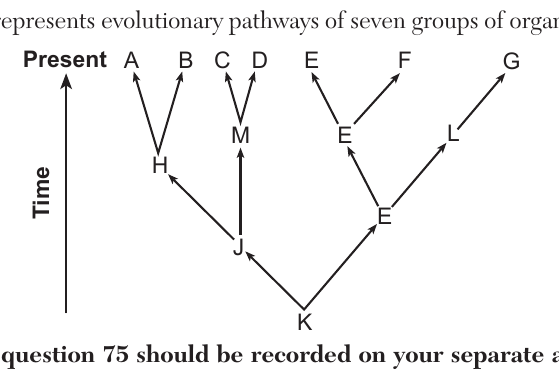
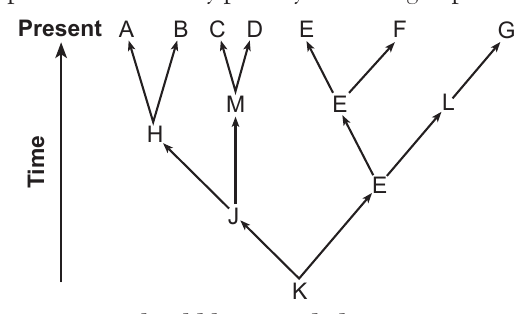
Base your answers to questions 75 through 77 on the information and diagram below and on your knowledge of biology. The diagram represents evolutionary pathways of seven groups of organisms alive today. 75 Which species is most closely related to species M?
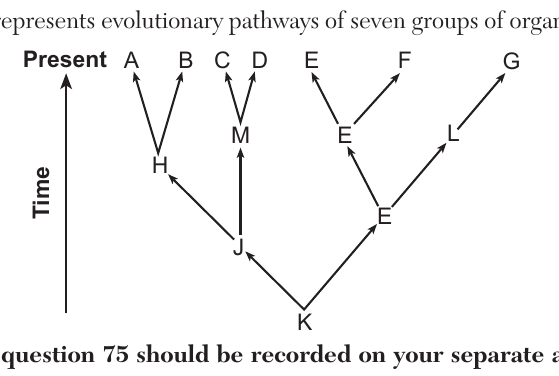
- (A) E
- (B) F
- (C) G
- (D) H ✓
Worked solution
The branch point/lineage that connects to M through the most recent shared ancestor in the cladogram is H, making it the most closely related among the given choices.
Note: The answer to question 76 should be recorded on your separate answer sheet. 76 Which species appears to have been well adapted to its environment for a long period of time?
- (A) E ✓
- (B) F
- (C) C
- (D) D
Worked solution
A long, unbranched lineage on a cladogram indicates minimal evolutionary change over time, which suggests the species was already well adapted to a stable environment.
The diagram was based on fossil evidence. Explain why other forms of evidence would help support the accuracy of the evolutionary pathways represented in the diagram.
Worked solution
Because fossil evidence alone can be incomplete, additional independent evidence (molecular, anatomical, or embryological) strengthens confidence in the accuracy of the proposed evolutionary relationships.
When determining a pulse rate, why is it best to use the average of three readings?
Worked solution
Averaging repeated trials minimizes the effect of random error, producing a more precise and trustworthy measurement.
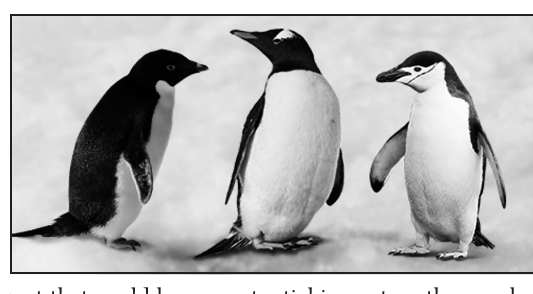
Base your answer to question 79 on the information below and on your knowledge of biology. Selecting agents can have a significant impact on the size of many populations living in an area. 79 Identify one selecting agent that could have a potential impact on the number of individuals in the various penguin populations living in the Antarctic Peninsula.
Worked solution
Any factor that limits survival or reproduction, such as predation, food supply, or climate change, is a valid selecting agent for penguin populations.
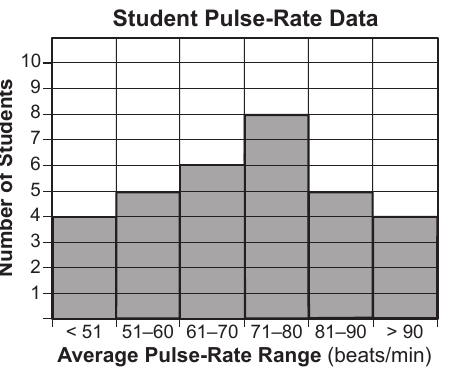
Base your answer to question 80 on the information below and on your knowledge of biology. Pulse-rate data were collected from some students during their study hall. The data are shown in the histogram below. Student Pulse-Rate Data (Average Pulse-Rate Range, beats/min : Number of Students) < 51 : 4 51-60 : 5 61-70 : 6 71-80 : 8 81-90 : 5 > 90 : 4 80 State one way the data would most likely be different if the pulse rates were collected immediately after gym class instead of during study hall.
Worked solution
Because exercise raises heart rate, pulse-rate data collected right after gym class would shift toward higher ranges compared to data collected while resting in study hall.
Note: The answer to question 81 should be recorded on your separate answer sheet. 81 Ground finches in the Galapagos Islands are seed eaters. The beaks of the offspring are very close in size to the beaks of their parents. The best explanation for this observation is that
- (A) a bird with a very small beak will die
- (B) the temperature of the environment determines the size of the beak
- (C) only birds with very small beaks are able to reproduce
- (D) the size of the beak is determined mostly by genes ✓
Worked solution
Consistent resemblance between parents and offspring in beak size reflects genetic inheritance of the trait, not an environmental or selective effect alone.
Base your answers to questions 82 and 83 on the information below and on your knowledge of biology. A student was assigned the task of determining which of three species of plant (species L, M, or N) was most closely related to Botana curus (BC). The student compared a segment of genetic material from each species using the procedure represented below. Note: The answer to question 82 should be recorded on your separate answer sheet. 82 A valid conclusion that can be drawn from these results is that
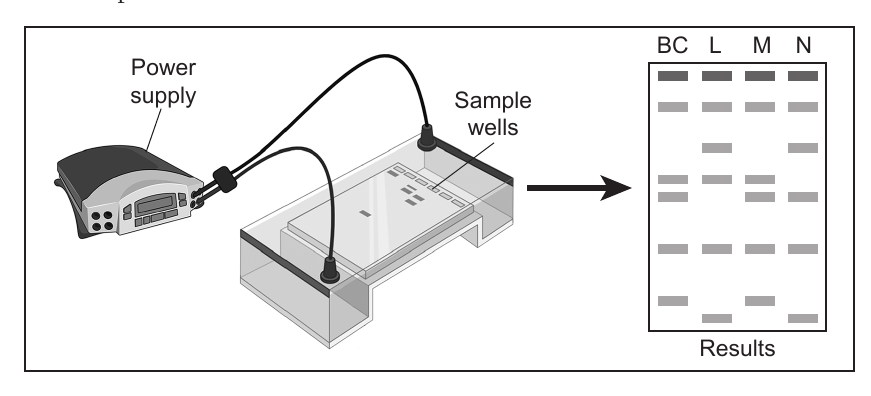
- (A) genetic material is not useful in determining evolutionary relationships
- (B) species M is most closely related to BC ✓
- (C) species L and N are most closely related to BC
- (D) BC is not related to any of the species
Worked solution
Gel electrophoresis results showing the closest band-pattern match between BC and M indicate that species M is genetically most similar, and therefore most closely related, to Botana curus.
Identify another biochemical test that would provide data to support which of the three plant species is most closely related to Botana curus.
Worked solution
Direct DNA sequencing or amino acid sequence comparison of a shared protein is another valid biochemical test for determining relatedness, since more similar sequences indicate closer relationship.
During physical activity, a person's pulse rate changes. Choose one body system, other than circulatory, that would be involved in maintaining homeostasis, and describe one change that would occur in that system.
Worked solution
Any body system besides circulatory that responds to exercise is acceptable (e.g., respiratory system increasing breathing rate, muscular system increasing muscle activity/heat production, or excretory system increasing sweating), as long as one specific change is described.
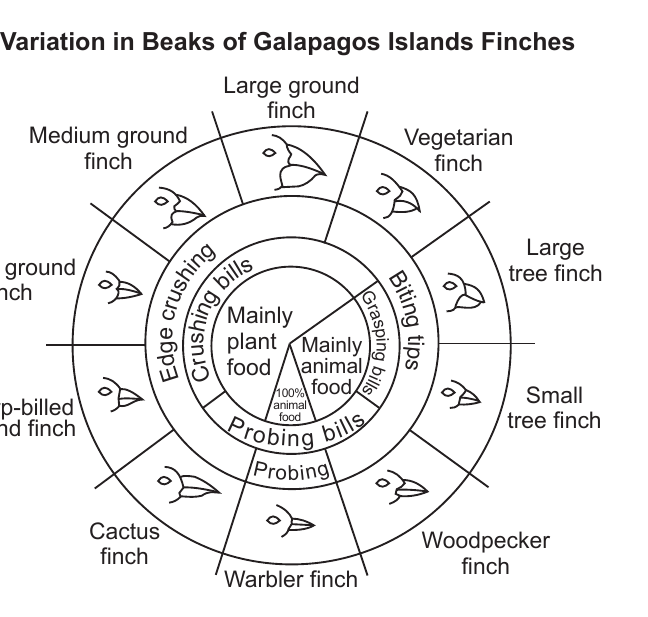
Base your answer to question 85 on the diagram below and on your knowledge of biology. Variation in Beaks of Galapagos Islands Finches 85 State one reason why it would be possible for a single island to support populations of both small tree finches and sharp-billed ground finches.
Worked solution
Since the two finch species occupy different feeding niches (different bill shapes suited to different foods), they avoid direct competition for the same resources, allowing both to coexist on one island.